
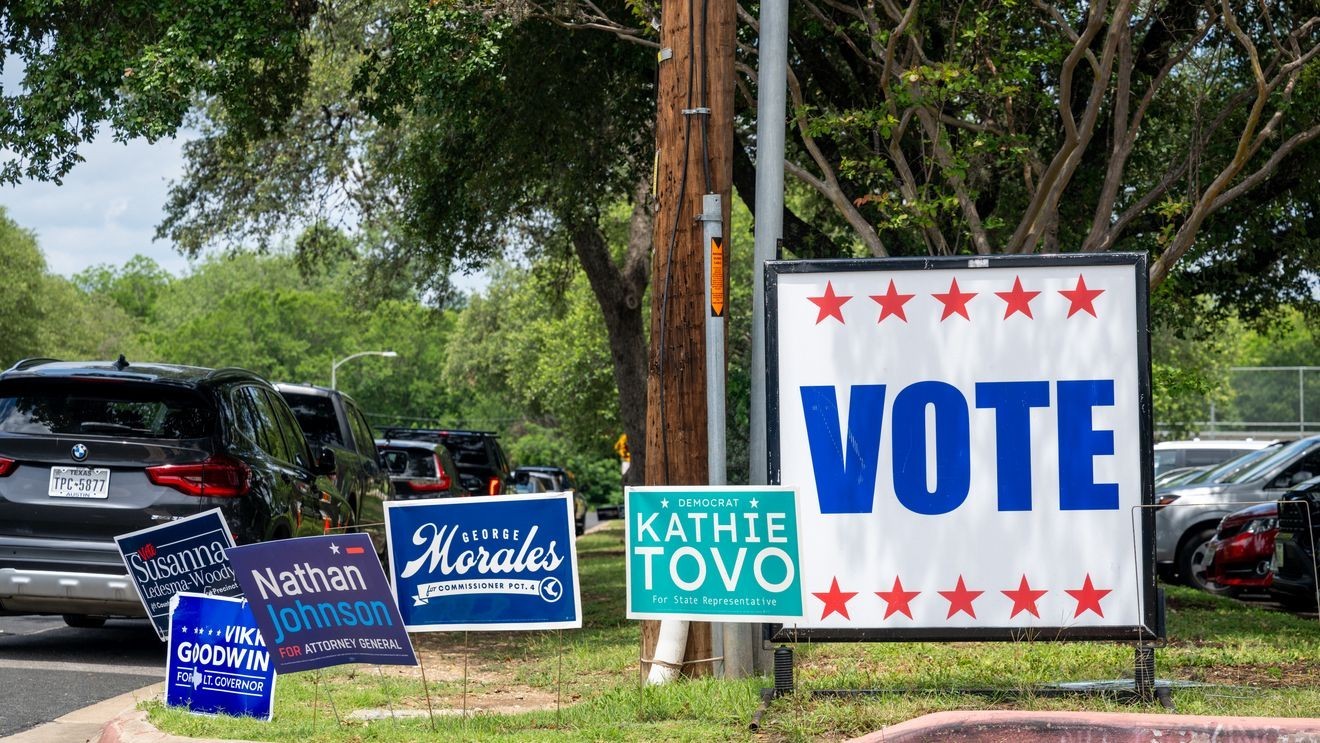
AUSTIN, Texas — As early voting begins Monday in Texas, potential highly competitive races are raising questions about how election results may be scrutinized or challenged.
In the months leading up to the midterms, conversations have started across the political spectrum about voter eligibility, voting systems and disinformation.
As part of The Atlantic Across America, a series hosted by The Atlantic ahead of the election, political writers discussed the topic of election integrity during a panel Thursday night in Austin.
Yvonne Wingett Sanchez, a staff writer who has covered elections extensively, spoke with CBS Austin about the potential challenges that could be raised following the election.
“There are a lot of questions about whether non-citizens have made their way onto the voter rolls, and how prominently that storyline–even though non-citizen voting is exceedingly rare–how deeply the administration is going to try to press that point in the days leading up to the election and post-election,” she said.
Wingett Sanchez added that misinformation about voting machines, as well as rare actual failures, could turn into attempts to cast doubt on the validity of the results.
ALSO| Trump blames Paxton’s troubles in Texas Senate race on other Republican voices
KEYE
She said part of the unusual nature of this election is Republican U.S. Senate nominee Ken Paxton’s role as Attorney General. His office may play a role in the legal process should claims of voter fraud or disenfranchisement surface.
“There are election officials around the state who are preparing for scenarios that, if the U.S. Senate race in Texas is as close as it could be, how the office of the attorney general might engage to try to challenge the results of an election,” she said. “We don’t know what’s going to happen, but these are very real scenarios that election officials have anxieties about and are preparing for and are sort of gaming out worst-case scenarios.”
The discussion comes as Texas election officials face scrutiny over their efforts to identify potential noncitizens on the state’s voter rolls. A representative from the office took questions from lawmakers this summer as they worked to clarify the process.
Last fall, the Secretary of State’s Office identified 2,724 registered voters as potential noncitizens through a review of a federal database.
Investigations that followed found that 578 of those voters had actually demonstrated U.S. citizenship, according to a September update from the Secretary of State’s Office.
The agency also referred 117 cases of potential noncitizen voting to the attorney general for further investigation.
State officials have defended the review process as necessary to ensure only eligible voters participate in elections, while acknowledging the importance of protecting eligible citizens’ voting rights.
During an August legislative hearing, the Secretary of State’s Office expressed confidence in Texas’ voting systems as early voting approaches.
Early voting runs from October 19 through October 30, ahead of Election Day on November 3.