
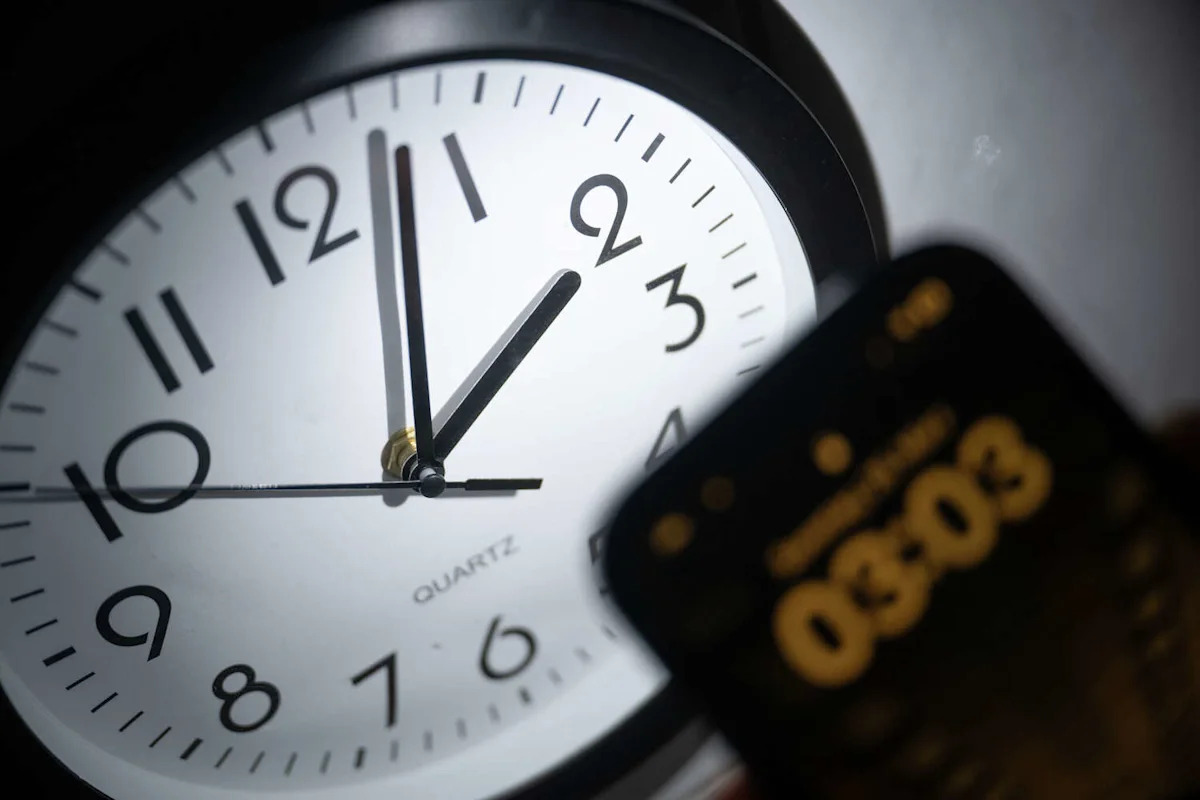
Get ready to make that annual routine change.
Texans have weeks before daylight saving time ends. A change in federal law could alter this twice-yearly routine.
A proposal moving through Congress would make daylight saving time permanent nationwide, potentially ending clock changes.
The U.S. House passed the Sunshine Protection Act by a bipartisan vote of 308-117 on July 14.
The Senate received the legislation the next day and referred it to the Senate Commerce, Science and Transportation Committee. As of Oct. 16, neither the committee nor the Senate floor had scheduled a vote.
Texas is already positioned to make the switch. House Bill 1393, known as the “Texas Time” bill, passed the Texas Legislature and was signed by Gov. Greg Abbott in June 2025.
However, the bill cannot take effect unless Congress changes federal law to allow states to permanently observe daylight saving time.
When is daylight saving time in 2026?
Daylight saving time begins on the second Sunday in March and ends on the first Sunday in November. Clocks move forward one hour when daylight saving time begins and back one hour when it ends.
In 2026, daylight saving time started Sunday, March 8, and is scheduled to end on Sunday, Nov. 1.
For Austin, daylight saving time officially ends at 2 a.m. Sunday, Nov. 1. At that time, clocks move back one hour to 1 a.m.
What would permanent daylight saving time mean for Texas?
If Congress changes federal law to allow permanent daylight saving time, Texas would no longer change its clocks every March and November. Instead, the state would keep the daylight saving schedule it currently follows during the summer year-round.
In Austin, the earliest winter sunset occurs around 5:31 p.m. in December, while the latest winter sunrise occurs around 7:30 to 7:45 a.m.
If permanent daylight saving time were enacted, those times would shift about an hour later. That would put the earliest sunset around 6:31 p.m. and the latest sunrise around 8:30 to 8:45 a.m.
Below is a graphic showing how sunrise and sunset times would change across Texas and the U.S. if the Sunshine Protection Act becomes law.
Why do we have daylight saving time?
The idea of daylight saving time dates to World War I, when Germany and Austria first adopted it in 1916 to conserve resources during the war. The United States followed in 1918.
Benjamin Franklin is sometimes associated with the idea because of a satirical 1784 letter suggesting people wake earlier to take advantage of daylight. He wrote: “Every morning, as soon as the sun rises, let all the bells in every church be set ringing.”
This article originally published at When does the time change in Texas? Here’s when daylight saving time ends in 2026.