
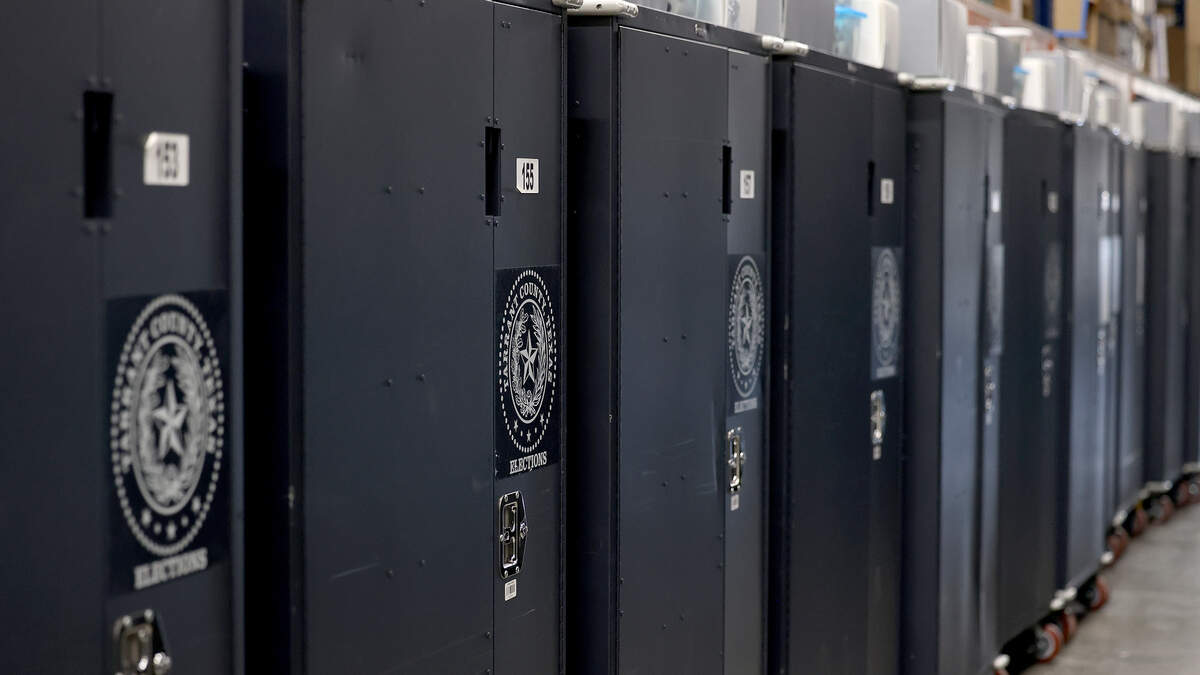
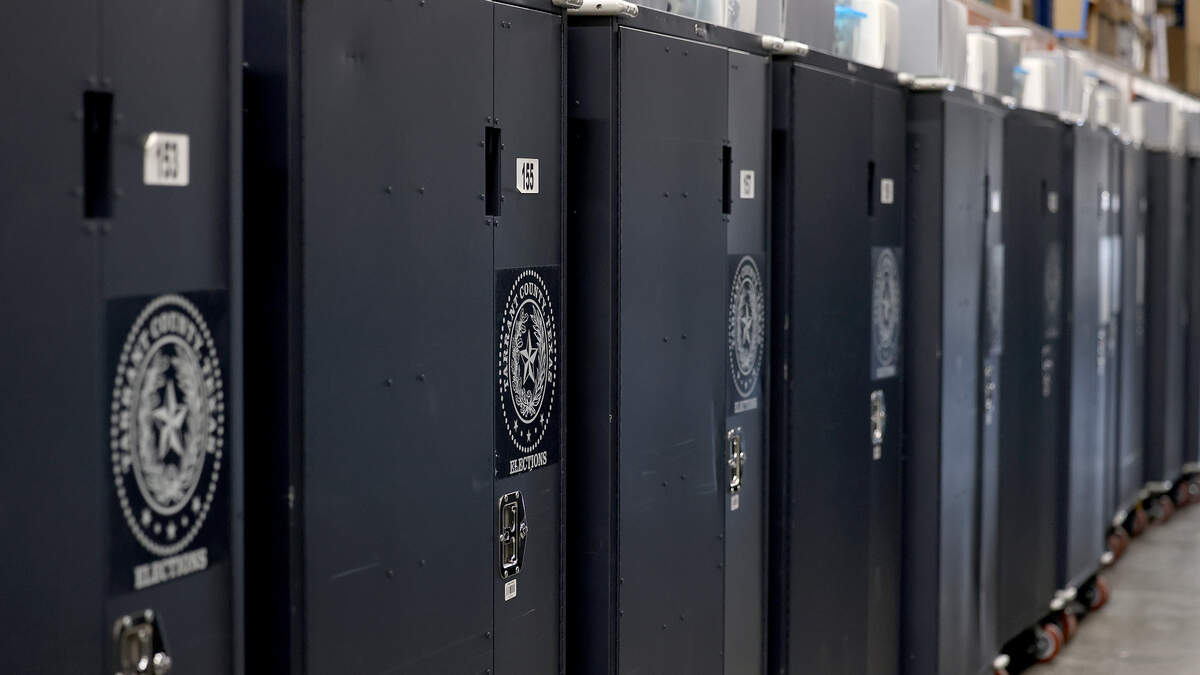
Election cabinets are stored Tarrant County Elections Warehouse on Monday, Aug. 31, 2026.
Amanda McCoy
FORT WORTH STAR-TELEGRAM
In Tarrant County, the Precinct 2 commissioner race is between Republican Tony Tinderholt and Democrat Jared Williams. The sitting commissioner, Democrat Alisa Simmons, is bidding for county judge rather than running for re-election.
Four commissioners sit on the Tarrant County Commissioners Court along with the county judge as the governing body of the county. Precinct 2 was redistricted by the Tarrant County Commissioners Court in June 2025 to give Republican candidates a leg up. It now crosses much of southern Tarrant, including Arlington, Benbrook, Burleson, Crowley, Dalworthington Gardens, Edgecliff Village, Fort Worth, Kennedale, Mansfield and Pantego.
Election Day is Nov. 3 and early voting runs from Oct. 19-30.
Here’s how both candidates responded to the Star-Telegram’s questionnaire ahead of the election.
Tony Tinderholt
Did not respond.
Jared Williams
City of residence: Mansfield
Campaign website: ourworktogether.com
Best way for voters to reach you: info@drjaredwilliams.com, @drjaredwilliams on Facebook and Instagram
Occupation: Non-Profit Leader
Education:
North Crowley High School; B.S. in Plant Science and Biotechnology, Fort Valley State University, 2012, magna cum laude; M.S. in Environmental Science, Texas Christian University, 2014; Ph.D. in Environmental Science, University of North Texas, 2019; graduate theological studies, Brite Divinity School, in progress.
Have you run for elected office before?
I previously served two terms on the Fort Worth City Council, representing District 6 from 2021 to 2025.
Please list the highlights of your civic involvement/activism in Tarrant County.
I served two terms on the Fort Worth City Council and chaired its Neighborhood Quality & Revitalization Committee, where I worked to lower the cost of living and improve quality of life through higher wages, childcare, homeownership, neighborhood and infrastructure investment, economic development, open-space conservation, community violence prevention, a new public EMS system, and expanded JPS healthcare access. I have nearly two decades of nonprofit and community leadership and served on the Tarrant County Human Services Advisory Committee. I currently serve as a local nonprofit leader and assistant pastor in Precinct 2 and hold statewide and national nonprofit and public policy leadership roles. I was honored as the 2023 NASW-North Central Texas Public Official of the Year and have received 40 Under 40 recognition from multiple organizations.
Have you ever been arrested, charged with a crime or otherwise been part of a criminal proceeding? If yes, please explain. No
Have you been involved in a civil lawsuit or bankruptcy proceeding? If yes, please explain. No
Who are your top three campaign contributors?
Our campaign is powered by grassroots support, with more than 400 contributions averaging approximately $65 each. Some of our top contributions came from Steve Hawkins; Wallace Bridges; Rev. Dr. Patrick Moses; Kathy Spicer; Rev. Dr. Michael Bell; Roderick Miles Jr. Campaign; Jason Smith; Richard Harleaux; Kevin Afkami; All In PAC; For The Children PAC; and Cynthia Paslay.
Why are you seeking this office?
I am seeking this office to help build a county government that works for everyday people. Too many families are struggling with the rising cost of living, unequal access to county services, and violations of fundamental rights resulting from decades of local, state, and federal policies that have failed to meet the needs of everyday people. I bring local government experience as a two-term member of the Fort Worth City Council serving Precinct 2 residents, along with nearly two decades of nonprofit and community leadership. I want to use that experience to lower costs, deliver excellent and effective county services, and protect our fundamental rights. Together, we can build a future where every person and every family in Tarrant County can flourish in harmony with an effective county government that helps make it possible.
If elected, what would your top 3 policy priorities be?
My top three priorities are lowering the cost of living, delivering excellent county services, and protecting our fundamental rights. I will work to lower costs by supporting living wages, expanding access to childcare, creating pathways to housing and homeownership, and advocating for property tax appraisal reform. I will strengthen county services by investing in public health and healthcare access, human services, transportation and infrastructure, community safety, and by safeguarding human dignity in county jails. Finally, I will protect our fundamental rights by prioritizing the voices of Precinct 2 residents in every decision, protecting the right to vote, and ensuring every resident has a meaningful voice in county government.
How will you measure your success as commissioner?
I will measure success by whether the everyday lives of Precinct 2 residents are meaningfully improving. Together, we will measure our progress by asking: Are families better able to afford housing, childcare, healthcare, and other necessities? Are county services more accessible, effective, and responsive? Are our neighborhoods safer and healthier? Are we safeguarding human dignity in our county jails? Are more residents able to access voting locations, participate in county government, and see their voices reflected in our decisions? We will establish measurable goals, regularly report our progress, and use data, best practices, and direct community feedback to evaluate our work. Ultimately, success means building a county government people can trust and that helps every person and family in Precinct 2 flourish.
Why should voters choose you over your opponent?
I bring proven local government, nonprofit, and community leadership rooted in Precinct 2. As a two-term Fort Worth City Councilmember, I delivered results for many of the same residents I am seeking to serve today, including higher wages, neighborhood and infrastructure investments, childcare, housing and homeownership opportunities, and community violence prevention. I also helped create a public EMS system through the Fort Worth Fire Department that improved response times and lowered ambulance costs. With nearly two decades of community and nonprofit leadership, I know how to govern, bring people together, and turn community priorities into results. I will listen to Precinct 2 residents and work alongside them to build a county government that works for everyday people.
What is the main issue facing Precinct 2? How do you plan to resolve it?
The main issue facing Precinct 2 is the rising cost of living. Families are working hard but increasingly struggling with housing, property taxes, childcare, healthcare, transportation, and other everyday expenses. As County Commissioner, I will work to lower these costs by supporting living wages, expanding access to childcare, creating pathways to housing and homeownership, advocating for property tax appraisal reform, and ensuring residents can access excellent county healthcare and human services. I will also prioritize infrastructure and transportation investments that connect people to jobs and opportunity. County government cannot address every affordability challenge in a silo, but we can use every tool available and work with our cities, state and federal partners, community organizations, and residents to make Precinct 2 a place where every family can afford to live and flourish.
Should the county redistrict following the 2030 census? Why or why not?
Yes, redistricting should occur following the 2030 Census, consistent with longstanding precedent and practice, so our precinct boundaries reflect current population and demographic data and provide fair and effective representation. Unlike the unnecessary mid-decade redistricting undertaken in 2025, the post-census process should be transparent, community-driven, and grounded in the Voting Rights Act. As a Fort Worth City Councilmember, I helped lead one of the most transparent and participatory redistricting processes in Texas, and I will bring that same commitment to county government. Redistricting should protect communities of interest, ensure fair representation, and never be used to diminish the voting strength of communities or manipulate political power. Every resident deserves a meaningful voice in our government.
How should the county and hospital budgets be run?
The county and hospital budgets should be transparent, data-driven, and built with the people we serve. As a Fort Worth City Councilmember, I gained experience with participatory budgeting, and I will bring that approach to county government by engaging residents, county and healthcare workers, and community organizations in setting priorities. Our budgets should lower the cost of living, deliver excellent services, protect workers’ wages and benefits, and invest in priorities that improve lives and reduce long-term costs. We should responsibly steward the tax rate while working to end unfair tax appraisals. Residents should not be priced out of their homes by rising appraisals nor taxed based on appraised values they may never realize. For JPS, we must strengthen our public hospital system and expand access to emergency, urgent, preventive, and mental healthcare regardless of income. Every taxpayer dollar should be transparent, accountable, and tied to measurable outcomes.
What is your philosophy on setting the tax rate?
My philosophy is to responsibly steward the tax rate while ensuring we can deliver the excellent county and hospital services our residents depend on. Taxpayers deserve a government that uses every dollar efficiently, transparently, and with measurable outcomes, but the tax rate is only part of the affordability conversation. We must also address unfair tax appraisals. I believe it is unfair for residents to be taxed based on appraised values they may never realize, since rising appraisals can price people out of homes and neighborhoods they have lived in for years. I will responsibly steward the tax rate while advocating to reform the basis on which residential properties are taxed. Together, these approaches can lower monthly housing costs, allow everyday residents and families to keep more of their hard-earned money each month, and ensure they have access to excellent county and hospital services.
Fort Worth Star-Telegram
Rachel Royster is a news and government reporter for the Fort Worth Star-Telegram, specifically focused on Tarrant County. She joined the newsroom after interning at the Austin American-Statesman, the Waco Tribune-Herald and Capital Community News in DC. A Houston native and Baylor grad, Rachel enjoys traveling, reading and being outside. She welcomes any and all news tips to her email.