
The Dallas city manager hasn’t had a performance review since 2022 — the last one, by the way, was done behind closed doors. And after nearly two years of committee meetings, City Council members still have yet to approve performance metrics or a formalized evaluation process.
Have they considered the ol’ reliable (aka, hiring another consultant)?
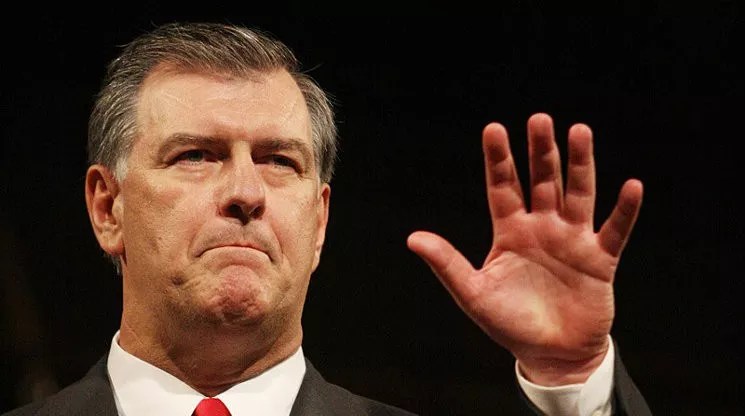
In an interview with the Observer, former Mayor Mike Rawlings said the solution is simple: accountability through one chief executive who actually has to stand by their record every four years. The time has come for a stronger mayor, he said, and Rawlings wants voters to weigh in on that decision too.
“I think the city comes together much better with this,” Rawlings said. “We’re more unified, and come back to my notion that that’s what the job of a leader is: to unify people, and get us on a strategic path to growth and the type of healthy growth that we all want.
Sign up for the This Week’s Top Stories newsletter to get the latest stories delivered to your inbox
THANK YOU!
You’re all set.
CLOSE
He and two predecessors, Tom Leppert and Ron Kirk, are pushing for a May referendum that would let Dallasites decide whether to give the city’s top elected official more power at the ballot box. The proposal would let the mayor hire or fire the city manager with council confirmation, propose a budget, and wield limited veto power.
‘No bosses’
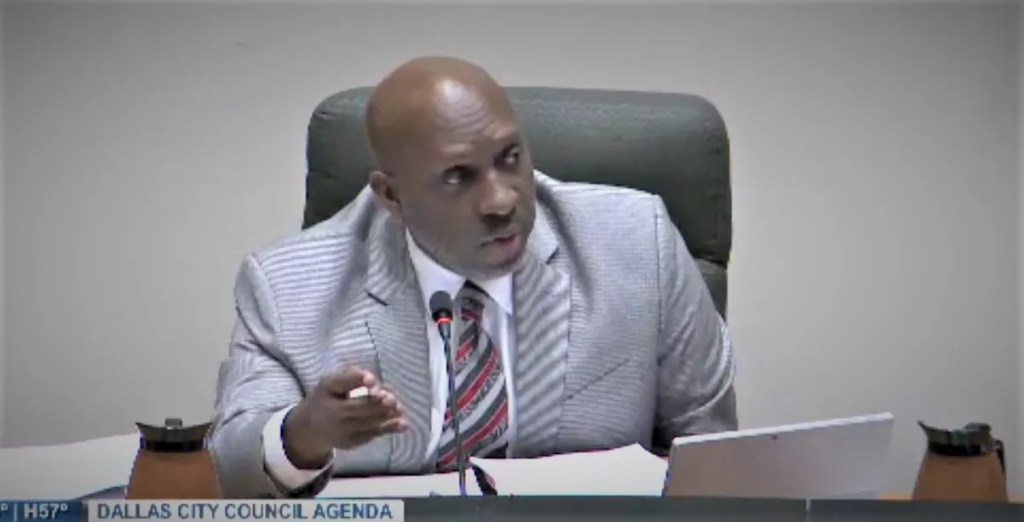 Former Dallas City Manager T.C. Broadnax’s had some rocky relationships at City Hall.
Council members represent individual districts and act together as a policy-making body, while an unelected city manager oversees day-to-day operations and proposes a budget to the council. They technically report to the council, which can fire them with a two-thirds supermajority vote, although most are allowed to resign and collect sizeable severance packages. Even then, their responsibility to the council is sometimes questionable.
“The weakness is fundamentally that the city manager has no bosses, because they have 15 bosses,” Rawlings said. “If you have 15 bosses, you don’t have anybody. Kids realize that with their parents, they can play one off the other, and they’re really in charge. And you take 15, it gets much worse.”
Some contracts are decided without the council’s approval or knowledge, as Robert Wilonsky of The Dallas Morning News recently reported on the current city manager’s decision to retain a Virginia legal firm for $100,000 without approval from the horseshoe. In a June D Magazine article arguing against the current council-manager form of government, former mayor and Observer columnist Laura Miller reported that the former city manager T.C. Broadnax had skipped two years’ worth of meetings with a veteran council member before eventually resigning and collecting a $467,000 exit deal.
Dallas’ mayor, meanwhile, controls committee assignments and can influence policy if they build support among the council, but otherwise largely functions as a ceremonial figurehead and brand ambassador with limited authority to push their own agenda. The result, Rawlings said, is a system that is structurally “broken” and lacks unified aims.
Symptoms of the current system’s dysfunction are evident and spurred the campaign, he added. They include bickering over small budget items through the lens of 14 competing priorities; longstanding obstacles (namely permitting wait times) to doing business in the city; and the departure of the Mavericks from downtown, along with painful exits by AT&T, the Dallas Stars and Neiman Marcus.
“Everybody’s realized the emperor has no clothes on,” Rawlings said. “OK, and I mean the system by emperor at this point. That, fundamentally, it’s flawed, and I think citizens are ready. They want a different option, and the dozens and dozens and dozens and dozens of people stop me all the time and say we’ve got to change the system.”
But Dallasites have rejected similar proposals before. In 2005, 62% of voters rejected a proposed charter amendment that would have effectively eliminated the city manager and given those powers to a true strong mayor. The current proposal doesn’t go that far and, Rawlings said, maintains some balance of power, with the city manager retaining some authority while council members could override hiring decisions by a two-thirds vote.
He added that circumstances have changed since ’05, as people are more likely to “vilify” their perceived opponents and are less inclined to find common interests to fight for, mirroring national trends. For example, the ongoing quagmire over the future of Dallas City Hall or the two recall campaigns targeting sitting council members lean in that direction. Or maybe even the latest news that the council body is currently gridlocked over renaming a small segment of Harwood Street to Exchange Place, a move intended as a nod to the city’s fast-growing financial sector.
“By not having a unified vision or a sense of where we’re going, it’s easier to splinter and not be as effective,” he said.
Why a stronger mayor could be the answer
 Mayor Mike Rawlings and Dallas police Chief U. Renee Hall talk to reporters in the wake of the murder of Botham Jean.
Originally from a small town on the High Plains of the Texas Panhandle, Rawlings spent decades in the corporate world, including as Pizza Hut CEO from 1997 to 2002. He said he wasn’t “excited” about entering the current system when he was elected to his first term in 2011, because the fractured nature of competing interests at City Hall was a different environment altogether. “I’ve been a business person my whole life, so having command and control is a positive in business,” Rawlings said.
And that’s what he thinks is the antidote to Dallas’ present woes: leadership. Under the proposed charter amendment, the mayor would have the ability to identify candidates, draft a contract and hire a city manager, who would still oversee day-to-day operations. And, as in any successful corporation, if a high-ranking employee can’t get with the program, they’re out, he said, with both the manager’s exit and entry still contingent on council confirmation.
“People are always the most important thing, hiring talent,” he said. “One can argue that you can have any system, and if you have the greatest people in the world, you make this system work. We don’t have the greatest people in the world year in and year out over the last 30 years — you have ups and downs. But I do believe having accountability about who I hire and what they’re doing is ultimately the most important.”
The proposal, still short of a full strong-mayor approach, would also give the chief executive the power to set council agendas and advance their own legislative priorities. But the biggest change might come during budget season.
Dallas faces financial difficulties amid rising costs, state-imposed revenue restrictions, and declining tax revenues. With current City Manager Kimberly Bizor Tolbert steering the process, officials had to close a $51 million funding gap to balance the previous fiscal budget, which included steep cuts to employee healthcare, parks funding and libraries, as well as layoffs. Council members also had to wade through a protracted process of amendments and straw votes, most of which followed hours of debate over relatively small amounts as individual members wrangled over line items like youth commission travel and funding for pools in their districts.
Under the proposed plan, the mayor would replace the city manager in compiling and proposing a budget. Then, council members could propose amendments as they do now, with one added hitch: the mayor could veto any line item the body proposes. And if they don’t agree, it would take a two-thirds supermajority of the council to override the veto. A consensus, if you will.
“I think what people that aren’t inside that loop don’t understand is once you start to be the initiator of the budget and have a line-item veto, now I can work with you to say, ‘Where are we going together?’” Rawlings said. “And if you want to be a Peck’s Bad Boy and constantly be throwing darts, it’s like, ‘OK, you’re not going to get what you want in that budget.’ You’re just cutting your own nose off to spite your face. Now we have a point. We’ve got to all agree to this, and I think that’s a healthy thing.”
14-1, inevitably
The debate about a stronger mayor in Dallas isn’t just about the council-manager form of government; it inevitably bleeds into a discussion about the council’s current 14-1 composition. The current setup was mandated by a federal judge in 1990 following a lawsuit by local civil rights activists who argued that Black and Latino votes were diluted under the prior framework. Under the struck-down 8-3 system, once called “flawed, elitist, exclusive, and racist” by former council member Diane Ragsdale, two council members and the mayor were elected citywide, while the remaining eight members were elected from single-member districts.
In a 5th Circuit Court of Appeals opinion, U.S. District Judge Jerry Buchmeyer wrote that at-large seats often precluded Black and Latino candidates because their communities struggled to fundraise the hefty minimum of $150,000 to $200,000 required for an effective campaign. Only one Latino had been elected at-large in the 8-3 configuration, while no Black candidates had won citywide office. The setup also disenfranchised Black voters in the way single-member districts were drawn, Buchmeyer wrote. A significant portion of Black Dallasites were crammed into two council districts, while the remainder were “cracked” into Council Districts 1 and 7, discriminatorily preventing them from forming a third majority-Black district.
With the new maps, four Black and two Latino council members were elected in 1991, dramatically increasing representation on the council. In a recent D Magazine article defending the system, civil rights activist Gerald Britt wrote that the court’s ruling “was a gain for the whole city” and that, now, “we’re told inclusive government is the problem.” He argued that taking power away from council members with a stronger mayor is an ill-conceived remedy to creating accountability in the city manager’s office, and that the best solution is electing representatives who wield council authority more assertively.
“Critics warn that single-member districts create fiefdoms and corruption, but those charges confuse representation with dysfunction,” Britt, one of the main organizers who drove support for the 14-1 system, wrote. “District loyalty is not treason; it is democracy at its closest range, with members accountable to the voters who elected them.”
Rawlings said he and the other mayors “felt we had crossed the Rubicon” with the 14-1 system, which is why their proposal does not directly call for remolding it. Still, he acknowledged that the proposal will impact how it functions in reality.
“It takes some power away because the city manager now knows who’s hiring and firing me,” Rawlings said. “Now, if they’re a good city manager, they’re going to spend as much time in those city council offices and try to make those people happy. That’s the only way the city can pull together. I think if I’ve heard anything negative, it is from people that have a lot of power at city hall because they have the ear of a city council person, and they want to keep that power.”
He added that those “single-issue” voices will lose power as the city moved council elections to November to boost turnout. Voter participation in May elections has historically been underwhelming, which gives officials who received only a few thousand votes the authority to legislate and control budgeting priorities for the entire city of Dallas, Rawlings said.
But as longtime proponents of a strong or stronger mayor likely remember, turnout has not always been weak. In 2005, Black and other minority voters in southern Dallas turned out in record numbers to vote down the ultimately unsuccessful strong mayor proposal after mobilization by religious and community coalitions.
When asked how the group will win support from neighborhoods that have historically balked at giving the citywide office more power, Rawlings said they are talking with community associations and leaders but are currently focused on getting the proposition on the ballot through a petition. If they collect the required number of signatures (about 20,000), he said, the persuasion campaign will begin.
“I think when you just explain it, people kind of get it,” he said. “But if it’s put around personalities in history, sometimes it’s easy to kind of fall into that.”
And isn’t that all the more dangerous coming from three former mayors? “Maybe,” Rawlings said.
“But I think Ron Kirk and Tom Leppert were two of the best mayors we ever had,” he added. “And I think I have a decent amount of respect out there. So I think people want to follow leaders. We don’t have anything to gain from it. We’re just saying, ‘Look, we’ve done the job. You want to solve the issues that you are complaining about. This is the way to do it.’”
Behind closed doors
A weakness of the current system that Britt pointed out in his article is city managers’ tendency to meet with business leaders behind closed doors, away from the prying eyes of the city council, which often learns about deals only when it’s asked to stamp them. In Miller’s piece, she wrote that a city manager had negotiated with Roy Hunt for years away from the spotlight on a massive $210 million private project that included a sports arena. Council members were “surprised” by the deal, Miller wrote, but still voted to approve it. The arena eventually went through without penalty for Hunt under the city manager-brokered contract, and Dallas was forced to spend $60 million of taxpayer money on Reunion Arena, Miller added.
The current city manager has also come under fire for pursuing her own downtown arena deal. In March, Mavericks CEO Rick Welts told a group of business leaders that Tolbert had approached him a year before council approved exploring potential relocation sites, suggesting the property as a new home for the team. After Tolbert defended her actions, pro-Save City Hall Council member Paula Blackmon said her public explanation pointed to “a preference for self-justification over a transparent partnership with the City Council and the people of Dallas.”
Britt wrote that a stronger mayor would still do that. Instead of a city manager negotiating on behalf of the council, he wrote, it would simply shift the “single point of entry” for private interests to the mayor’s office.
Rawlings, a founding member of a local private equity firm, said he doesn’t buy the argument.
“I guess if you don’t like business interest, you can always be fearful of business interest in any system,” he said. “I think the DNA of this city is business, and when we do that well, working with communities for what they want, that’s when this city does great. So I don’t think you build a system to chase out boogeymen. You build a system for what is optimal for accountability to citizens. The citizen is number one here.”
‘Why I think this is important’
Despite explosive growth in North Texas, Dallas’ population has stagnated in recent years as housing remains expensive, birthrates decline and, perhaps most concerningly, residents move to neighboring suburbs. At the same time, more unified suburban councils have lowered barriers to doing business and voted decisively to approve economic incentives for corporate relocations, with some coming at the expense of the city.
Y’all Street is a promising sign, Rawlings said, but the city’s constraints still lead him to believe Dallas could become one of the “cities across America that have had their heyday, and it starts to slow,” though he added it hasn’t reached that point yet.
With the November 2027 elections on the horizon, elected officials will face several difficult realities. Finding relief on revenue caps from state lawmakers in Austin will be an uphill battle; funding requirements for the police pension and hiring remain in place, and services continue to be cut with each budget. Rawlings said the next mayoral election isn’t as important as redefining the office, which he believes could be the only way to unify the city behind a shared vision to get Dallas back in the green.
“They’re not easy decisions to make,” He said. “People may think they’re easy because they know what the right answer is, but when you try to unify the city, there are different points of view in that. That’s why I think this is important. If you don’t make that [happen], then you start to slowly lose it.”