
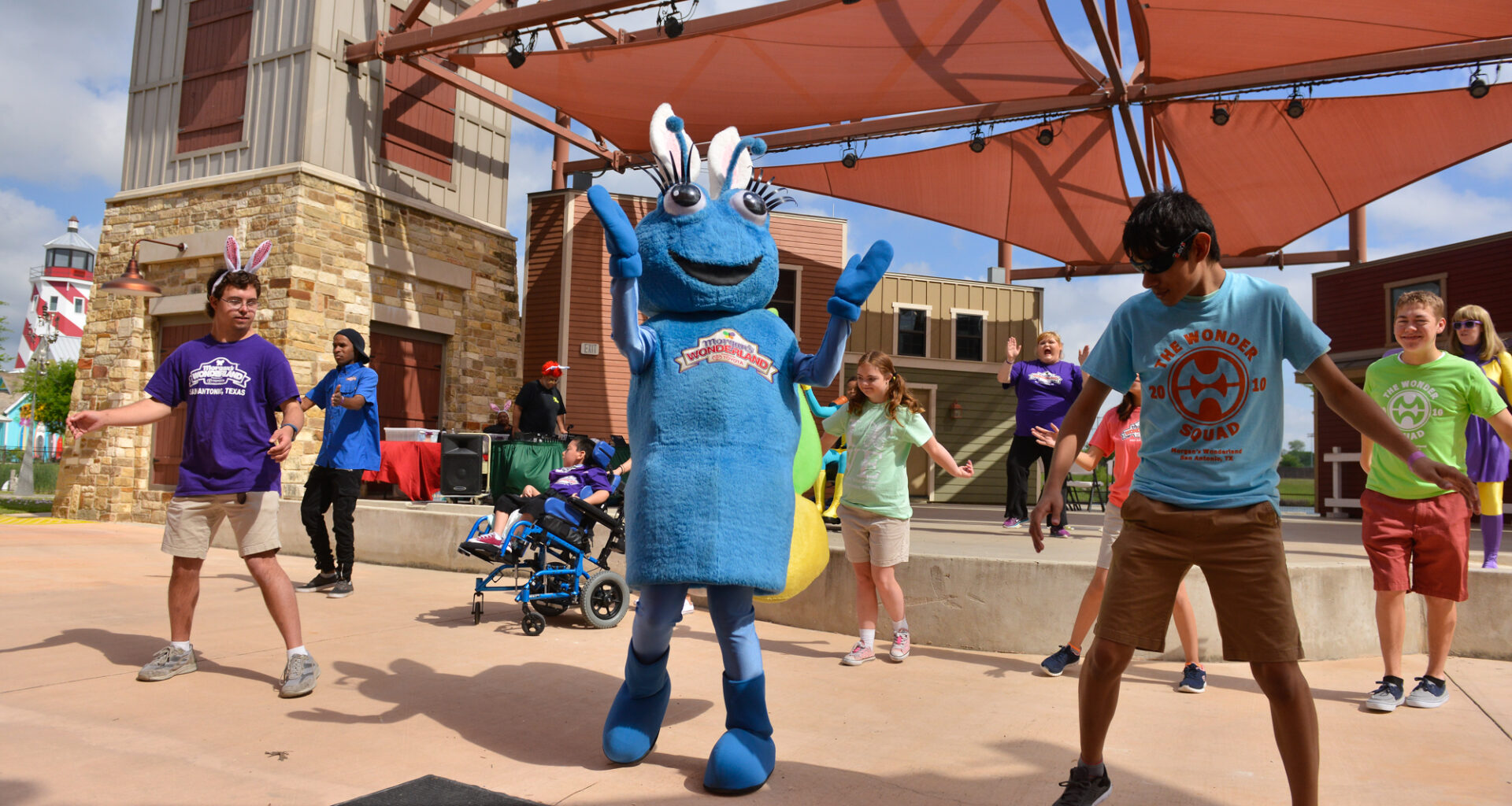
Joy the Butterfly leads dancers during Easter activities at Morgan’s Wonderland, an ultra-accessible theme park that serves people with special needs. With Election Day near, we should press candidates about how they will support people with disabilities, our guest columnist writes.
Robin Jerstad/San Antonio Express News
As the midterm election approaches, candidates are busy making their case to voters. They are visiting cities and towns, explaining how they intend to improve people’s lives.

They routinely court communities of race, ethnicity and religion, listening to their concerns and tailoring their messages accordingly.
Article continues below this ad
This is incredibly important, but where is the same effort for people with disabilities?
The Census Bureau estimates 45.8 million Americans are living with a disability. The disability community warrants the same deliberate attention as other sizable voting groups.
This segment cuts across every racial, ethnic and religious community candidates are trying to reach. Its concerns matter deeply to parents, spouses, siblings, friends and caregivers, no matter the demographics. When a candidate takes disability issues seriously, that attention resonates through family and support networks.
It also is a community any of us can join at any moment, through an accident, illness or simply the natural changes aging can bring.
Article continues below this ad
Someone who has never considered whether a building, workplace or public service is accessible may suddenly depend on it being so. A family that has never needed help navigating disability services may find itself searching for answers overnight.
READ MORE: Statesman Editorial Board Texas General Election Recommendations
My daughter Morgan opened my eyes to how often people with disabilities are left out of everyday life. Over two decades of working with other families through Morgan’s, a network of initiatives dedicated to improving life for individuals with disabilities and their families, I have seen how much time families can spend simply trying to connect the pieces: finding care, arranging rides, understanding services, planning for a child’s future.
Each of those pieces matters. Education, health care, transportation and employment help make it possible for people with disabilities to learn, work, build relationships and shape their own futures. When those opportunities — often taken for granted — are out of reach, the consequences extend far beyond a single household.
Article continues below this ad
A job opportunity means little if a person cannot get to work. A student’s potential can go unrealized without appropriate support. A parent may reduce work hours because the help they need isn’t available.
Removing these barriers also makes economic sense; inclusion is good business. An accessible, welcoming business gives more people the opportunity to become customers. An inclusive workplace gives employers access to skills and talent they might otherwise overlook. Reliable care and support can give caregivers the flexibility they need to work.
Candidates promise to expand opportunity and strengthen the economy. Those promises should include people with disabilities. What does an economic agenda miss when it overlooks their talent, their spending and their families’ ability to work?
FROM THE ARCHIVES: Bob Kafka never stopped making good trouble for a better normal
Article continues below this ad
Many Americans have navigated these challenges their entire lives, and their experiences should help shape the decisions our leaders make. Listening to people with disabilities should be a basic expectation of anyone seeking public office.
Candidates should speak directly with them, include families and caregivers, and ask what is working, what is failing and where they can make a meaningful difference.
Then they should explain what they intend to do.
Voters should ask for those answers. When candidates promise better schools, more jobs or improved transportation, ask how those plans will serve people with disabilities. Look at their records as well as their promises. Have they addressed barriers to participation before?
Article continues below this ad
Don’t stop paying attention after the election, either. Watch how those conversations show up in budgets and policies, and hold elected officials accountable for the results. Ask people with disabilities to assess whether those policies are making a difference.
Any of us could need an accessible workplace, reliable support or help navigating an unfamiliar system tomorrow. Millions face these challenges today.
They should not have to fight for a place in every political conversation. Candidates asking for their votes should come prepared to explain how they intend to represent them.
Article continues below this ad
Gordon Hartman is the founder and board chair of Morgan’s. He is an entrepreneur, philanthropist and creator of Morgan’s Wonderland, the world’s first ultra-accessible, fully inclusive theme park.