
International students who want to remain in the U.S. and work under the Optional Practical Training program could face new fees under rules proposed by the Department of Homeland Security.
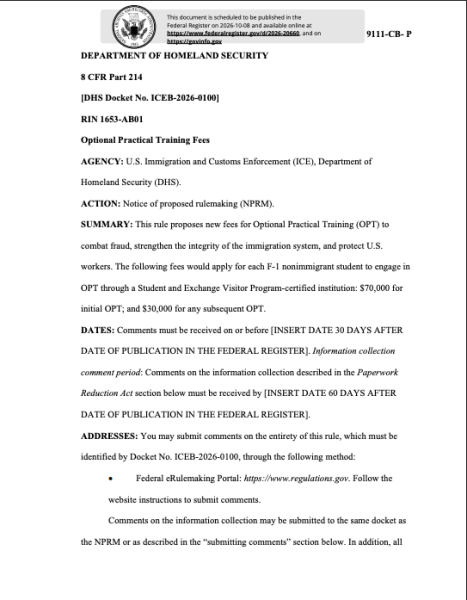 DHS proposal to raise the initial Optional Practical Training fee to $70,000, with subsequent fees set at $30,000.
DHS has proposed a new rule that could affect international students’ ability to remain in the United States and work after graduating from college.
“DHS is upskilling OPT to require foreign students to justify their worth to employers,” a DHS spokesperson said. “American workers should not have to compete against a program that has been turned into a pipeline for cheap foreign labor.”
For international students at TCU, immigration guidance and documentation are handled through the TCU International Services office. The International Services Office (ISO) helps students maintain their legal status in the United States by providing guidance on immigration requirements, documentation and visa options.
The proposal would affect international students with F-1 visas, which allow foreign nationals to study full time at accredited U.S. institutions.
Currently, students with F-1 visas who apply for the OPT program must pay a government application fee ranging from $470 to $520, depending on the filing method.
The proposed rule would introduce additional fees for OPT participation. Under the proposal, the fee would be the fee would be $70,000 for a student’s first OPT recommendation and $30,000 for each subsequent one. Schools would be required to pay the fee before recommending students for OPT. The proposed effective date is 60 days after a final rule is adopted.
“If adopted, the fees could create a substantial financial consideration for institutions deciding how to support students pursuing OPT,” said Joshua Kai, TCU director of international services and university immigration officer. “TCU will need to consider the final requirements and their implications before determining how to respond. Until that process is complete, we cannot commit to a specific funding arrangement or other course of action,” he added.
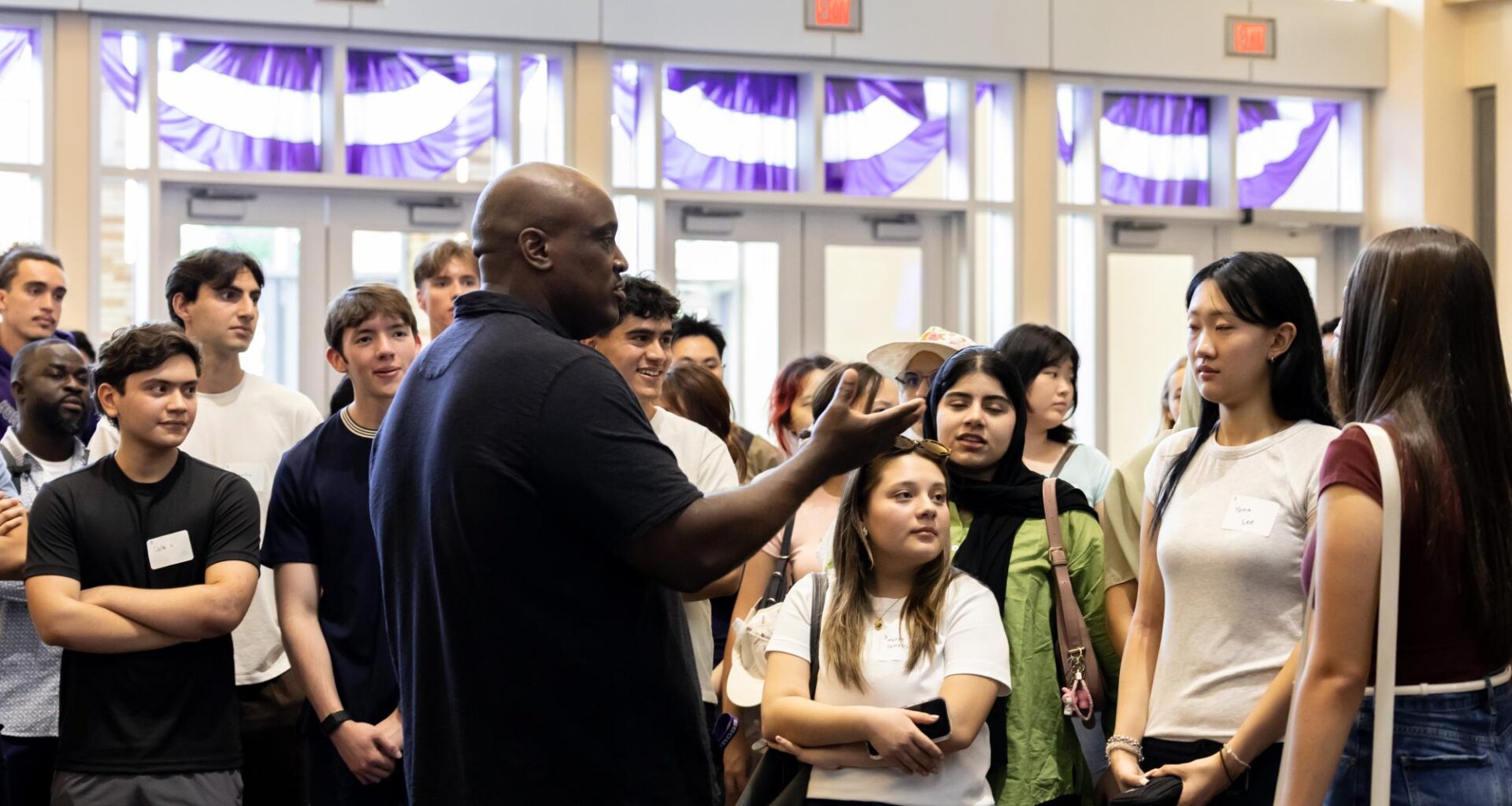
 TCU international students after the “Football 101” event at international orientation
Photo provided by Kai Joshua (Lily Green/TCU Office of Admissions Marketing)
The proposal has already created uncertainty among international students.
“It doesn’t just affect whether I can stay in the U.S., it affects my personal and professional growth too,” said Andrea Andjelkovic, a senior finance major who is originally from Belgrade, Serbia.
She said uncertainty about her ability to work in the United States after graduation has been discouraging, prompting her to apply for jobs outside the U.S. as well.
“I’m already feeling it. Fewer people are replying to my emails, and I’m getting fewer and fewer updates on my applications and interviews,” Andjelkovic said. “It’s really discouraging, because I’m putting in the same work as everyone else, but that number makes me much harder to hire. Because of that, I’ve started applying to jobs back in Europe too,” she added.
The public comment period ends early November. After reviewing the comments, DHS will decide whether to withdraw, modify or move forward with the proposal.