
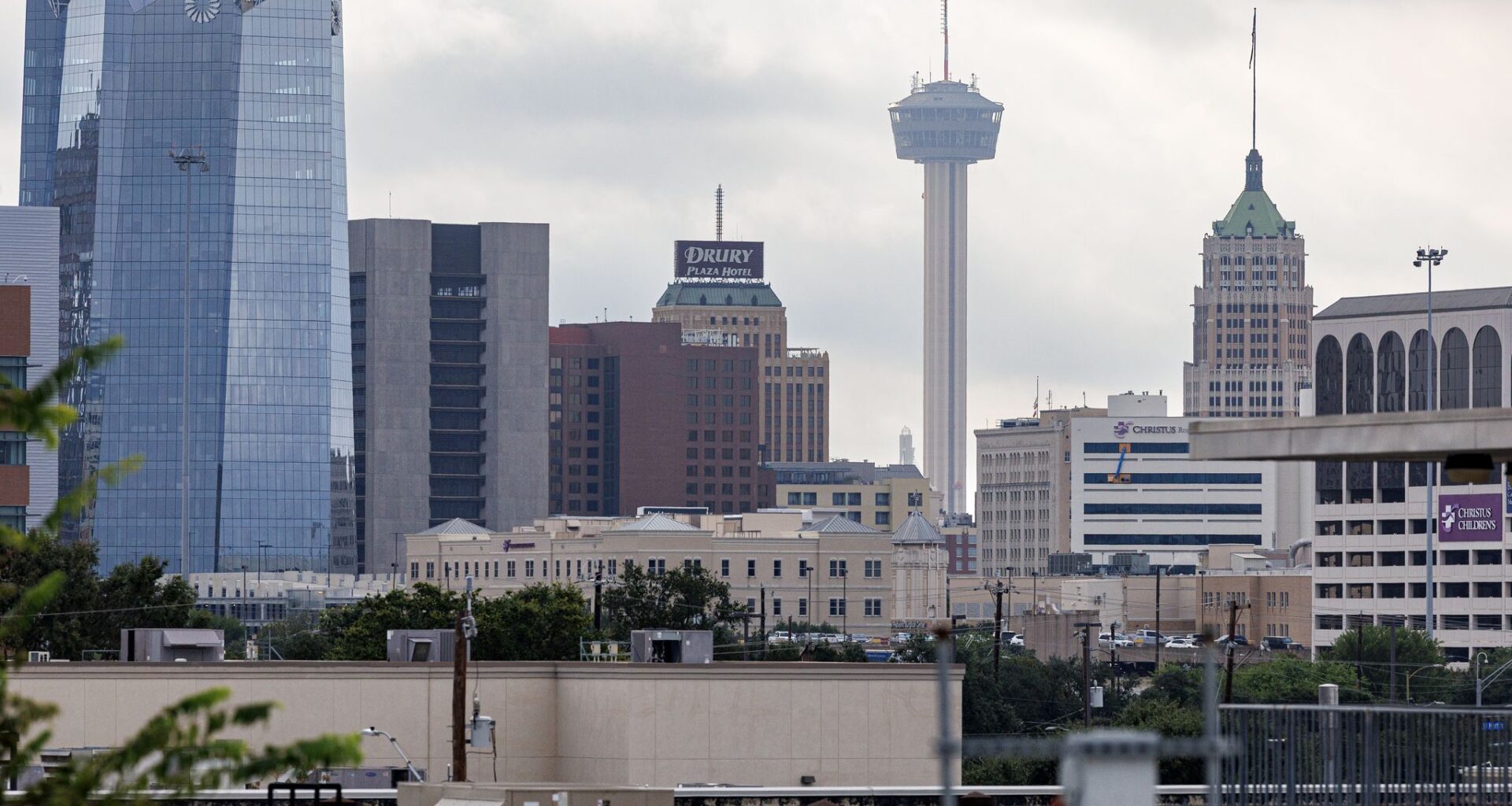
The downtown San Antonio skyline seen from a rooftop on the Haven for Hope campus on Friday, Sept. 4, 2026.
Sam Owens/San Antonio Express-News
The number of San Antonio children living in poverty has dropped slightly, but seniors are worse off, according to the city’s new Status of Poverty Report.

The Department of Human Services’ report, which is assembled every two years, relies on public data, primarily from the 2024 U.S. Census Bureau’s American Community Survey. The survey data covers five-year spans.
Article continues below this ad
Twenty-six percent of children under 5 were in poverty as of 2024, which is almost 3% lower than in 2015. Almost 15% of adults over 65 live in poverty, up nearly 2% from the 2015.
Despite improved conditions for children, the rate is still high. About one in four children in San Antonio live in poverty.
The study found no reduction in overall poverty. About 17% of San Antonians — or 250,000 residents — are impoverished. That far outpaces Texas’ almost 14% rate and national rate of close to 13%.
“Poverty remains a persistent and structural social issue in San Antonio, significantly affecting access to education, healthcare, housing, and economic opportunity,” the report states. “It reflects systemic inequalities and uneven regional development.”
Article continues below this ad
Poverty remains concentrated inside Loop 410 and southern parts of the city. The report identifies dozens of ZIP codes within the urban core with populations that have had high poverty rates — more than 20% — over the past three decades.
San Antonio has long been known as one of the poorest large cities in the country.
The city’s metropolitan area, which includes New Braunfels, had the third-highest rate of poverty of all metropolitan areas in the country, according to Census data released last year. The San Antonio area’s rate ranked behind Houston and Detroit among the 25 most populous metropolitan areas of the U.S.
City staff suggested a slew of broad recommendations to tackle the persistent poverty, including strengthening collaboration among social service providers and expanding public-private partnerships to increase funding for initiatives to improve people’s living standard.
Article continues below this ad
“We want to bring a conversation about how we can make sure that economic prosperity is impacting lower-income residents in a more positive way,” said Laura Serrano, chief of social demography in the Department of Human Services.
She briefed City Council’s five-member Community Health Committee on the report results Thursday. Committee members also talked about food insecurity and financial empowerment programs.
North Side Councilman Marc Whyte said he appreciates the work that organizations do to directly assist people in need of food and other resources, but he thinks the city should focus on economic development to provide higher-paying jobs.
“We have a community where we have people that are ready, willing and able to work, and we need to be focused on creating opportunities to them to have employment and have good paying jobs,” Whyte said.
Article continues below this ad
Councilman Ric Galvan, chair of the committee, said after the meeting that he agrees that it’s important to recruit major employers to the city, but that negotiating good deals, including fair worker wages, is key.
“At the same time, we have to continue to invest in community services,” Galvan said, noting that many health programs residents rely on wouldn’t exist without city funding.