
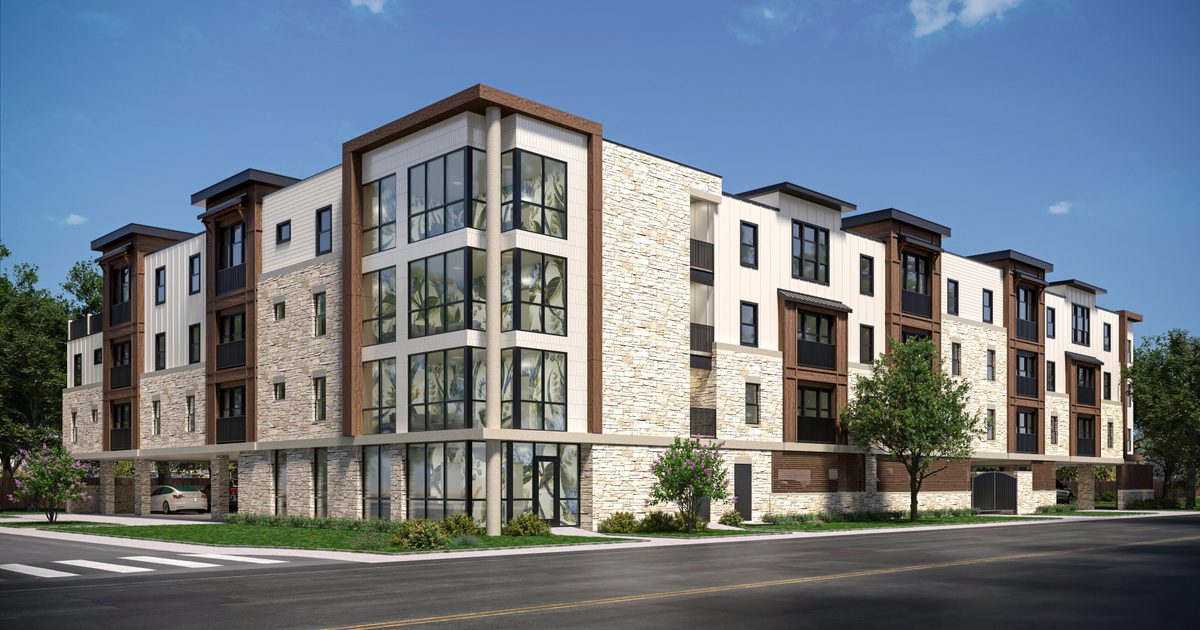
Austin leaders directed more than $21 million to help finance five affordable housing developments around the city this fall.
What’s happening
City Council, serving as the board of the Austin Housing Finance Corp., authorized loan agreements totaling $21.09 million for the income-restricted residential projects on Oct. 22. The majority of those funds—$20.8 million—come from the city’s 2022 housing bond, while the remaining $1.01 million came from a federal housing investment.
Gap financing for new projects in South, Central and East Austin this fall includes:
“Affordable housing is essential infrastructure for a thriving city. These funding recommendations demonstrate how strategic public investment, paired with strong partnerships, can deliver lasting community benefits,” Nicole Joslin, Austin housing and community development officer, said in a statement. “We’re proud to support developments that will provide long‑term affordability and expand access to housing across Austin.”
Council’s fall approvals add to the tens of millions in financial support for affordable housing projects citywide provided through the $350 million bond approved by voters four years ago.
Zooming in
The October funding decisions followed council votes earlier this year to support Texas housing tax credits for several of the proposed developments. All four projects backed by local officials in February have now secured those state Low-Income Housing Tax Credits, according to the city.
Of the 261 new housing units planned across the five projects supported in October, 248 will be reserved as affordable based on income; 13 of The Maven’s 83 units will be rented at market rates. Unit mixes range from efficiency to four-bedroom layouts.
Affordable housing in Austin is made available based on median family income, or MFI, that’s currently $134,400 for a family of four. MFI scales based on household size, and income-restricted units are reserved for those making lower shares of the current median.
A majority of the new units supported this fall will be available to those earning below 30%-50% MFI, referred to as “extremely” to “very” low incomes by the Department of Housing and Urban Development.
Some council members have recently pressed to ensure more of the affordable housing that’s incentivized or sponsored by the city includes units in those lower income brackets, rather than the 60%-80% MFI range more commonly seen in past years. That shift comes as Austin’s MFI rapidly rose in the past decade, which city planners and officials have attributed to the arrival of higher-earning residents and displacement of lower earners.
Housing Division Manager Brendan Kennedy highlighted the October financing as supporting lower-income residents with affordable developments in accessible areas.
“AHFC is excited to recommend these five proposed developments for funding. In particular, this funding round includes proposals which promote affordable housing in areas of high opportunity and near high-frequency transit, including the proposed Project Connect light rail, with 54 deeply-affordable units proposed at or below 30% MFI,” he said in a statement.