
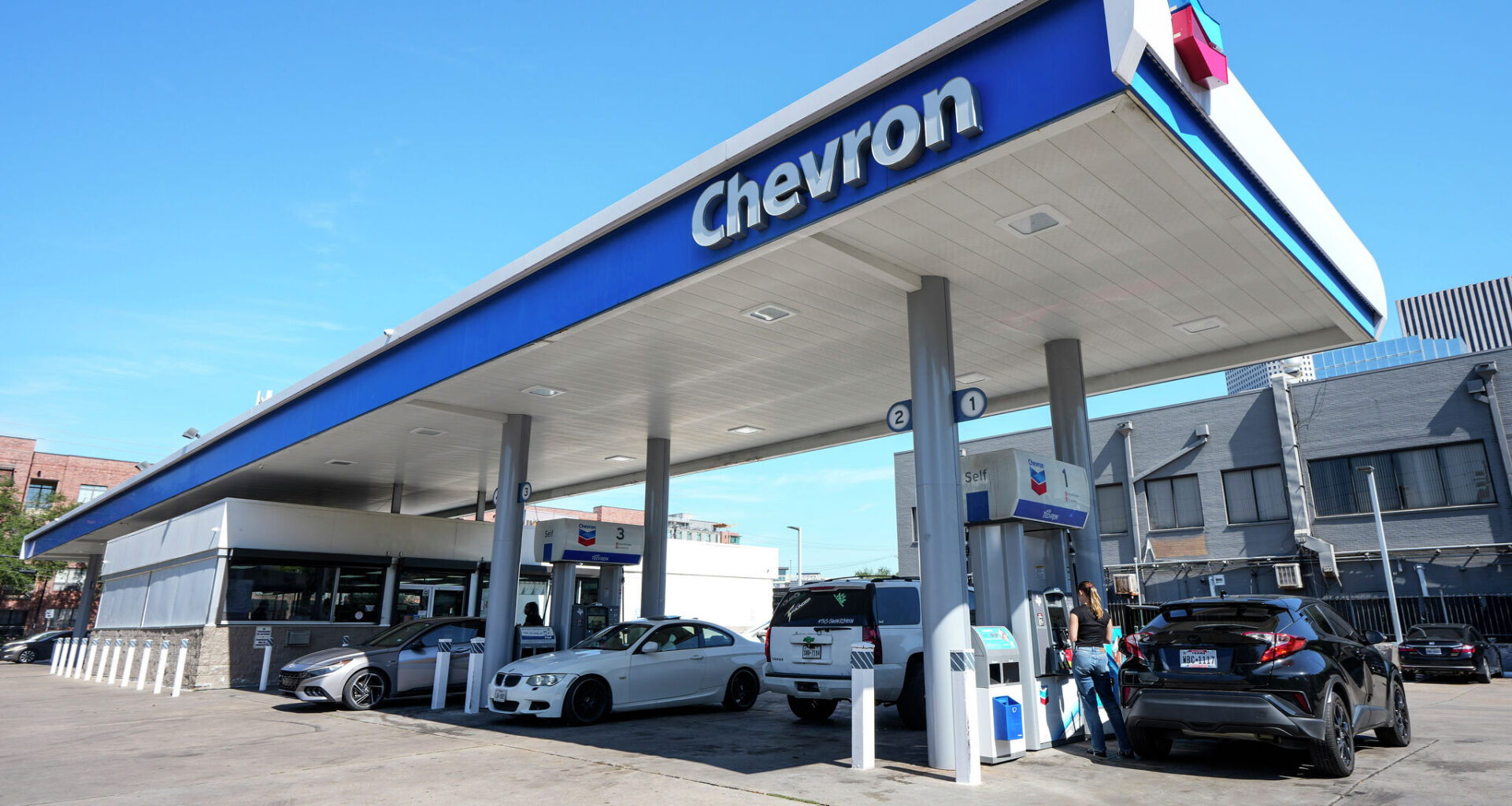
Houston is considering an ordinance that would limit where new retail fuel stations can be built, including a two-step review based on road width and nearby residential property.
Brett Coomer/Houston Chronicle
If you’ve noticed an excessive number of gas stations in the Greater Houston area, especially crowding residential areas, you’re not alone. City officials are now considering new rules to guide where future fuel stations can be built.

According to a presentation shared Wednesday by the City of Houston’s Economic Development Council Committee, plans are being reviewed to create a new ordinance guiding where new retail fuel stations can be built.
Article continues below this ad
What the city’s review found
Of 188 fuel station applications filed in Houston’s Harris County portion over the past four years, 95 percent were on major thoroughfares, 52 percent had homes within 50 to 100 feet of the site and more than 27 percent were on roads that were 80 feet wide or less—or even smaller streets.
The distinction matters because the proposed ordinance would give closer scrutiny to stations proposed on narrower roads, where the city says residential development can be more directly affected.
“We concluded that retail fueling stations were largely going on major thoroughfares, which is what we wanted, but there are some opportunities to perhaps encourage them to locate away from residential property,” Marlene Gafrick, a senior adviser to the Mayor’s Office, said during the presentation.
Article continues below this ad
Houston is considering an ordinance that would limit where new retail fuel stations can be built, including a two-step review based on road width and nearby residential property.
RONALDO SCHEMIDT/AFP via Getty Images
How the proposed rules would work
Under the proposed rules, every new fuel station would first be checked to see whether it sits on a major thoroughfare wider than 80 feet. If it does, the location would qualify without further location review.
If the road is 80 feet wide or less, the city would then examine the surrounding area to determine whether less than half of it is residential. If more than 50 percent of the surrounding area is residential, the proposed location would not qualify, although an applicant could request a variance.
Article continues below this ad
The city also showed council members two examples of how the proposed rules could work. A hypothetical station at 1909 Washington Avenue would move to the second step because Washington Avenue is an 80-foot major thoroughfare, while the surrounding area is 57 percent residential within 100 feet.
A second example at 5204 Live Oak Street, on Southmore Boulevard, also would move to the second step and fail the location test because the surrounding area is 100 percent residential within 50 and 100 feet.
The proposed ordinance would apply only to new retail fuel station applications going forward.
“If you have an existing station, at this point it will not affect you,” Gafrick said.
Article continues below this ad
City review process could change
Gafrick said the city’s research also found that the current approval process is divided among three agencies: the Texas Department of Licensing and Regulation, the City of Houston and the Texas Commission on Environmental Quality. Their approval processes currently run at the same time without depending on one another.
“What we found is their parallel processes and there is no interconnection and they look at different things,” Gafrick said.
Council members weigh in
The proposal comes months after District J Council Member Edward Pollard asked Mayor John Whitmire to pause new gas station approvals near residential property. In July, Pollard called for a 90-day moratorium on stations with fuel pumps within 200 feet of residential property lines, saying residents and neighborhood leaders had repeatedly raised concerns about clusters of gas stations.
Article continues below this ad
“I received several emails from large community groups over an extended period of time and this was something that we were seeing all over the city, many different residents who were concerned about gas stations near residential homes,” he said.
Pollard initially considered pursuing a proposition to address the issue but praised the mayor’s office for making it a priority.
“I am digesting this formula you came up with; I think it is creative,” Pollard said. “I know it’s very difficult to come up with a one-size-fits-all approach and language in a city that may satisfy everyone, but I definitely think this is something that looks promising.”

Stay informed, and entertained.
By signing up, you agree to our Terms Of Use and acknowledge that your information will be used as described in our Privacy Policy.
At-large Position 1 Council Member Julian Ramirez questioned how quickly the ordinance could move through the city’s approval process, warning that developers could rush applications if they know new restrictions are coming.
Article continues below this ad
Prices are displayed on an Exxon gas station sign in Houston, Tuesday, March 17, 2026. (AP Photo/Ashley Landis)
Ashley Landis/AP
“Every week we get complaints about gas stations going up or being proposed and when developers find out you’ve got three months before Council adopts anything, you might very well see sort of a rush in these applications under the deadline and get them approved,” Ramirez said. “So anything we can do to shorten this ordinance schedule would be a good thing.”
The proposed ordinance is scheduled to go before the Planning Commission in November, followed by a public hearing in December. City Council could hold its required public hearing in January and consider the ordinance on Jan. 20, 2027.