
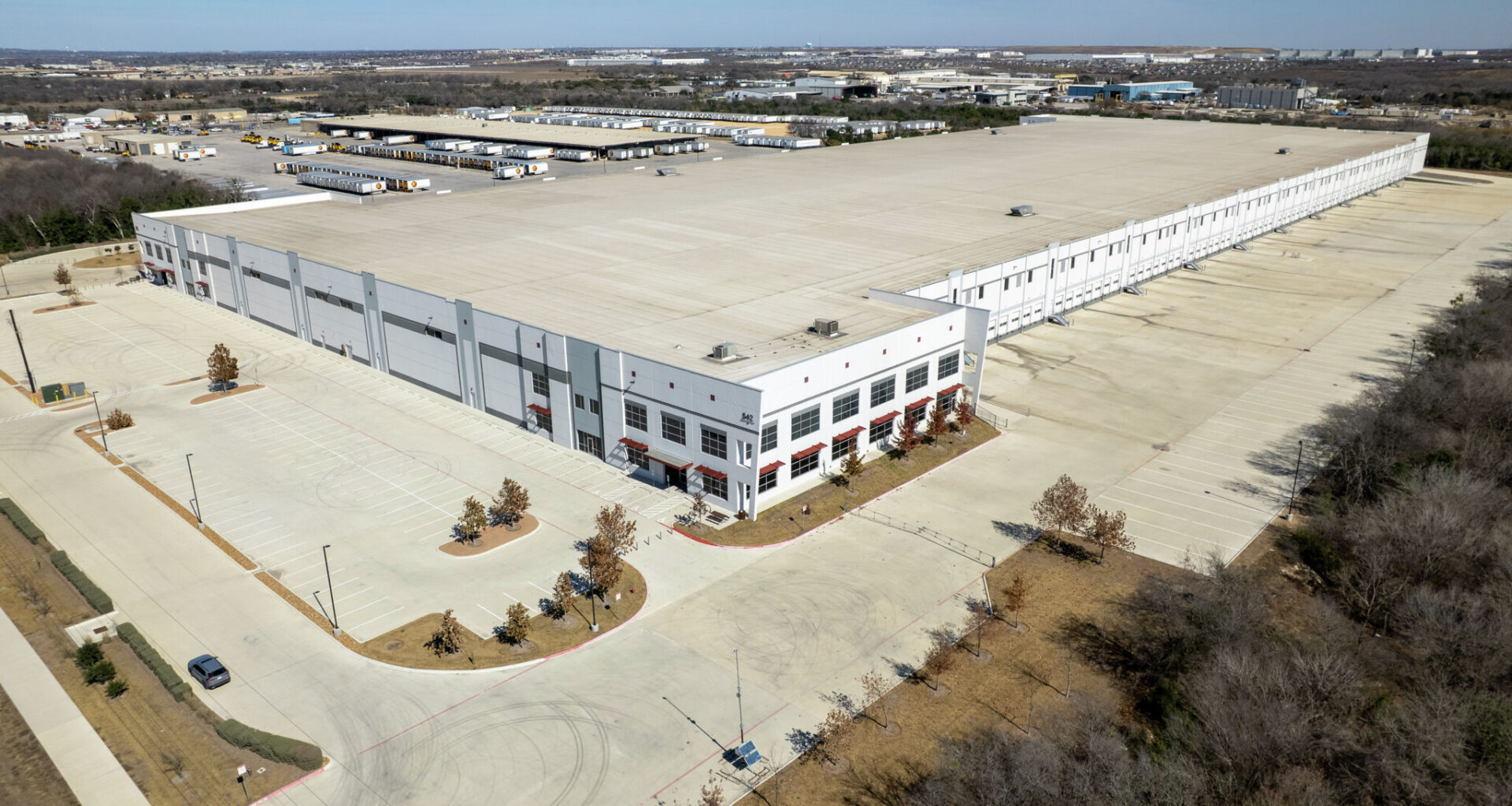
U.S. Immigration and Customs Enforcement bought Oakmont 410, an industrial building on the East Side, with plans to convert it into an immigrant detention center. The federal government’s plans to convert warehouses into mass detention centers are “deeply troubling,” the Rev. Gustavo García-Siller, archbishop of San Antonio, writes.
Monte Bach/San Antonio Exp
District 2 San Antonio City Council Member Jalen McKee-Rodriguez speaks on Oct. 13 at a news conference in front of City Hall about a lawsuit the city filed against the federal government seeking to block it from building an immigration detention center on the East Side.
Alma E. Hernandez/For the San Antonio Express-News
I applaud the city of San Antonio’s efforts in taking legal action against the proposed Immigration and Customs Enforcement processing facility on the East Side, as the federal government has refused to supply information and repeatedly ignored compliance with obtaining environmental assessments or receiving local permits.

The 640,000-square-foot warehouse could hold up to 1,500 beds and has elicited concerns that it will negatively impact the city’s sewage and water systems. It raises concerns for the impacts on public health and safety, as well as the provision of emergency services.
Article continues below this ad
The proposed facility has also prompted public protests.
As the city states in its civil complaint against the Department of Homeland Security and ICE, the warehouse was designed for the storage and transloading of commercial goods — not for any human residence.
“Defendants are purchasing warehouses nationwide to retrofit them into immigration detention and processing centers capable of holding tens of thousands of immigrants to facilitate ICE’s stated goal of running deportation operations ‘like (Amazon) Prime, but with human beings,’ ” the city’s civil action states.
ALSO READ: ICE awards contract for San Antonio immigration detention center
Article continues below this ad
At least eight facilities in Georgia, Maryland and Pennsylvania, and three in Texas — including the building on the East Side of San Antonio — have been acquired.
The “mega centers” would each be capable of detaining 7,000 to 10,000 people, with the estimated cost of ICE’s “new detention center model” being $38.3 billion.
In its legal filing seeking relief from the courts, the city of San Antonio writes, “In their rush to convert warehouses into Amazon-life store-and-ship facilities for immigrants, Defendants have trampled over federal law designed to protect the city and other stakeholders’ interests.”
ICE detention centers have been cited for unsanitary conditions, lack of basic care, and instances of violence and death, as well as denial of pastoral visits and access to legal counsel. In just the past few months, two ICE facilities in Montana and Texas were the sites of measles outbreaks. Incidents such as these endanger public health and would require a response by city health officials.
Article continues below this ad
American prelates have expressed alarm over reports of pregnant mothers not getting needed medical care while in immigration detention, tragically resulting in miscarriages in some cases, as well as reports of nursing mothers being separated from their babies when detained by ICE.
The church reaffirms the centrality of the understanding of human dignity, as the Incarnation itself “tells us who God is and where He chooses to dwell.” Christ unmistakably identifies Himself with the displaced in Matthew 25:35: “I was a stranger and you welcomed me.”
Earlier this year, I and other bishops of border states echoed comments from the U.S. Conference of Catholic Bishops that plans to convert warehouses into mass detention centers are “deeply troubling.” In our view, the use of detention should be minimized, not expanded, and alternatives to detention be pursued.
As the bishops and many across the country have advocated for decades, Congress should repair the U.S. immigration system by placing hardworking immigrants and their families on a path to citizenship and by improving access to the legal immigration system.
Article continues below this ad
As always, we stand ready to work to create an immigration system that ensures public safety, protects human rights, encourages economic growth and justice, and upholds our heritage as a nation of immigrants.
I applaud and support the city’s initiative to ensure that proper procedures are being followed for the protection of all involved, especially our migrant brothers and sisters in Christ.
Gustavo García-Siller is archbishop of San Antonio.