
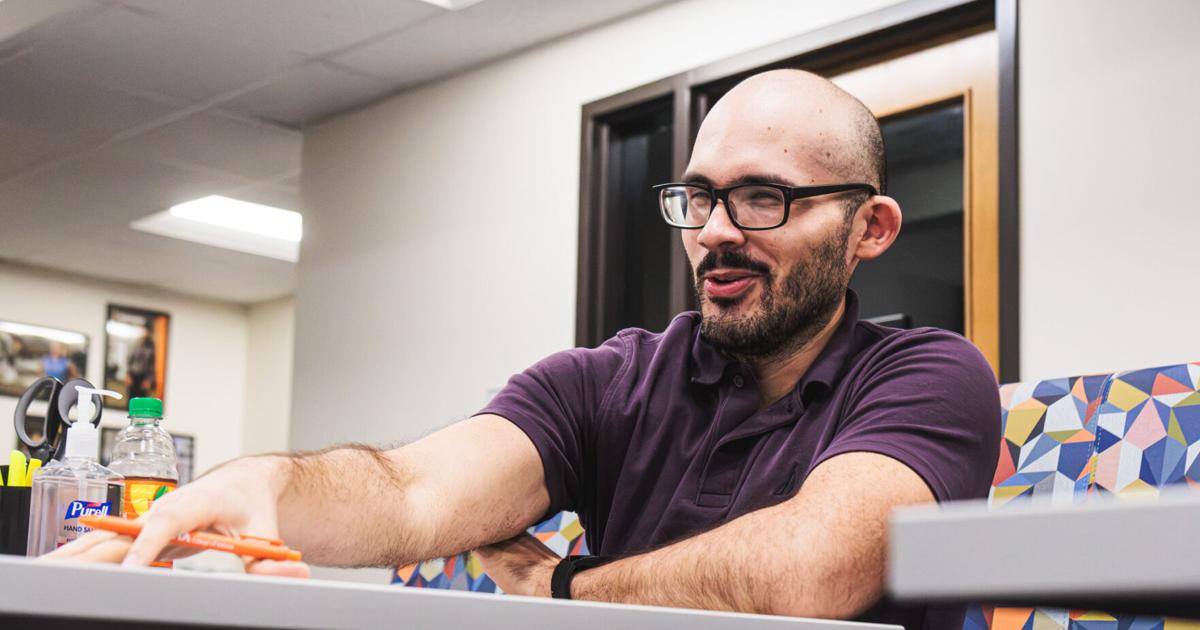

Manuel Chavez, quantitative biology doctoral candidate, speaks during GradChats: Grad School Mythbusters on Oct. 26 in Science Hall. Chavez said the event gave graduate students the opportunity to connect and recognize that they were not alone.
The Empowerment, Development and Growth in Education Center hosted GradChats: Grad School Mythbusters on Monday in Science Hall.
The event was another way the center prepares students for their next step in education.
EDGE Center coordinator Catalina Molina said grad school is another pathway to elevate one’s career, both in practice and in knowledge.
“It’s to find your specialization, to find your niche within your own industry,” Molina said.
UTA’s graduate school offers master’s programs, post master’s certificates and doctoral programs.
Molina said master’s programs are typically shorter than doctoral programs, lasting between one and three years depending on the program.
Doctoral programs are a step up from master’s programs, and one is not required to obtain the other. She explained the process as determining what one wants from a career before choosing to pursue a master’s, doctorate or both.
“Typically, people with PhDs go into either higher-level management leadership positions or they teach in the professoriate, and so it just depends,” Molina said.

Yaritza Martinez, electrical engineering master’s student, smiles during GradChats: Grad School Mythbusters on Oct. 26 in Science Hall. The event went over common myths about graduate school.
Classes in graduate programs are generally different from undergraduate courses. They happen later in the day and can have fewer assignments and higher percentages in the grade value.
“In my graduate school experience, I would work my GA shift during the daytime, and then all my classes started at 4,” Molina said.
The first step toward applying to graduate school varies, she said. If a student goes to the EDGE Center, Molina said they might defer the student to an admissions adviser within their graduate program of choice. She also recommends students check out the university’s graduate school website for more information.
“If students are interested in learning more about the program itself, I would say reach out to students who are currently in the program, or the graduate coordinator,” she said. “Typically, there is a coordinator that oversees the program and the students and helps them transition into grad school life moving forward.”
Molina said asking questions is the biggest thing for students looking into graduate school.
“Never be afraid to send the email to the graduate adviser or the graduate coordinator or maybe a potential professor that you want to study with,” she said.
@j.e.journalism