
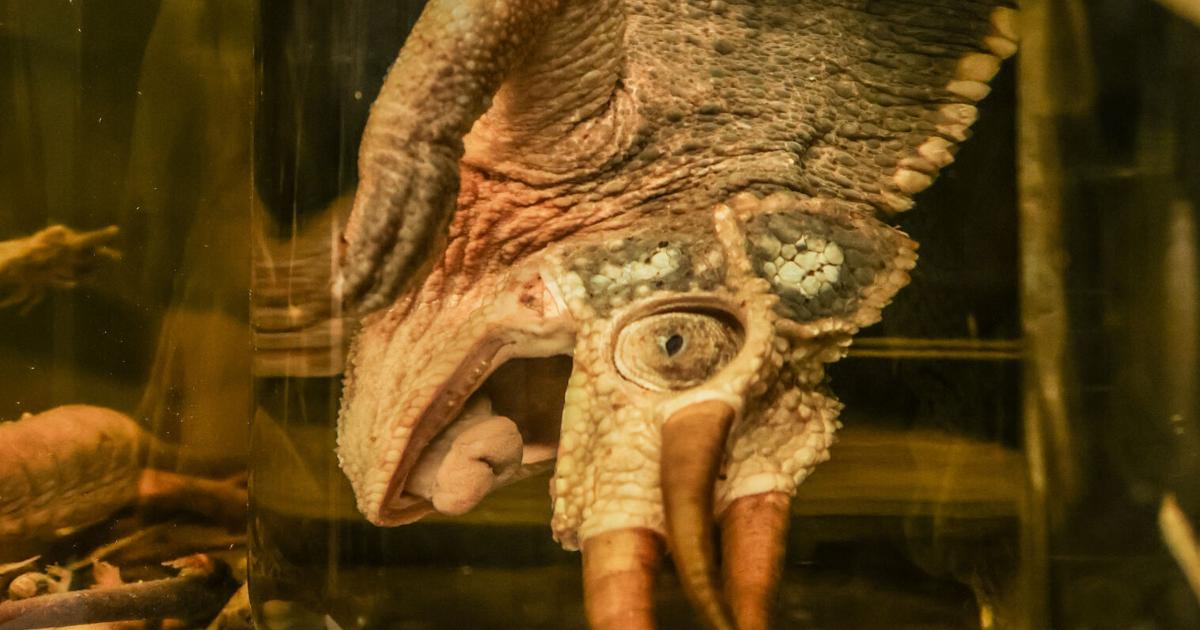

A preserved horned chameleon sits in a jar during the Night at the Museum event Oct. 21, 2025, at the Amphibian and Reptile Diversity Research Center.
The annual Night at the Museum tour of the Amphibian and Reptile Diversity Research Center will feature reptile and amphibian specimens at 6 p.m. Thursday.
Hosted by UTA’s Herpetology Club in collaboration with the research center, the event will give students a look at the various specimens housed in the center. The research center has more than 200,000 specimens from about 90 countries, making it one of the largest collections in Texas, according to its website.
The tour will last about two hours and will be capped at thirty people due to limited space inside the museum, said Greg Pandelis, collections manager and biological curator for the center and Herpetology Club adviser. If more attendees come, he said they might split the tours.
Pandelis said the event will open the research center to the public for a tour of the museum.
“The goal is to show folks why it’s important to have these research museums,” Pandelis said.
Herpetology Club President Waylon Shinn said the event will allow students to see a glimpse into the world of herpetology, from preserved sea turtles to larger specimens like crocodiles.
“We have some very, very unique specimens that the public doesn’t usually get to see,” Shinn said.
The center and its specimens are a “hidden gem” not many students know about, he said.
“It’s a resource that students are able to take advantage of if they want to do research, if they want to get involved in science,” Shinn said.
Pandelis said people might be surprised by the active research conducted at the center and the knowledge gained from the preserved specimens.
“Everyone thinks it’s cool to see an interesting snake or Komodo dragon,” he said. “But the amount of active knowledge that we gain from these specimens and the number of scientific publications that are constantly coming out using the specimens is something that I think surprises people.”
@atclements03