
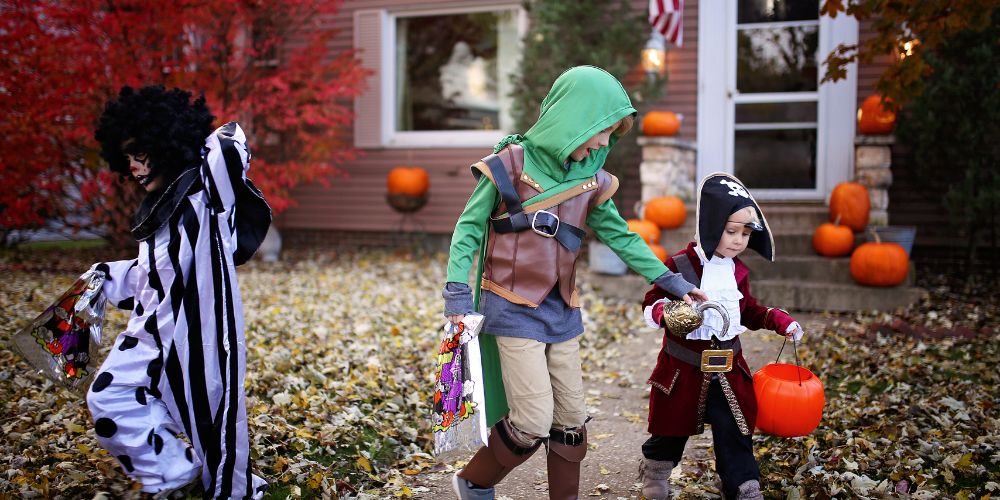
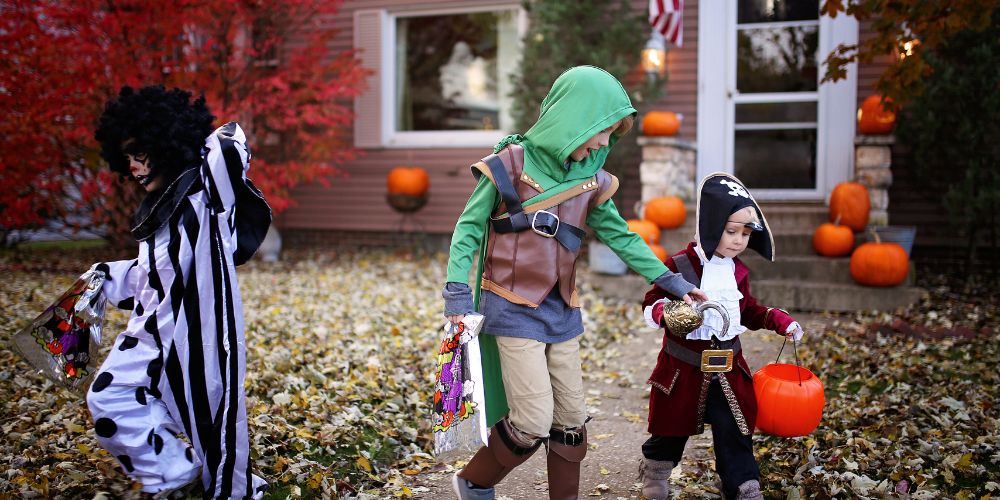
 UTA nursing expert shares tips to keep trick-or-treaters safe. (Adobe Stock)
Halloween means cool costumes, spooky stories and trick-or-treating fun. But safety should always remain top of mind. Children are more than twice as likely to be struck and killed by a vehicle on Halloween than on any other day of the year, according to Safe Kids Worldwide.
That’s why Jennifer Roye, a nursing expert at The University of Texas at Arlington with more than 16 years of emergency department experience, says pedestrian safety should be parents’ top concern during trick-or-treating.
“A lot of what we saw in the ER were falls, cuts, sprains and bumps to the head. Costumes that are too long, masks that make it hard to see, and kids running around in the dark can all contribute,” said Dr. Roye, assistant dean for simulation and technology and clinical associate professor at UTA’s College of Nursing and Health Innovation.
“But the bigger concern is pedestrian injuries because kids can be excited and dart into the street without thinking.”
Roye shared safety insights and best practices to ensure the holiday stays memorable for the right reasons. Her advice comes as approximately 3,200 Halloween-related injuries are treated in U.S. hospital emergency departments each year, according to the U.S. Consumer Product Safety Commission.
What’s your advice to ensure a safe and fun Halloween?
Roye: Plan ahead, slow down and make sure kids can see and be seen. Check the costume before you leave the house, supervise younger kids, use crosswalks and remind older kids to put their phones away while they are walking. Check treats before they start eating them, especially if there are allergies or choking concerns. A few simple precautions can keep Halloween focused on the fun stuff: costumes, candy and making good memories.
How can parents reduce the risk of injuries that may be caused by costumes? Are masks or face paint generally safer?
Roye: The biggest thing is making sure the costume actually fits. It should be short enough that the child is not stepping on it, and they need shoes they can really walk in. I usually prefer face paint over a mask because masks can limit peripheral vision, but make sure the face paint is non-toxic and safe for skin. Reflective tape, glow sticks or a little light are also great because being seen is just as important as being able to see.
What concerns are there about Halloween candy? Any myths to be debunked?
Roye: Parents should take a look through the candy, but the things I worry about most are choking hazards, food allergies and damaged packaging. Small hard candies and gum can be a problem for little kids. There is a lot of worry every year about candy being intentionally tampered with, but the more common risks are much simpler: allergies, choking and kids eating way too much way too fast. I would also stick with commercially wrapped treats unless it is something from a person you know and trust.
What first-aid items should people make sure they have before Halloween?
Roye: You don’t need anything fancy. A basic first-aid kit with bandages, gauze, antiseptic wipes, tape, an instant cold pack and gloves is plenty for most minor problems. If your child has asthma or a serious food allergy, make sure their inhaler or epinephrine auto-injector is with you and easy to get to. I would also add a flashlight and a fully charged phone to the list.
What injuries should come to the ER? What can be handled at home?
Roye: Minor scrapes, small cuts and mild bumps can usually be handled at home with basic first aid, ice and a little observation. I would want a child to be seen in the ER for trouble breathing, passing out, a significant head injury, bleeding that will not stop, a deep cut, a serious burn or an obvious deformity. And if a child is very sleepy, confused, vomiting repeatedly, or just does not seem like themselves after an injury, that is a reason to get them checked out.
About The University of Texas at Arlington (UTA)
The University of Texas at Arlington is a growing public research university in the heart of Dallas-Fort Worth. With a student body of over 42,700, UTA is the second-largest institution in the University of Texas System, offering more than 190 undergraduate and graduate degree programs. Recognized as a Carnegie R-1 university, UTA stands among the nation’s top 5% of institutions for research activity. UTA and its 300,000 alumni generate an annual economic impact of $28.8 billion for the state. The University has received the Innovation and Economic Prosperity designation from the Association of Public and Land Grant Universities and has earned recognition for its focus on student access and success, considered key drivers to economic growth and social progress for North Texas and beyond.