
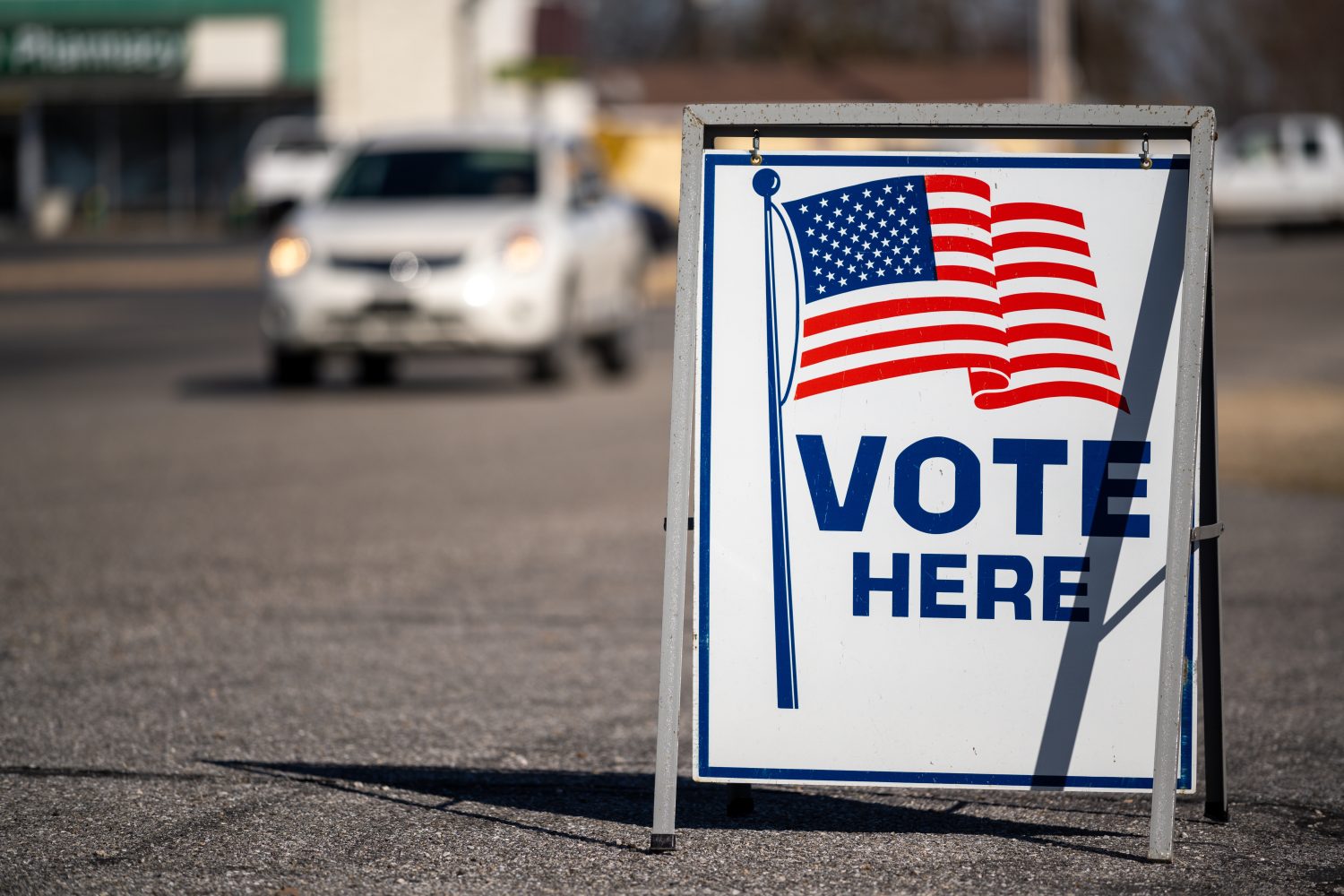
Dallasites are turning out in record numbers after county officials added voting centers and expanded polling hours. But is it all about more ballot boxes?
Voters in Dallas County set a new record on the first day of early voting last week. Election officials reported 76,079 votes cast on the first day, more than a 30% increase from the 2024 presidential election and far exceeding the previous record, set in 2020. As of 5:30 p.m. Tuesday, 416,023 mail-in and in-person votes had been tallied, representing 27% of Dallas County’s 1,493,955 registered voters, according to the Texas Secretary of State.
The ballot features a mix of prominent statewide and local issues for residents to decide. County officials are asking for a tax increase to fund about $100 million annually in homeless services, while the city of Dallas is seeking a $443 million public safety bond that some say could pave the way for relocating City Hall.
But the biggest questions facing voters involve contested midterm races, including what is expected to be an extremely close Senate race between GOP Attorney General Ken Paxton and James Talarico. Gina Hinojosa has also gained ground on incumbent Gov. Greg Abbott as she seeks to become the first Democrat to hold the office since Ann Richards in 1994, polling shows.
Sign up for the This Week’s Top Stories newsletter to get the latest stories delivered to your inbox
THANK YOU!
You’re all set.
CLOSE
Statewide turnout has also reflected high voter enthusiasm, although overall numbers have lagged behind the 2018 cycle, when Beto O’Rourke challenged incumbent Republican Sen. Ted Cruz. Counting mail-in and in-person votes, over five million Texans have voted through Tuesday night, representing roughly 26.3% of the state’s registered voters. Harris, Travis, and Bexar (Houston, Austin, and San Antonio) counties all set first-day records for nonpresidential elections and remain ahead of the 2022 midterm election, while Dallas remains just behind 2024 figures.
In a Facebook post, the Dallas County Democratic Party quickly credited local officials for their actions leading up to the election.
“When voters have access, turnout SURGES,” the post reads. “Thanks to our County Commissioners, we’ve expanded voter access across Dallas County to add more early voting locations.”
What Dallas County did
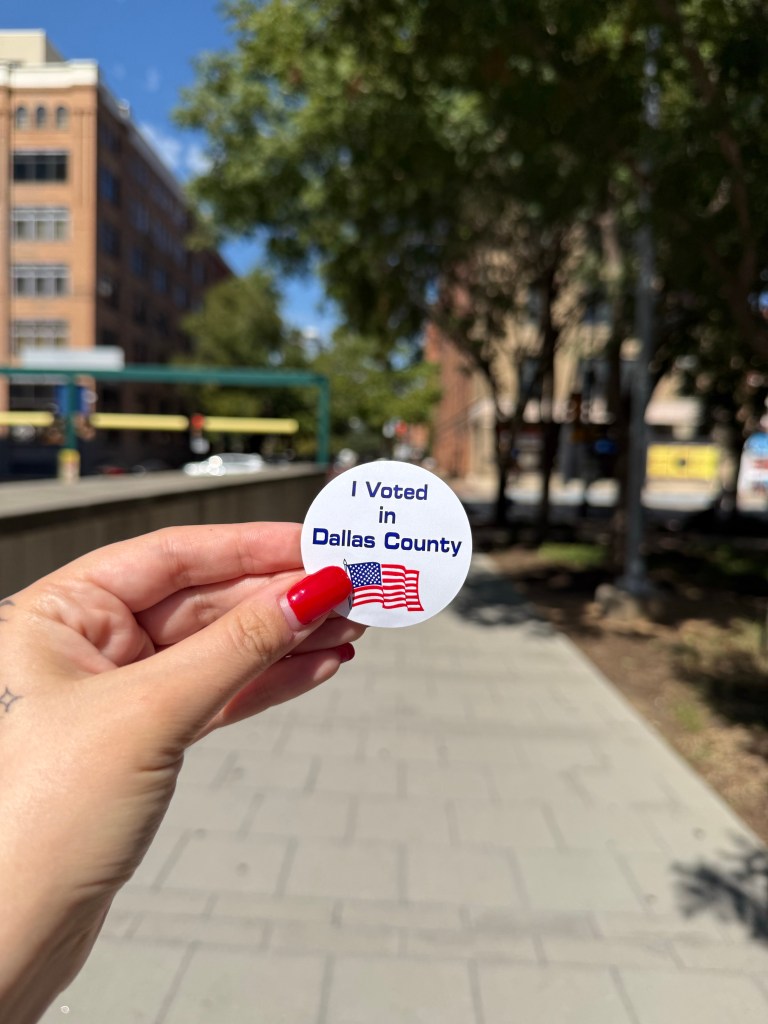 The county also keeps it simple with a traditional, effortless design.
Dallas County voters currently have over 84 early voting centers available this October, a number the Commissioners Court approved in early September. That’s up from 73 in the March primary, which was marred by voter confusion amid a Republican-driven move to precinct-based voting on Election Day, and more than a 62% increase from the last midterm in 2022, when the county operated 52 early voting centers.
District 2 Commissioner Andy Sommerman, a Democrat who is up for reelection, told the Observer on a phone call that adding polling places is about “access to Democracy”
“We’ve given people a lot of access to places where they would find comfort in where they voted, whether that be in a public building or in a Christian church or in a Hindu temple or in a Jewish temple or in a mosque,” Sommerman said. “Whatever your comfort level is, we’ve got it for you.”
Dallas County also bolstered on-site security and expanded voting hours in 2024. During the first week of the presidential election, voting centers were open from 8 a.m. to 5 p.m., which he said hurt working residents’ ability to make time in their busy schedules. This year, voting centers will be open from 7 a.m. to 7 p.m. six days a week, as hours are still reduced on Sunday.
Their efforts have paid off, he said, as Dallas County had tallied fewer than 20,000 early votes and mail-in ballots compared to the same period in 2024 as of Tuesday, making this election an outlier in midterm cycles.
“It’s been terrific,” he said.
Sommerman pointed out that the county invested $1 million in voter outreach to avoid the Election Day confusion seen in the March primaries, which he attributed to the county GOP’s push to make voters cast ballots at their assigned voting precincts, rather than the traditional countywide system. Along with a media campaign, Dallas County mailed each resident a voter information packet.
A Dallas Morning News analysis also found that more than 30 early voting centers are now less than a half-mile away from DART bus stops or train stations. County Judge Clay Lewis Jenkins, another Democrat running for reelection, said officials are trying to meet people where they are.
“You’re looking for proximity to the voters,” Jenkins said. “You’re keeping in mind that in some neighborhoods, it’s almost everyone has a car, but in other neighborhoods, that’s not the case. You want those polling places to be, you know, approachable by transit or just closer to people.”
He said there have been no issues at voting centers so far, aside from minor equipment problems that have been quickly resolved.
Jenkins added that residents can visit dallascountyvotes.org to view a sample ballot based on their registered residence and find an interactive map showing wait times at voting centers around the county, which will remain in place through Election Day.
“I understand we have all this gerrymandering and other negative things happening in politics, but it is important for everyone to make their voices heard, and we’re seeing that happen in this election,” he said.
Counterpoint: Tarrant County
 A recent UT Austin poll reported Talarico leading Paxton by three points in the Senate race.
A 2024 ABC analysis found that from 2012 to 2022, the last midterm cycle, the U.S. lost over 27,000 polling places. And losing those locations hurts: a 2020 study published in the American Economic Journal found that for every quarter-mile increase in distance to a polling place, ballots cast fell by 2% to 5%.
To the immediate west of Dallas, officials in traditionally Republican-leaning Tarrant County controversially cut nearly 100 polling places after unexpected victories by Fort Worth Democratic candidates such as Taylor Rehmet earlier this year. They also eliminated three early voting locations. Tarrant County GOP officials said they were necessary due to budget constraints, while Democrats argued the move amounted to voter suppression.
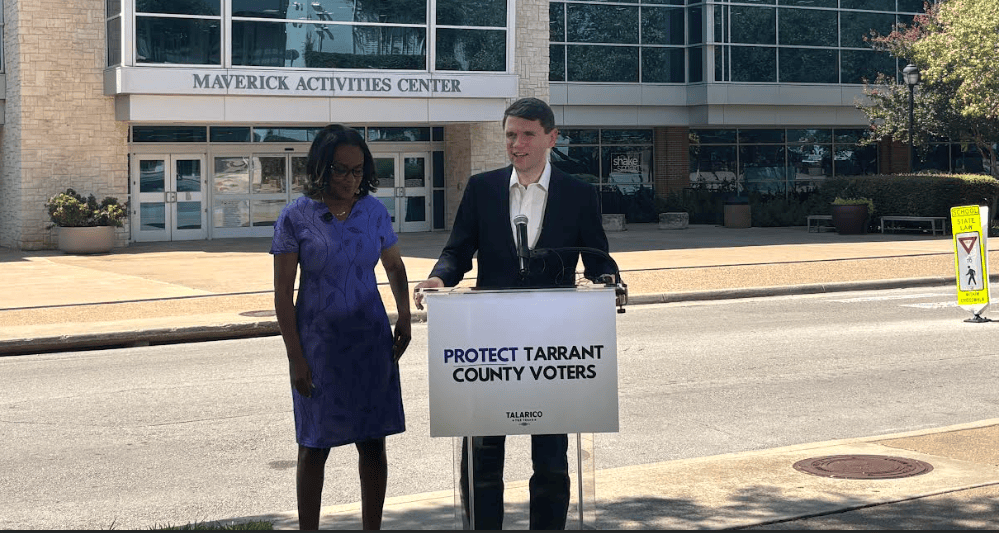
The reduction followed county commissioners’ citation of explosive population growth in Tarrant County to justify an unprecedented middecade redistricting effort that many Democrats decried as gerrymandering in an increasingly purple area. At a press conference in August, Democratic Commissioner and county judge candidate Alisa Simmons pointed out what seemed like a contradiction.
“If you redistricted on the basis that this county is growing, the population is growing,” Simmons said. “If that is your premise, why are you slashing the number of election voting centers for your constituents?”
But even with the reductions, Tarrant County voters are still getting out to vote, as Simmons and other Democrats organize polling-place transportation and voter-education efforts. According to Tuesday data from the Texas Secretary of State, 387,173 in-person and mail-in votes have been cast thus far, representing a turnout rate of 31.52% of registered voters in the county, more than four points higher than Dallas County figures.
Cal Jillson, a political science professor at SMU, said that while increased access may be contributing a small amount to Dallas County turnout, the real driver is increased voter enthusiasm across Texas and in counties like Tarrant.
“Democratic voters feel like they’ve been beaten about the head and shoulders for the last couple of years, and the first opportunity to register their active dissent is something that they’ve been waiting for, and the fact that the economy is not where most citizens and voters would like to see it,” Jillson said.
He added that the MAGA base is likely to support what he describes as a Republican ticket that is “so weak” at the top between scandal-ridden Paxton and longtime incumbent Abbott. Moderate Republicans who voted against Paxton and independents are less likely to support the incumbent party, he added, as is typical in midterm elections.
Jillson said the turnout split between traditionally rural and suburban areas and urban centers is encouraging for Democrats through the first week. For them to succeed when the final ballot is tallied, he added, urban counties like Dallas and especially Tarrant will have to keep voting.
“Tarrant County is very closely balanced, but moving in a Democrat direction, and that’s important for Democrats statewide because they need to maximize their turnout and their vote share in the major cities,” he said.