
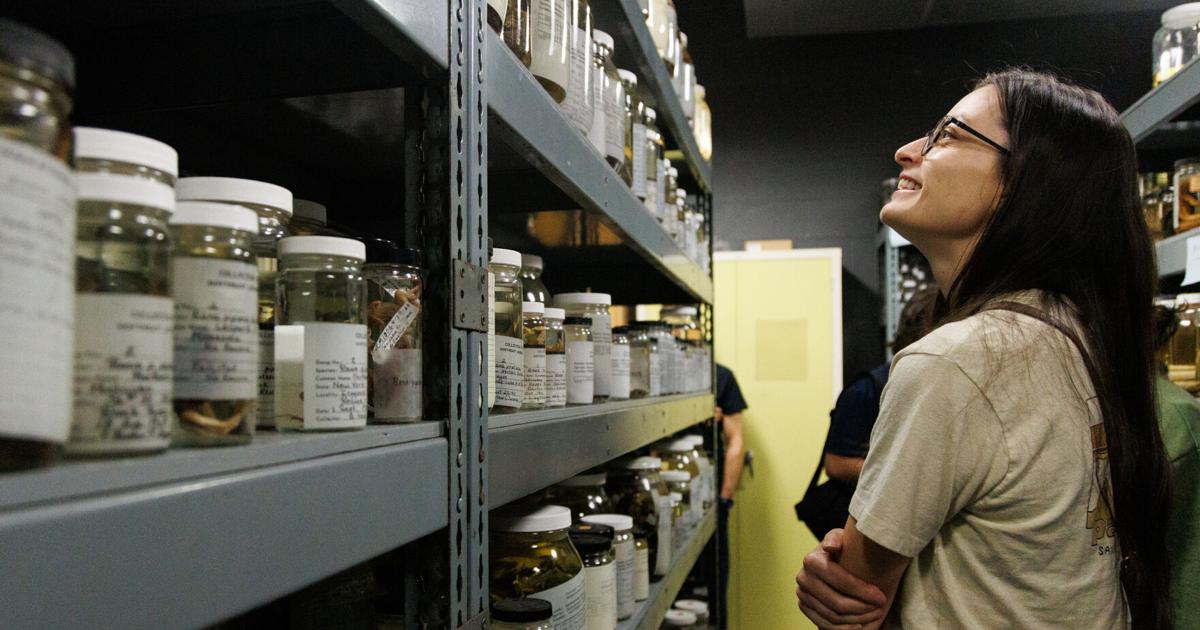

Farmers Branch, Texas, resident Marissa Prizio, 29, looks at the amphibians and reptiles on display during the Night at the Museum event Oct. 29 at the Amphibian and Reptile Diversity Research Center. Prizio said she was interested in different types of reptiles.
The Herpetology Club hosted its Night at the Museum event Thursday, offering a free tour of the Amphibian and Reptile Diversity Research Center.
The center collects specimens and literature for use in research. Greg Pandelis, collections manager and biological curator, said the center is typically only open for scientists but is opened to the public once a semester to show the importance of research museums.
Pandelis said he wants people to understand what they use the specimens for.
“It’s not just a specimen in a jar,” he said. “It’s all of this data and photographs and tissue samples and everything that go with that specimen.”
Pandelis took attendees through the specimen preparation room, the library and storage rooms containing shelves of preserved amphibians and reptiles in jars.
Farmers Branch, Texas, resident, Marissa Prizio, 29, said she’s interested in reptiles and amphibians — specifically frogs and toads. She said she loves their songs and how calm they are.
Close
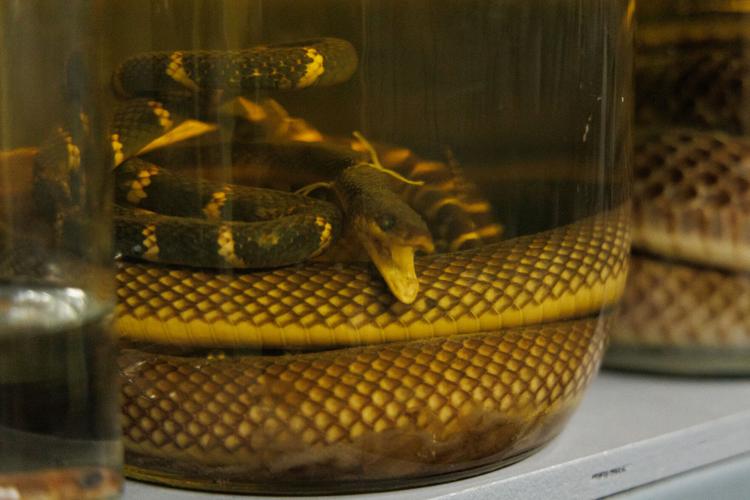
Snakes sit in a jar during the Night at the Museum event Oct. 29 at the Amphibian and Reptile Diversity Research Center. The center has one of the world’s most comprehensive libraries for herpetology literature.
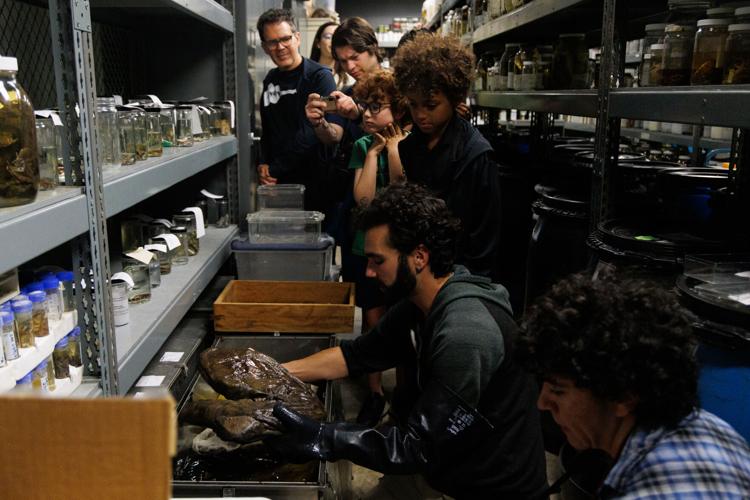
Greg Pandelis, collections manager and biological curator, shows off a salamander specimen during the Night at the Museum event Oct. 29 at the Amphibian and Reptile Diversity Research Center. The center has over 200,000 specimens from about 90 different countries.
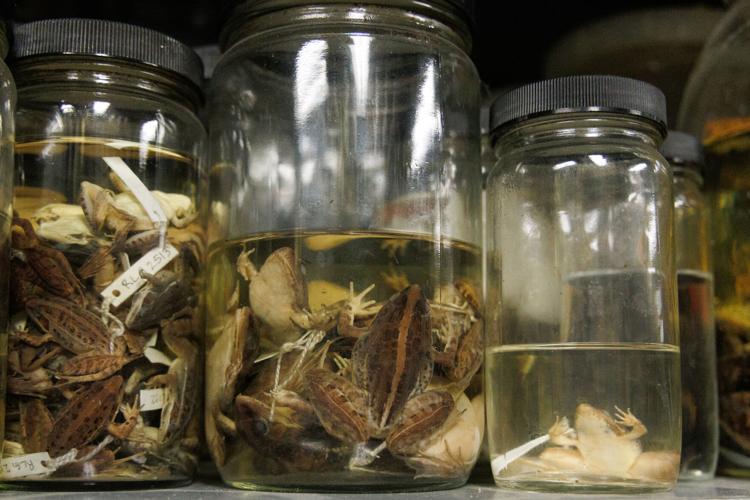
Different types of frogs sit in a jar during the Night at the Museum event Oct. 29 at the Amphibian and Reptile Diversity Research Center. The specimens are used for research.
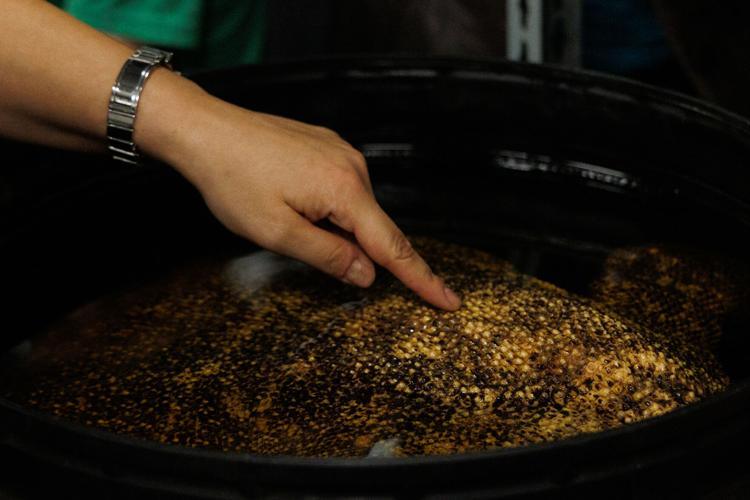
An attendee touches an amphibian specimen during the Night at the Museum event Oct. 29 at the Amphibian and Reptile Diversity Research Center. The center offers students the chance to be involved with the curation of museum specimens and resources.
Snakes sit in a jar during the Night at the Museum event Oct. 29 at the Amphibian and Reptile Diversity Research Center. The center has one of the world’s most comprehensive libraries for herpetology literature.
Greg Pandelis, collections manager and biological curator, shows off a salamander specimen during the Night at the Museum event Oct. 29 at the Amphibian and Reptile Diversity Research Center. The center has over 200,000 specimens from about 90 different countries.
Different types of frogs sit in a jar during the Night at the Museum event Oct. 29 at the Amphibian and Reptile Diversity Research Center. The specimens are used for research.
An attendee touches an amphibian specimen during the Night at the Museum event Oct. 29 at the Amphibian and Reptile Diversity Research Center. The center offers students the chance to be involved with the curation of museum specimens and resources.
Prizio said she was excited to see the extinct golden toad, a species she thought she’d never see after learning of their extinction when she was younger.
“I remember reading a book about those when I was little and being upset about it,” she said. “Now I get to see them, not exactly the way I want to, but still pretty cool.”
The scale and variety in the museum surprised Prizio and she said she now realizes how many species need to be protected and preserved.
According to the International Union for Conservation of Nature’s Red List of Threatened Species, 41% of amphibian species are threatened with extinction, making them the most threatened vertebrate group. Many reptile species are also threatened, with 21% of them on the list.
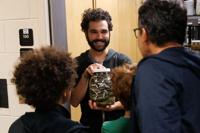
Greg Pandelis, collections manager and biological curator, shows off amphibians during the Night at the Museum event Oct. 29 at the Amphibian and Reptile Diversity Research Center. Pandelis said he believes sharing the research opportunities with the specimens is important.
Alazjah Tates, biology freshman and member of the herpetology club, said she’s familiar with mammals but wants to learn more about reptiles and amphibians. As she potentially leans toward herpetology, Tates said the prospect of working with the center excites her.
Pandelis said the center frequently works with undergraduate students who may be interested in herpetology as a career. He said there are research courses where biology students can get involved with the curation of the museum specimens and resources.
“This is really like the fundamental source of all our knowledge of biodiversity, life on Earth as we know it,” Pandelis said. “Sharing that information with people that these are dynamic research specimens that are being constantly used to further our understanding of biology is really important.”