
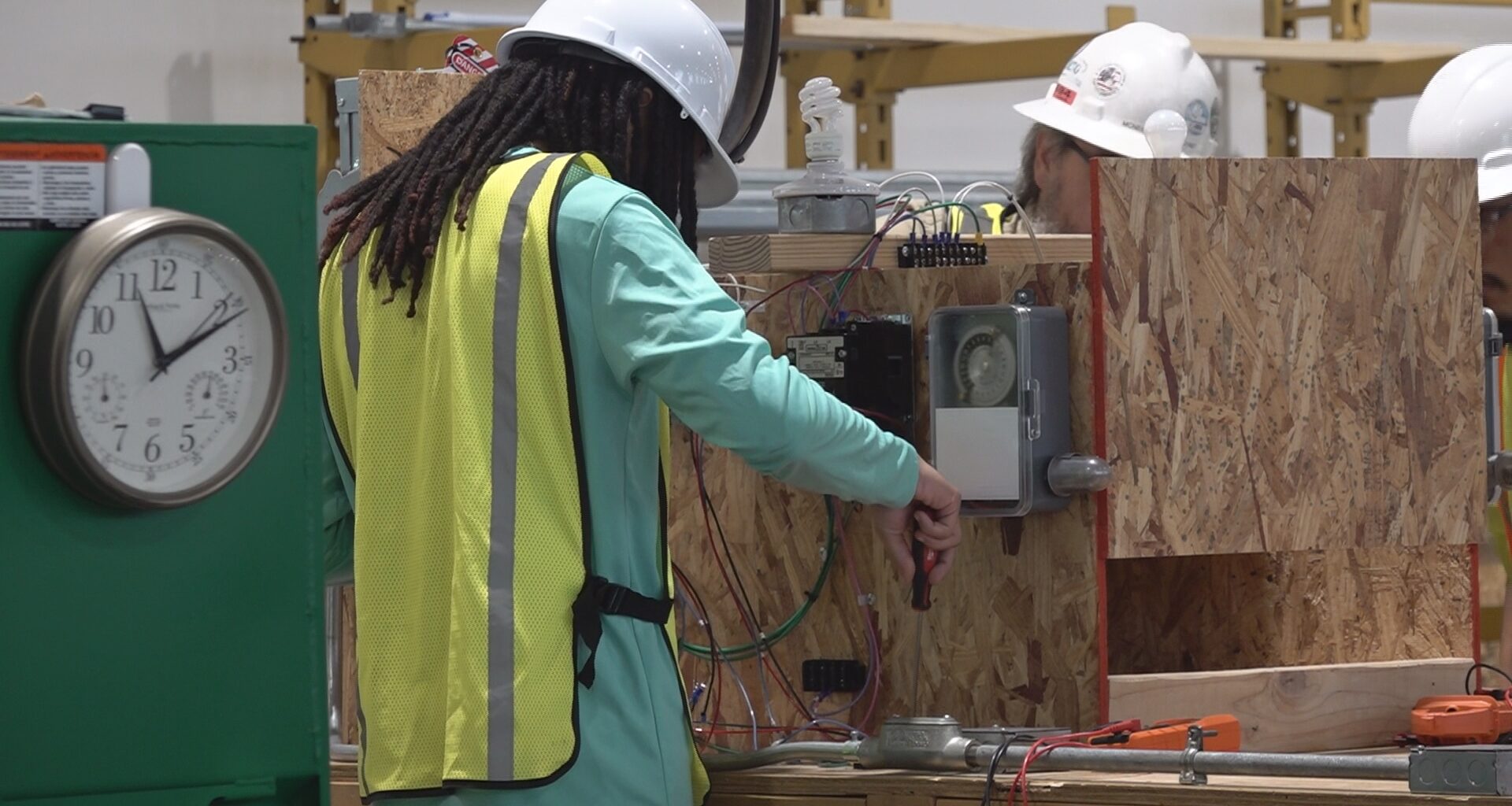
Texas State Technical College is partnering with the state to help Electrical Construction students qualify to take the journeyman electrician exam sooner.
WACO, Texas — Texas State Technical College is partnering with the Texas Department of Licensing and Regulation to help students in its Electrical Construction associate degree program qualify to take the state journeyman electrician exam sooner, as Texas and the nation face growing demand for skilled electrical workers.

This story continues below.
Students at TSTC’s Waco campus are expected to become eligible to take the exam as early as 2027 under the new pathway. The program is the first in the country to align an Electrical Construction associate degree with journeyman licensing requirements, according to TSTC.
The U.S. Bureau of Labor Statistics projects employment of electricians will grow 9% from 2025 to 2035, much faster than the average for all occupations. About 72,700 openings are projected annually nationwide over that period, with many resulting from workers retiring or leaving the occupation.
“There is a severe gap between the electricians retiring and the ones coming into the industry,” said Karla Flanagan, TSTC’s associate vice chancellor for instructional alignment and innovation. “TSTC is here to help.”
How the new licensing pathway works
Typically, aspiring journeyman electricians need 8,000 hours of on-the-job training to qualify to take the state exam.
Under the new partnership, the state will recognize the competencies, knowledge and skills students gain through TSTC’s Associate of Applied Science degree in Electrical Construction as equivalent to 4,000 hours of on-the-job training.
Students must complete the associate degree to receive that credit and qualify to take the exam. They must still complete the remaining 4,000 hours of industry experience and meet the state’s other licensing requirements before becoming licensed journeyman electricians.
“They have to go out into industry to actually complete the remaining hours,” Flanagan said.
The pathway is part of the Texas Department of Licensing and Regulation’s Journeyman Electrician Education Program, which aims to address the state’s shortage of licensed journeyman electricians.
“Input from TSTC and other stakeholders helped TDLR develop a rigorous, hands-on pathway that maintains safety and professional standards,” said Caroline M. Espinosa, the department’s director of strategic communications.
TSTC’s existing Electrical Construction certificate program also provides a pathway for students to take the state residential wireman electrician exam. Flanagan said the college encourages certificate students to continue into the associate degree program to expand their career opportunities beyond residential wiring.
Funding and industry partnerships
In May, Gov. Greg Abbott and BlackRock leaders announced a three-year, $30 million investment in the future of electrical work in Texas through the BlackRock Future Builders Initiative, funded by The BlackRock Foundation.
TSTC will receive a portion of that investment to expand its associate degree program. The funding will support additional instructional capacity, equipment and scholarships for eligible students.
Flanagan said industry partners also help the college by providing work placements, contributing to curriculum development and hiring graduates.
“They are hiring our students, most importantly,” Flanagan said. “That’s our biggest partnership with our industry partners and other folks.”
James Macik, field operations director at Waco-based Nemmer Electric Datacom AV and a member of TSTC’s Electrical Construction industry advisory panel, said finding enough workers can be difficult when demand increases.
Macik said his company uses temporary staffing agencies to help fill gaps on jobs, sometimes reaching beyond the Waco market to Dallas and Austin. Recruiting electricians from farther away can increase costs, including travel allowances.
Scott Norman, CEO of the Texas Association of Builders, said the shortage of electricians can affect construction schedules and costs. When homebuilders lose experienced electricians to other projects, some jobs may be delayed by at least two months, he said.
“A strong, skilled workforce is critical to keeping homes affordable, supporting Texas’ economic growth, and meeting the state’s rapidly expanding infrastructure demands,” Norman said.
Texas faces continued demand for electricians
The Texas Workforce Commission projects a need for more than 87,400 electricians through 2034, with an average of more than 8,100 annual openings in the state.
Nationally, the Bureau of Labor Statistics says electricians will continue to be needed to install and maintain electrical systems in homes, businesses and factories. Increasing demand for electricity, including the power needed for data centers and other infrastructure, is also expected to create job opportunities.
TSTC plans to introduce the new journeyman exam pathway at its Waco campus in 2027 before expanding it to other campuses across Texas.
The college says the goal is to prepare more qualified workers for the electrical industry while giving students a more direct route toward professional advancement.
Registration for TSTC’s spring semester is open. More information about its Electrical Construction program is available at TSTC.edu.