
We recently published in two parts,”Big, tasty Austin Tex-Mex history: 40 restaurants that shaped the city’s food culture.” Readers ate it up. More than a dozen early purveyors of Mexican food, however, did not make it into the big story. Retired city planner Jim Duncan, who has researched some 650 short Austin business histories, could not let that stand. This week we continue to present additional Tex-Mex histories, some suggested by fans of this series, others updated from previous compilations. – Michael Barnes
Casa Garcia’s Mexican Restaurant & Cantina
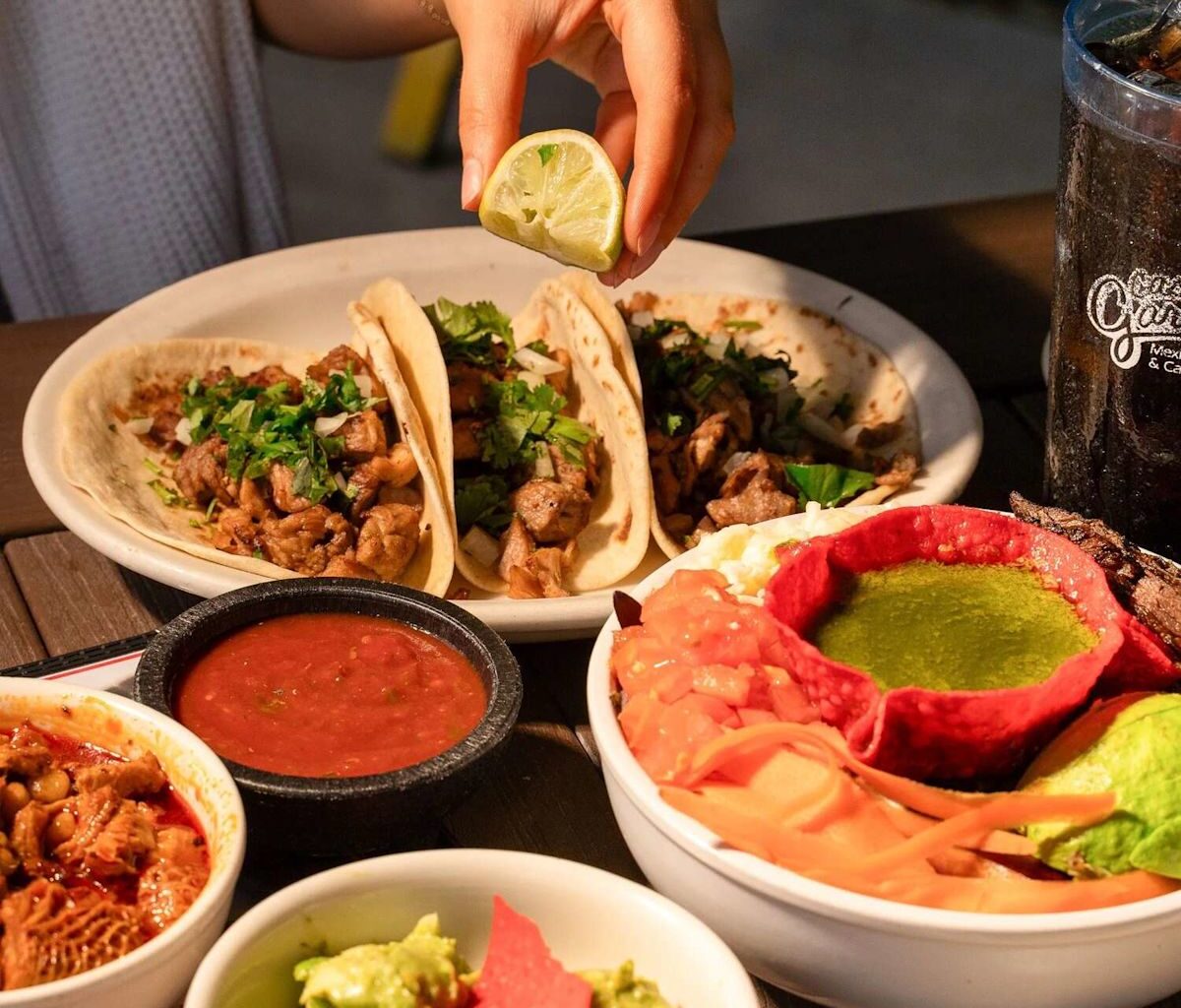
After its first two restaurants opened in South Austin, Casa Garcia’s went on a suburban spree and opened six more restaurants throughout Central Texas. (Casa Garcia’s)
After its first two restaurants opened in South Austin, Casa Garcia’s went on a suburban spree, opening six more restaurants throughout Central Texas. Founded by Jay Garcia and his wife, Patricia, who are part of the family that also owns Dario’s on Interstate 35, Casa Garcia’s has shown steady growth over the past quarter-century.
Their first restaurant was located at 1901 William Cannon Drive in the Town Square Shopping Center in 1999, and the second was at 1000 South Lamar Blvd. in the Lamar Plaza Shopping Center in 2002.
They were followed by suburban restaurants in Pflugerville, Round Rock, Kyle, Leander, Manor and New Braunfels.
When the South Lamar cafe opened, a Statesman columnist noted that, if past was prologue, the location was probably “doomed, with a long parade of restaurants passing through, none of them staying very long.” That prophecy became reality, but for a different reason. In 2012, the restaurant was displaced by Lamar Union, a vertical mixed-use development promoted by the city. All the other Casa Garcia’s are still open.
Walker’s Austex Chili
Austin had very little manufacturing during the early and mid-20th century. One exception was the Austex Chili plant on West Third Street near Republic Square Park. Along with a spinach-packing plant, it was the center of an agribusiness hub in a part of downtown known as “Mexico” because of its Hispanic residents. (Austin History Center ND 48a05707)
When buying canned chili, the only decision Austinites once had to make was “with or without beans,” because the brand was almost always “Austex.”
While Thomas Bailey Walker is usually given credit for having created Austex Chili in 1910, kudos should also go to banker and entrepreneur Frederick William “Fred” Catterall. While Thomas founded Walker Manufacturing and quickly became one of the nation’s largest packers and dealers of canned Mexican foods – chili, tamales and beans – he had to declare bankruptcy in 1914 with debts of more than $1 million. Fred rescued the business and continued to operate it under the Walker brand.
He added “Austex” to the name in 1931. Thomas died in 1922 at the age of 46. Austex offices were at 310 San Antonio St. near Republic Square (now a state garage) and its plant was at 500 West Fifth St. (where the Federal Courthouse now stands). At the time, the neighborhood was largely populated by Mexican-Americans, and thousands of new immigrants were able to launch their American dream in Austin by working for Austex.
In 1961, Austex merged with Frito-Lay, which started a series of subsequent mergers with Riviana Foods, Castleberry Foods and Bumble Bee Foods.
Wick Fowler’s 2-Alarm Chili
Wick Fowler in chili cooking contest. (Jerry Click/Houston Post)
While Homer Thomas Wilson “Wick” Fowler was a respected journalist, columnist and humorist, his most enduring legacy was a food product. After an illustrious career as a war correspondent during World War II, which included landing at Anzio, following Patton into Germany, and entering Tokyo Bay on the USS Missouri, Wick returned to Austin and, in 1964, invented 2-Alarm Chili.
Three years later, his chili sales shot up after winning the first International Championship Chili Cookoff in Terlingua. After Wick died of Lou Gehrig’s disease in 1972, his son Gordon took over and, operating from a 10,000-square-foot warehouse at East Fourth and Brazos streets, turned it into a multi-million-dollar national business – Caliente Chili Company.
In 1983, Gordon sold Caliente to Noxell, makers of Noxzema and Cover Girl skin lotions, who moved it to a larger 20,000-square-foot warehouse at 208 Nueces St. In 1990, Consumer Reports named 2-Alarm as the nation’s top chili. That same year, Noxell sold Caliente to Reilly Foods in New Orleans, where it relocated its production operations. Gordon moved on to other interests, such as opening La Zona Rosa, a popular restaurant and nightclub, and painting landscapes.
Virginia’s Cafe / Torchy’s
Torchy’s Hillbilly queso stands out with chorizo, cotija cheese and chunks of guacamole. (Ana Gutierrez / Austin American-Statesman)
Beyond the lower end of what was once known as “Tex-Mex Mile” on South First Street is a small, unpretentious frame building that has played an outsized role in Austin’s restaurant history. Few places have contributed more to the eclectic palate of Austinites than 2809 South First St.
From 1965 to 1993, it was the home of the legendary Southern homestyle eatery Virginia’s Café, and from 2008 to 2019, it was the first brick-and-mortar home for one of Austin’s most successful food truck startups, Torchy’s Tacos.
In addition to these two local culinary icons, it has housed an espresso bar (ForRay’s), a cactus-infused Mexican cafe (El Nopalito), a Tex-Mex restaurant (Acuarios) and a high-tech pizza parlor (Show Me).
Its two prime tenants, however, could not have been more different in their menus or aspirations. Virginia’s was known for its “meat-plus-three” menu and cantankerous owner and cook, Virginia Doherty, while Torchy’s is known for its innovative tacos and a 2016 Obama visit. While Virginia was growth-averse and limited her customer seating to only four tables and six barstools, Torchy’s was growth-driven and spawned a 140-eatery dynasty.
Late Statesman reporter Michael Corcoran once wrote: “One advantage that newcomers have is that they don’t know what Austin used to be. They can drive down South First without pining for Virginia’s Café.” Virginia died in 2007.
Previous stories in this Tex-Mex series
Big, tasty Austin Tex-Mex history, Part 1
Big, tasty Austin Tex-Mex history, Part 2
El Azteca, El Gallo, Las Manitas, Mi Madre’s
El Matamoros, Maudie’s, El Arroyo and more
Texas Chili Parlor, La Palapa, Fiesta Tortilla Factory
Güero’s, Mr. Natural and Camino Real have served for decades
Juan in a Million, Manuel’s and other local staples
This article originally published at Austin Tex-Mex history continues with Casa Garcia’s, Torchy’s and more.