
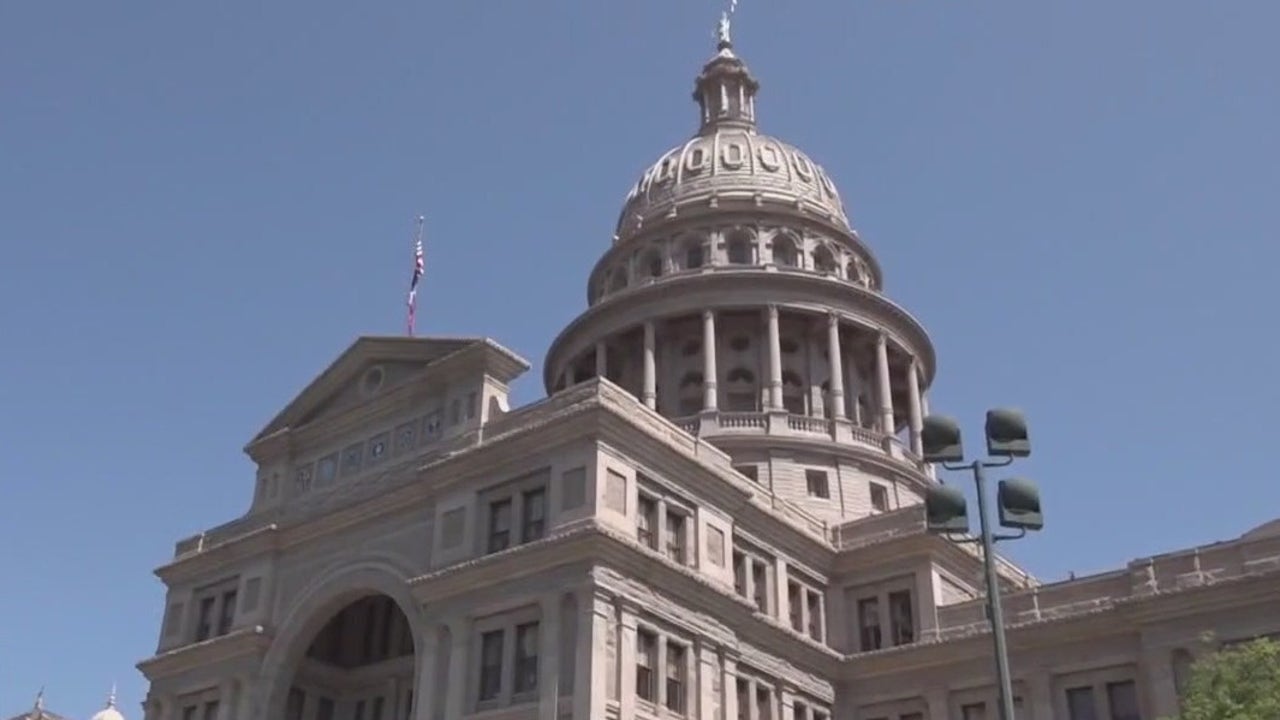
AUSTIN, Texas – A hearing at the Texas State Capitol Thursday was held to review new laws that clamp down on college campus protests, while also protecting free speech.
What they’re saying:
UT Austin has a new rule that restricts when and where protest events can be held.
A federal judge has that rule on hold, but at the State Capitol, a discussion was held Thursday regarding the complicated process of addressing speech.
“I think there is some thought by people that, you know, Hate Speech, you can’t. You can’t have on college campuses because the reality is if you get to define what hate speech is then nobody’s talking on college campus,” said State Rep. Jame Frank (R -Wichita Falls).
Members of a select joint House and Senate committee held their first hearing on Civil Discourse & Freedom of Speech in Higher Education. Amanda Cochran McCall, UT Austin’s Vice President for legal affairs, was asked about legal limitations on speech by State Sen. Bryan Hughes (R-Mineola).
“If it’s not inciting violence, defamatory, if it’s unconstitutional, it’s protected speech, right,” asked Hughes which Cochran-McCall said was correct.
The discussion turned to UT’s new rule that can prevent outside groups from organizing protest events on campus. Last year, pro-Palestine events became confrontational, raising questions about non-student agitators.
That brought up a question from state Rep. Richard Raymond (D-Laredo) regarding groups linked with violence. Raymond expressed concern that the Ku Klux Klan could go through a registration process and have an event on campus.
“So, prior to September 1 when we were a traditional public forum, yes, we would have had to let them come because we wouldn’t have had discretion to say outsiders, you can’t come on to our campus for your protest or your demonstration. After September 1, no,” said Cochran-McCall.
There is a legal loophole. An event organized by students, who are Klan members, can happen according to Cochran-McCall. That example played into questions about selective censorship.
“The point I want to make is that the context does matter. That’s right. So, it gives flexibility for both sides to make their arguments,” said State Sen. Cesar Blanco (D-El Paso).
That opportunity to say ‘no’ can be misused, according to some conservative student groups. There are claims that universities that have allowed targeting and canceled events on the claim they could be disruptive.
State Rep. Terry Wilson (R-Georgetown), who chairs the House Committee, wanted to know if there’s a sharing of security costs that’s part of the determination of whether UT allows a group to speak or not.
“No, we’re not going to penalize a group financially because they are presenting something that’s controversial,” said Cochran-McCall.
What’s next:
Select committees typically will hold a few more hearings and then write a report that could bring about some new legislation.
As part of this review, lawmakers want to see how a new ombudsman position over colleges will perform. They expressed concern when some students who testified said they do not feel it’s safe to voice opposite viewpoints in class and on campus.
It’s possible some type of legislation providing added protection could come in the 2027 session.
Dig deeper:
Former Texas State student Devion Canty Jr., who was caught up in a free speech case, reportedly was initially invited to testify, but was excused because of safety concerns, according to a story by the Texas Tribune.
Canty was kicked out of school after making a crude gesture about the Charlie Kirk assassination during a campus gathering earlier this year.
The Source: Information comes from reporting by FOX 7 Austin’s chief political reporter Rudy Koski