
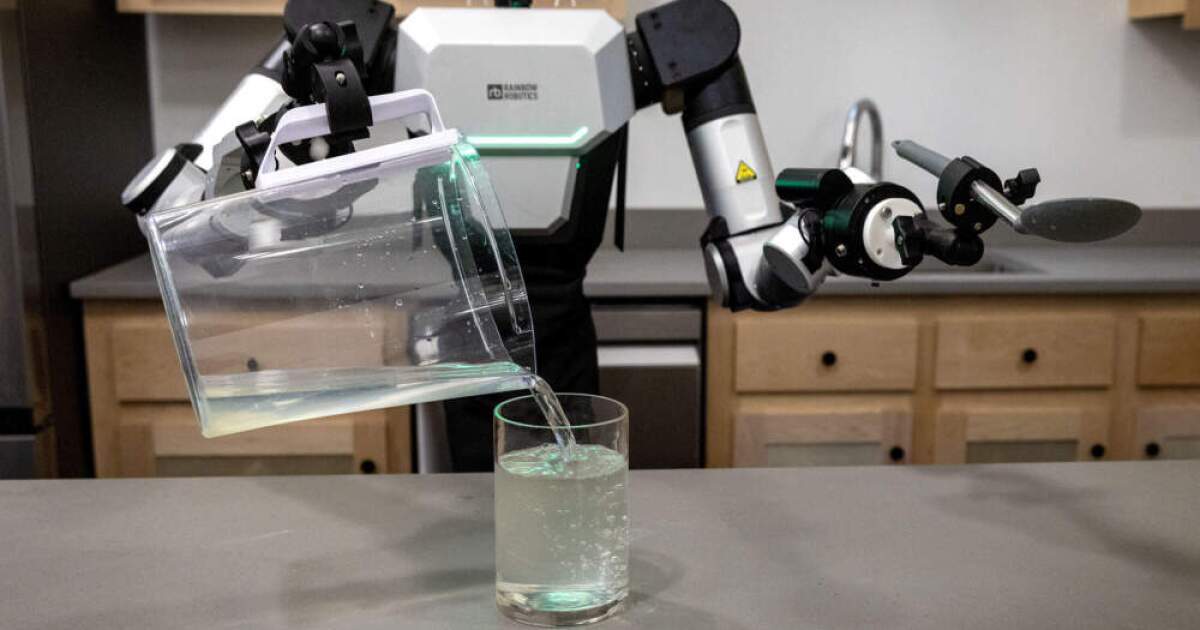
MIT researchers huddled around a humanoid robot in a mock kitchen. The robot slowly scooped lemonade powder out of a bowl into a pitcher of water, mixed the liquid, and poured the lemonade into a glass, with no spills.
The space, called the Living Lab, is intended to show researchers how robots could assist people with everyday tasks.
The lab is equipped with a fully functioning kitchen complete with a fridge, sink, center island and cabinets. The researchers teach the robots how to do these tasks by wearing sensors and acting them out.
Scott Kirsner, a columnist with our editorial partner MassLive, joins WBUR’s Morning Edition to discuss a recent trip to the lab and the future of robotic caregivers.
See photos from the visit below:
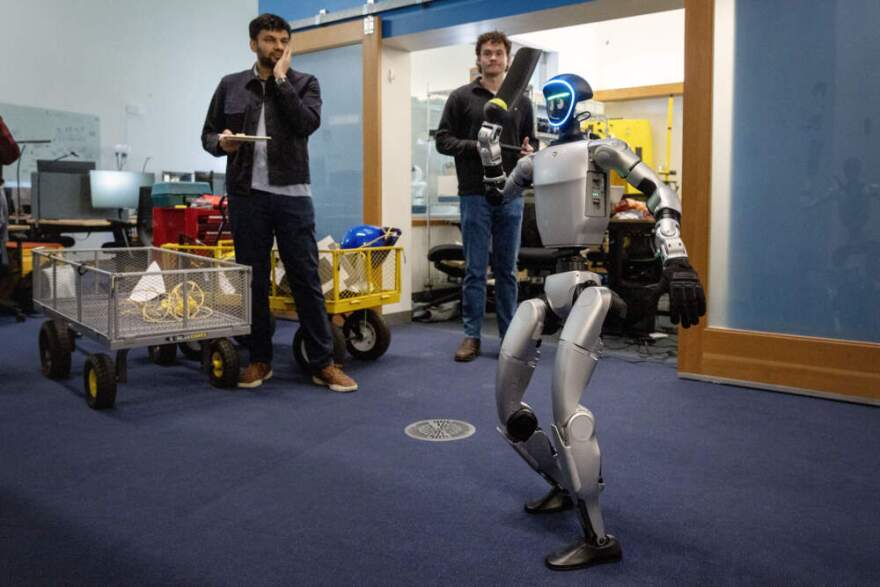
A robot prepares to throw a tennis ball at MIT’s lab (Robin Lubbock/WBUR)
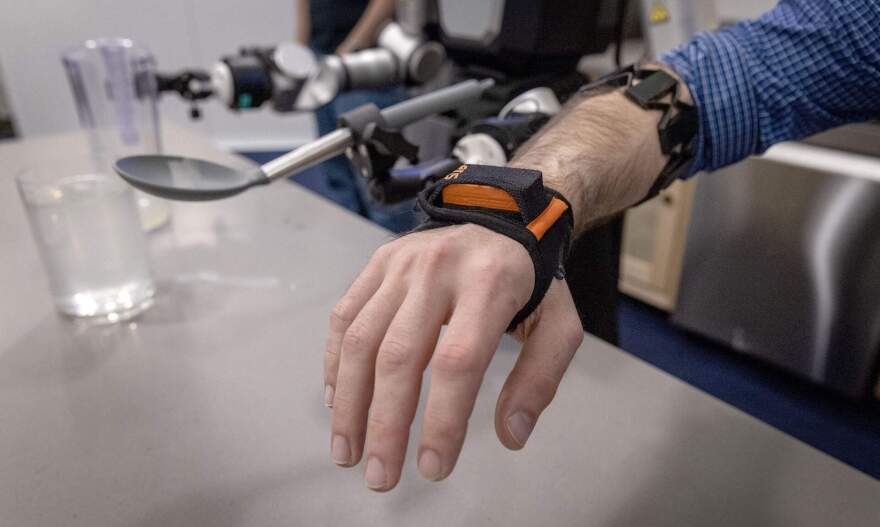
Research Scientist Joseph DelPreto shows how sensors are placed on a human arm to gather data to to train robots, at MIT CSAIL Distributed Robotics Laboratory. (Robin Lubbock/WBUR)
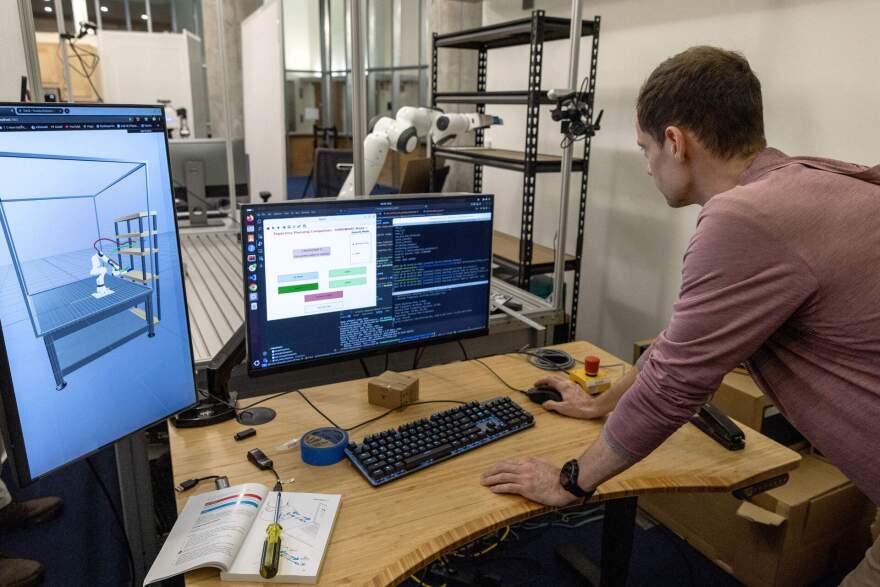
MIT PhD student Peter Werner works on programming a robotic arm to stock shelves, at the Distributed Robotics Lab. (Robin Lubbock/WBUR)
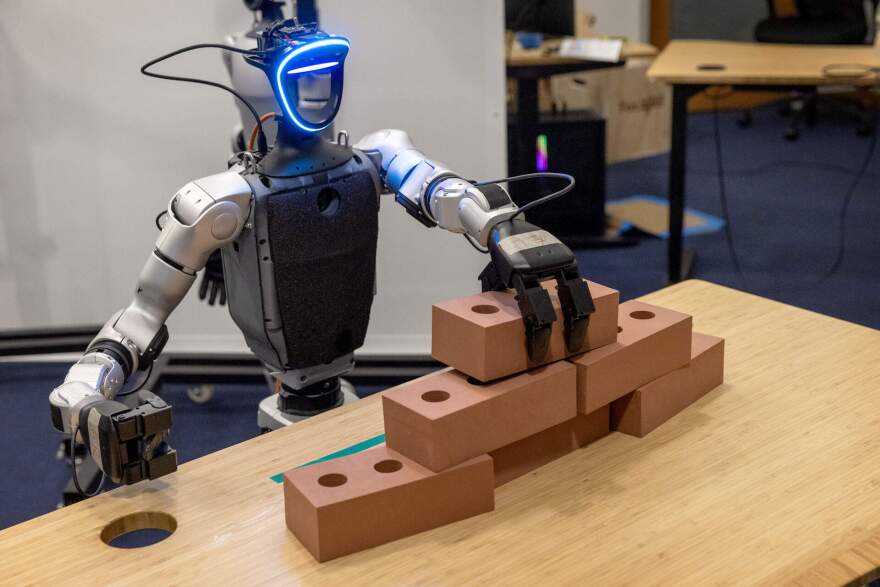
A robot builds a wall of foam bricks at MIT’s Distributed Robotics Laboratory. (Robin Lubbock/WBUR)
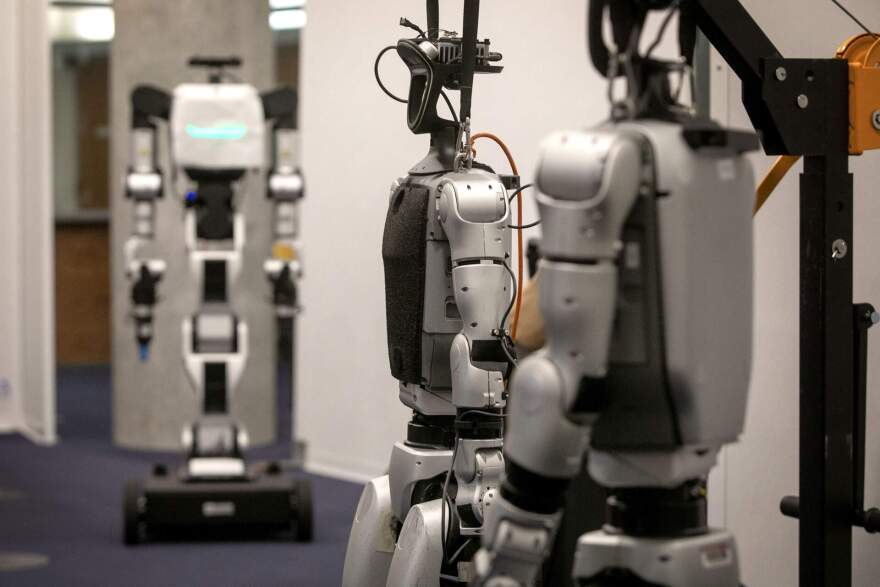
Humanoid robots at MIT’s Distributed Robotics Laboratory. (Robin Lubbock/WBUR)
This article was originally published on WBUR.org.
Copyright 2025 WBUR