
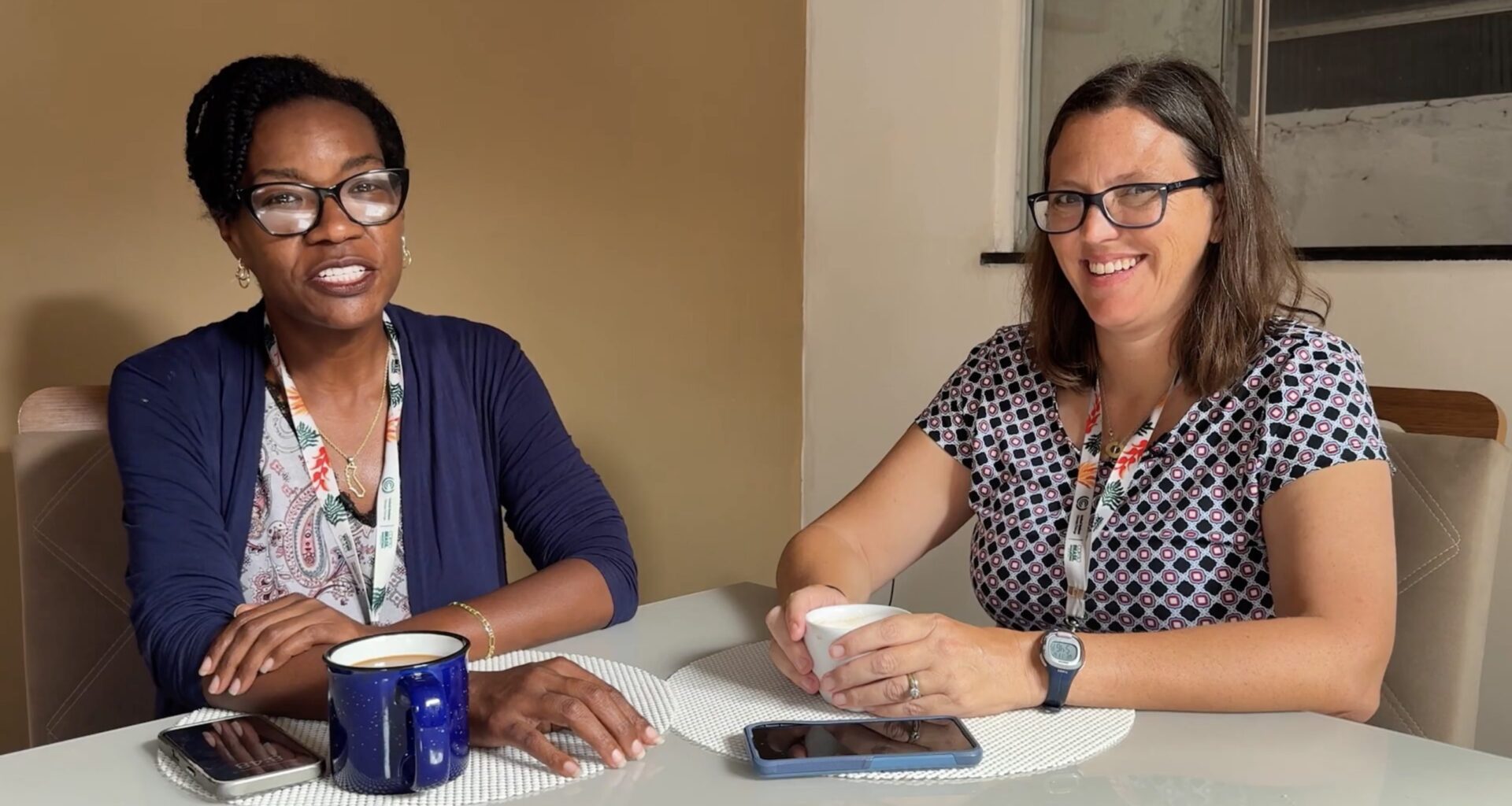
As the world’s eyes turn to Brazil for the United Nations Climate Change Conference (COP30), Austin-based Texas Impact/Texas Interfaith Power & Light is sending dispatches from the conference to the Chronicle.
If Marvel made a movie about fighting climate change, the characters would gather a team of people with unique abilities that, when combined, made it so climate change didn’t stand a chance. That team might look like the panel of subnational climate action experts assembled by America Is All In at a Tuesday afternoon event at COP30. A professor, a city government sustainability officer, a doctor, and a corporate sustainability expert teamed up to offer a creative and action-oriented approach to climate mitigation in the US.
New Mexico Governor Michelle Lujan Grisham opened the session by talking about how New Mexico has cut methane emissions from the oil and gas industry in half even as output of oil and gas production has grown. By requiring the oil and gas industry to install improved equipment, the state is on track to mitigate nearly all methane emissions from oil and gas equipment over the next decade.
Methane mitigation measures have improved air quality and public health and created a new workforce. These co-benefits have provided enough revenue for the state to subsidize childcare and universities, demonstrating the whole of society benefits that a well-thought-out climate mitigation program can provide.
Dr. Nate Hultmann, Director of the Center for Global Sustainability at the University of Maryland, also spoke about the cascade of benefits from climate action. Emissions standards have climate benefits, but they also have immediate benefits for public health. And that benefits the economy, according to Dr. Hultmann. A recent report from the Center for Global Sustainability, Pathways to 2035: Impact of Expanded Subnational Climate Leadership in the US Assessment, finds that subnational work on climate in the U.S. is making a significant dent in the U.S.’s climate goals, even without federal support.
Nylah Oliver, Director of Sustainability for the City of Savannah, Georgia, provided examples of ways Savannah is making improvements to cut emissions and make the city more climate resilient, like providing adequate EV charging infrastructure to accommodate hurricane evacuees traveling through town to installing solar panels on critical facilities like fire stations and community centers that allow them to operate even if there is a power outage, meaning they can serve as cooling stations and offer other services in an emergency.
Dr. Mary Rice, Director of the Center for Climate Health and the Environment at Harvard University, reminded the audience that people were once allowed to smoke in public places. Even after we understood that smoking caused health problems, people were still allowed to jeopardize the health of others by smoking in public. The path to eliminating public smoking started with policies enacted at the local level, like bans on smoking in restaurants. Over time those small interventions grew in scope until now it is difficult to remember a time when someone could light up a cigarette at the desk next to yours.
In the same way, we have known for decades that climate change causes harmful impacts, and we have known what we need to do to slow and stop it. Local and state governments are already working to pass laws and create programs to mitigate and adapt to climate change. Now we need to support those efforts and build momentum.
Dr. Rice thinks broadly about health care when it comes to extreme heat and poor air quality. Rather than just offering traditional medical care to people suffering the impacts of climate change, we should consider things like air conditioning and air filters as part of a larger system of health care that will prevent health problems and improve quality of life.
For Lou Leonard, Dean of Clark University’s School of Climate, Environment, and Society, it is young people who inspire his work on climate. 70% of people aged fifteen to twenty-nine feel concern or anxiety about climate. Young people rank universities high on the list of sources of trusted information. He sees his role as helping young people turn their passion into a career path and has an innovative approach to teaching that he said “turns classrooms into consultancies.”
Scott Tew of Trane Technologies called air conditioning an important climate adaptation. As Global Head of Sustainability Strategy, his role is to guide the company in finding more efficient ways to provide it. Thirty percent of the energy flowing to buildings is wasted, most by inefficiencies in heating and air conditioning. As extreme heat becomes a bigger problem around the world, air conditioning is more important than ever. Tew’s work is to improve ways to provide it while still meeting climate mitigation goals.
All of the panelists spoke to the challenges of continuing to work on climate while the current presidential administration has been so hostile to climate work of all kinds. Cuts to research funding and federal labs, cancellation of popular programs at EPA and FEMA, and the end of the Inflation Reduction Act have all had big impacts on the work these panelists do every day. But they were careful to explain that all is not lost. The benefit of having many, smaller organizations and subnational governments working on the problem is that they cannot be eliminated by a single executive action. Each panelist described ways they have been able to adapt to changing federal conditions and continue their important climate work.
The last interview of the session featured a conversation between two real life climate superheroes, former UNFCCC Executive Secretary Christiana Figueres and California Governor Gavin Newsom.
Echoing Dr. Mary Rice’s analogy about the growth of anti-smoking laws, Governor Newsom thinks of the U.S. as not a top down government, but a bottom up one. In the U.S. power, implementation, and policy outcomes all come from the bottom. Subnational governments are first responders when it comes to climate action. Those local efforts are taking hold, coalescing into a larger network of climate action that is more robust that it might seem from the outside.
Presidential administrations come and go, but local governments, who are more about practicality than politics, quietly continue the work year in and year out, making life better for their residents. This is the level that has been the most effective and the most consistent on climate action.
About Texas Impact
Texas Impact exists to put faith into action. We equip faith leaders and their congregations with the information, opportunities, and outreach tools to educate their communities and engage with lawmakers on pressing public policy issues. We are an interfaith group that works together on issues that impact the most vulnerable people in our communities. We help people live out their faith in the public square, moving the faith community from charity to justice.
A note to readers: Bold and uncensored, The Austin Chronicle has been Austin’s independent news source for over 40 years, expressing the community’s political and environmental concerns and supporting its active cultural scene. Now more than ever, we need your support to continue supplying Austin with independent, free press. If real news is important to you, please consider making a donation of $5, $10 or whatever you can afford, to help keep our journalism on stands.