
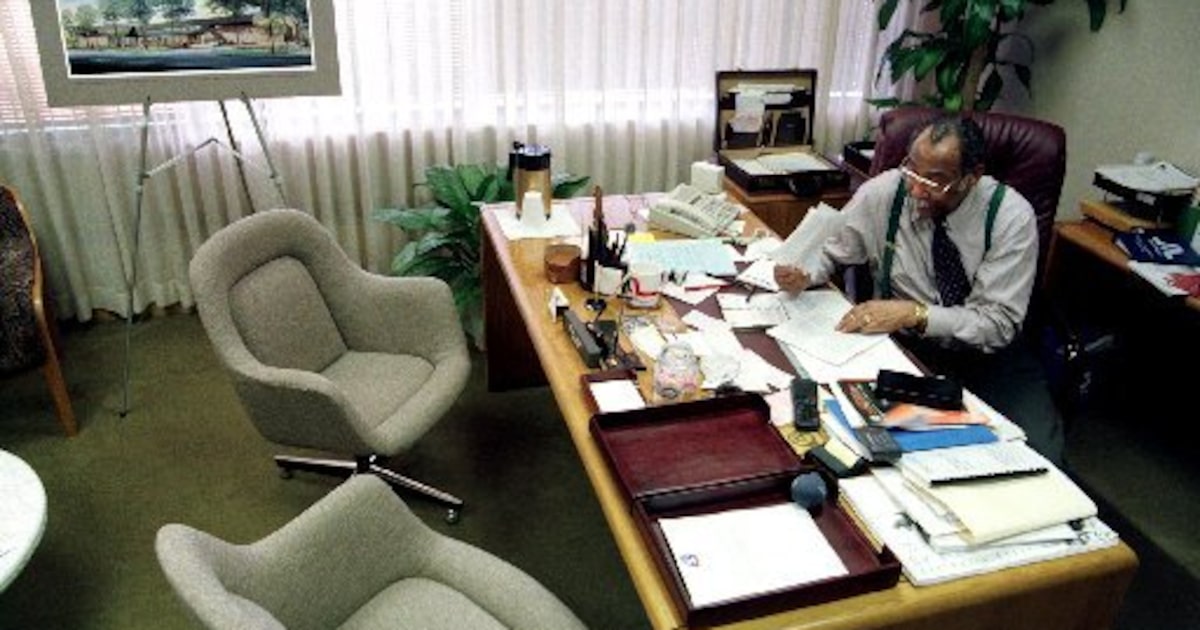
Elzie Odom, the first Black mayor of Arlington and one of the nation’s first Black inspectors for the U.S. Postal Service, has died. He was 96.
City leaders in Arlington announced Odom’s death Monday, recalling him as a tireless advocate who championed economic growth, opportunities for children, improved transportation and greater inclusion in city boards and commissions.
Odom served as the first Black city council member from 1990 to 1997, then its mayor from 1997 to 2003. In 1999, the city named a recreation center in his honor.
Among his most notable accomplishments were successful bids to keep the Texas Rangers and General Motors in Arlington. They are now celebrating their 53rd and 71st year, respectively, in Arlington.
Breaking News
“Elzie Odom was more than a dedicated servant; he was the embodiment of the Arlington spirit,” Mayor Jim Ross said in a statement. “He was a trailblazer who fundamentally changed our city’s landscape, not just through transportation and infrastructure improvements and keeping vital employers like General Motors and the Rangers in town, but by championing the idea that every single person in Arlington deserved a seat at the table.”
Odom was known as a soft-spoken but self-assured leader. In 2000, he told The Dallas Morning News that his achievements meant little if they did not push others to pursue opportunities.
“Being the first Black means a lot,” Odom said. “But it doesn’t mean as much if it doesn’t inspire some kid somewhere to want to follow in your footsteps; to say, “If he can do it, I can do it.’”
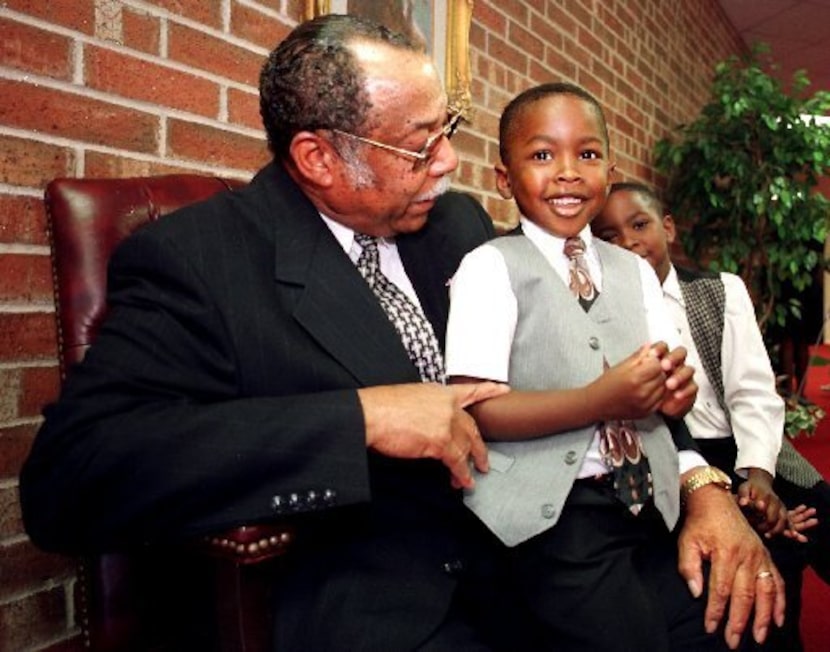
Elzie Odom
The Dallas Morning News
His own daughter, Barbara Odom Wesley, followed in his footsteps and now serves on the Arlington City Council.
“I was taught that service is the price you pay for the space you occupy,” she said in a statement. “My public service is deep respect and honor for my dad, who blazed the trail.”
Odom was born May 10, 1929, and grew up in the freedom colony of Shankleville in East Texas.
He was a descendant of Jim and Winnie Shankle, two slaves who met on a Mississippi plantation and fell in love. When Winnie was sold to a Texas slaveowner, Jim escaped, crossed the Mississippi and Sabine rivers and found Winnie, who convinced her master to purchase him as well, according to family lore. After emancipation, the two settled the area as a freedmen’s colony.
Odom graduated from high school in Shankleville before studying carpentry and cabinet making at Prairie View A&M University near Houston.
In June 1947, one month after turning 18, Odom married Ruby Truvillion, whom he met years earlier at church in Shankleville.
“He was the kind of person who makes you get chills down your spine,” Ruby Odom told The News in 2000. “He was a Christian gentleman and I was sort of particular. We were meant for each other. He was the God-sent person for me.”
In 1950, Odom joined his brother James as a letter carrier with the U.S. Postal Service. His route was the all-white neighborhoods of then-segregated Orange, a small town in southeast Texas known for racial division.
The nearby town of Jasper became known for the brutal death of James Byrd Jr., who was dragged to his death by three white supremacists in 1998. Yet Odom said he never faced significant racial problems, and in 1964 he ran for school board in Orange and lost. One year later, he ran for a seat and won, becoming the first Black board member.
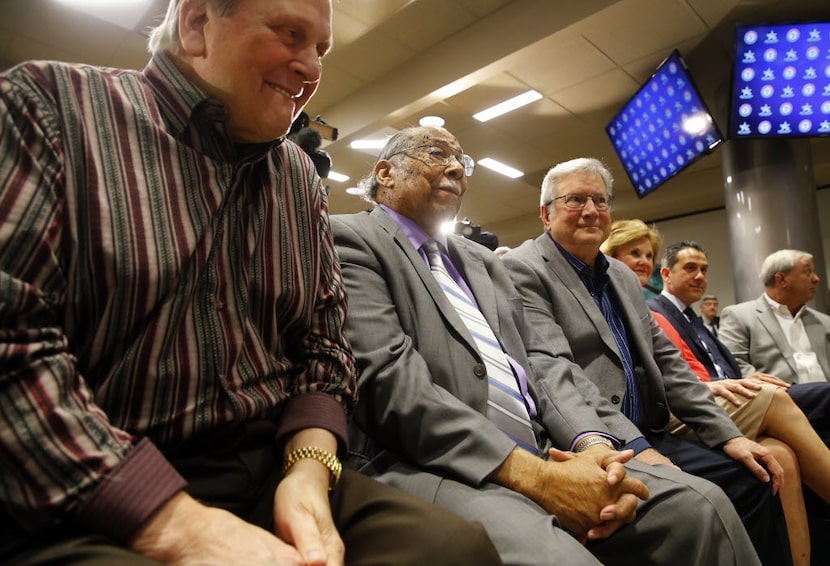
Arlington’s previous mayors from left, Robert Cluck, Elzie Odom and Richard Green are recognized by Mayor W. Jeff Williams in 2016.
Tom Fox / The Dallas Morning News
In 1967, Odom was named the country’s fifth black postal inspector, the law enforcement arm of the U.S. Postal Service. The agency’s policy prevented him from working in his home area for three years, so he transferred to Los Angeles, where he did undercover work as well as handling assault cases.
After the requisite three years, he returned to Texas and was stationed in San Antonio. Then in 1979, he was transferred to the Dallas region and his family settled in Arlington and joined the Mount Olive Baptist Church, where he served as deacon and treasurer.
Odom retired from the postal service in the late 1980s and often said he knew he wanted to return to public service. After his election, he sometimes downplayed his role as the city’s first Black council member and mayor.
“There was a lot of hype about my being the first African American on the council but after I was sworn in and the work started, I was no different from anyone else,” Odom wrote in his memoir “Counting My Blessings.” “All my life I was taught that all people are the same and should be treated the same.”
This report includes material from The Dallas Morning News archives.