
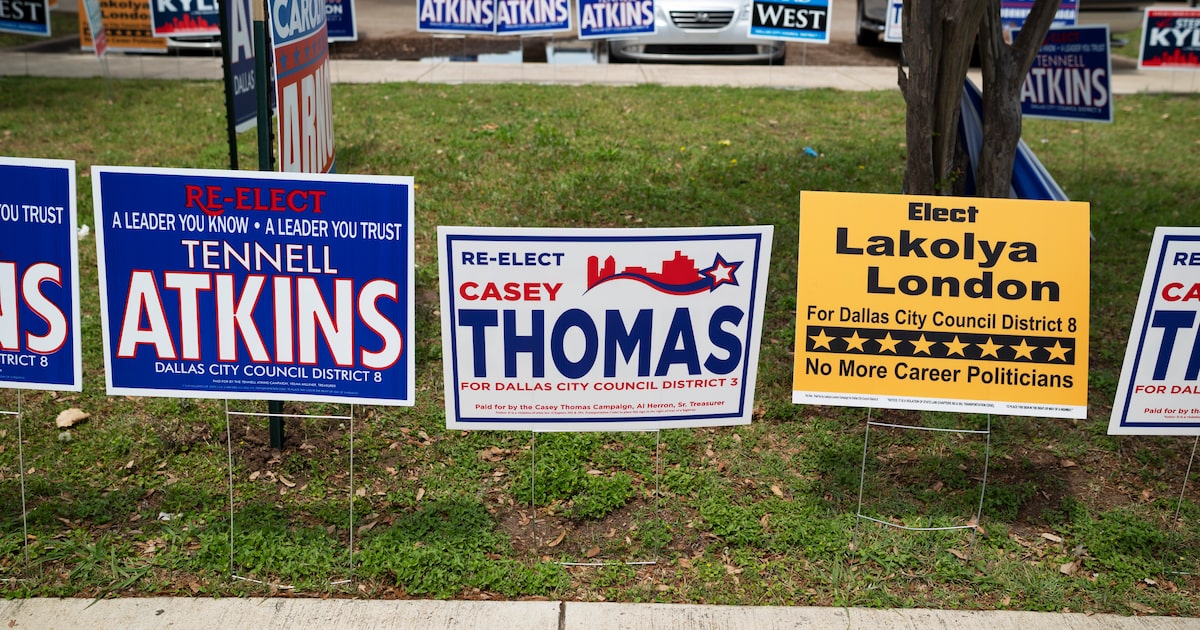
It is a depressing tradition of this editorial page to write about poor voter turnout after municipal elections. These are the elections closest to taxpayers and their everyday lives and concerns, but turnout is often in the single digits or low teens.
The Dallas City Council decided to try to change this bleak reality. After a prolonged effort that required approvals from voters, the state Legislature and finally the council, Dallas is moving its municipal elections from May to November of odd-numbered years.
This move will align council elections with voting for state constitutional amendments, which typically see higher turnouts than local races. Now it’s up to Dallas voters to prove the wisdom of this decision.
We take comfort in the figures from the most recent November election. Voter turnout in Dallas County was about 16%, which matches the overall state turnout.
Opinion
Contrast that with turnout in the May 2025 municipal elections. Thirteen Dallas council seats were contested, and many of them were decided by fewer than 4,000 voters in each district. The Dallas County turnout for the spring local elections was only 8%.
Dallas residents have recently packed the council chambers to speak out on controversial zoning cases, a potential partnership between police and federal immigration authorities, and the future of City Hall. These are signs of an engaged citizenry.
If only more Dallasites felt as passionate about their council elections. Voting in local elections is the most compelling way for citizens to influence how their neighborhoods are governed at City Hall. Council members determine policies, tax rates and spending priorities. Even when voters don’t see their candidates prevail, the closeness of the vote can send a message to the winners about dissatisfaction from constituents and the need to address their concerns.
We suspect many voters stay home because of apathy or lack of knowledge. Perhaps they feel there is nothing they can do about dysfunction at City Hall or they have checked out of local civic life.
These citizens should take heart in the decision to move the council elections from May to November. The initiative is a testament to the power of civic participation.
David de la Fuente, a Dallas political operative active in local campaigns, advocated for the change for nearly four years. He pitched the measure as an appointee to the city’s Charter Review Commission, which sent the policy recommendation to the council. Voters resoundingly passed the measure last fall, and a group of Dallas lawmakers ran with that momentum and secured the necessary approval of the Legislature.
The council, in a welcome display of unity, passed the measure in a 15-0 vote last week.
Even as we recommended the measure to voters, we shared concerns that November council elections might fuel the shenanigans of political groups trying to muck up nonpartisan races. But we believe the benefits of higher voter turnout outweigh these risks.
Dallas voters got what they wanted. Now they need to show up.
Meat processing industry deserves sustained attention from regulatorsProsper’s e-bike ordinance can help curb teenage riders