
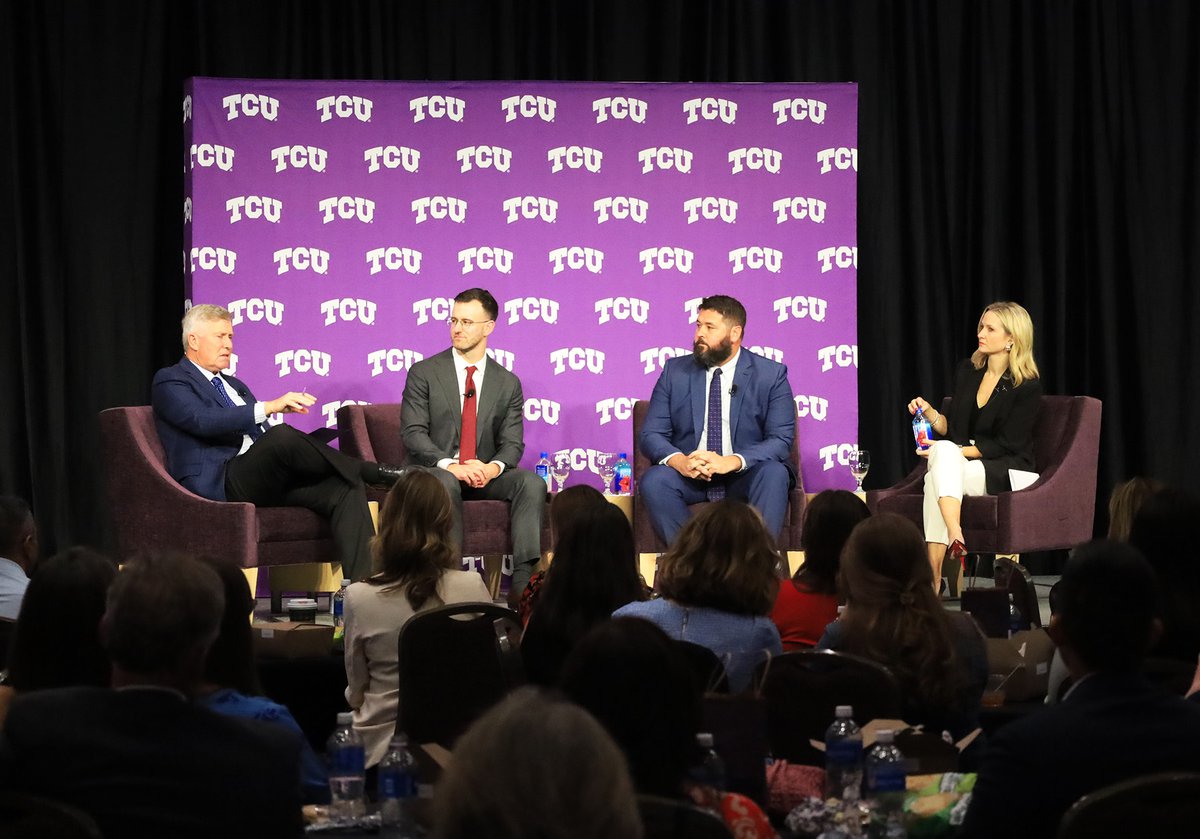
An initiative many said couldn’t be done has taken shape — there’s a rare alliance between Fort Worth and Dallas, and for something bigger than sports and civic pride. Instead, this new alliance is focused on another, more critical issue: maternal health.
At TCU’s Brown-Lupton University Union Ballroom, a sundry of clinicians, policymakers, community leaders, and students gathered to witness the launch of the North Texas Maternal Health Accelerator on Nov. 17.
“Today, Dallas and Tarrant Counties become the first region in the United States to collectively commit to a quantified reduction target in its severe maternal morbidity rate,” said Cameron Combs, Sr. Director of the Child Poverty Action Lab.
Fort Worth Mayor Mattie Parker added, “Simply put, too many mothers in our community risk their lives when they give birth. That’s unacceptable.” The goal is ambitious: a 20% reduction in severe obstetric complications across a population of 5 million, fueled by nearly $25 million in philanthropic support.
The North Texas Maternal Health Accelerator — a partnership between TCU’s Anne Burnett Marion School of Medicine, UT Southwestern Medical Center, and more than 120 community organizations — is designed to transform the way mothers are cared for across the region.
Combs framed it plainly: “The intractable problem here is not that we don’t know how to care for our patients. Folks in this room literally write the books about that. No. The retractable problem is that keeping all of our mothers healthy requires our healthcare system to coordinate in some new ways.”
Catherine Spong, M.D., the Paul C. MacDonald Distinguished Chair of the Department of Obstetrics and Gynecology at UT Southwestern, highlighted how research is already being translated into lifesaving practice.
“Handing a bottle of iron to women during their prenatal visit rather than recommending that they purchase it on their own reduces the risk of anemia during delivery,” she said. That simple intervention — now being rolled out across clinics in Tarrant and Dallas counties — has already decreased blood transfusions by roughly a third.
The Accelerator also builds on programs like MCAP, which Spong described as “an award-winning program that provides 12 months of postpartum care to the vulnerable mothers in South Dallas, especially women with hypertension and diabetes.” By scaling proven interventions across hospitals and community providers, the coalition aims to reduce preventable complications while collecting rigorous evidence to guide future health policies.
TCU Chancellor Daniel Pullin celebrated the partnership as a model for innovation and community engagement. “Imagine an effective solution that not only saves lives but is also efficient — it saves, and it creates models that can be replicated all over the country,” he said. Pullin stressed that the effort reflects TCU’s core values: integrity, engagement, community, and excellence.
Philanthropic partners have been central to the initiative’s momentum. Ann Barnes, CEO of the Episcopal Health Foundation, noted, “If a mother can’t get prenatal iron, can’t get to her appointment or can’t afford to feed the family, that’s not a personal failure. It’s a systems failure.” Her foundation’s early investment has helped accelerate the distribution of iron supplements and fund financial analyses to demonstrate cost savings for future replication.
Mayor Parker brought the human stakes into sharp focus. “Three years ago, we convened for the first time…to acknowledge this hard truth together to begin to tackle this challenge head on,” she said. She also highlighted the on-the-ground impact: “TCU and Catholic Charities in Fort Worth and Dallas have already distributed 15,000 bottles of iron across 60 clinics and community distribution sites to combat maternal anemia.”
Parker framed the effort as a test of accountability as much as innovation: “We have set a goal…a 20% reduction in severe maternal morbidity, which means we need to avoid at least 500 to 600 severe obstetric complications year over year. So when you leave today, think about as many as 600 mamas that will have safe deliveries over the next year and be able to go home with their baby because of your hard work and contributions to today’s work.”
November 18, 2025
9:33 AM