Texas’ citrus crop is slightly behind schedule for the season and facing an uncertain future when it comes to water, according to a Texas A&M AgriLife Extension Service expert.
Juan Anciso, Ph.D., AgriLife Extension vegetable specialist and associate head of the Department of Horticultural Sciences based at the Texas A&M AgriLife Research and Extension Center in Weslaco, said citrus orchards are showing heavy fruit crops but that limited summer irrigation has led to smaller sizes so far.
Anciso said quality continues to remain good to excellent for Texas citrus. Grapefruits continue to produce acidity levels that consumers seek, while Texas oranges could use cooler nighttime temperatures to help fruit color and increase even higher sugar levels.
Anciso said harvest crews continue to pick fruit but are choosing market-size-appropriate oranges and grapefruit. Fruit sizes led to shipping volume setbacks compared to last year.
By Nov. 8, 2024, about 636,000 40-pound boxes of fresh grapefruit and oranges had been shipped compared to 448,000 boxes so far this year.
Prices are also much lower than last year, Anciso said. Producers are getting about $20-$22 per box, compared to $26-$32 per box last year.
“They’re a little behind in terms of getting to market, but the market is also down,” he said. “We don’t know if it’s exports or just declining demand driving the prices down, but it’s been a significant drop.”
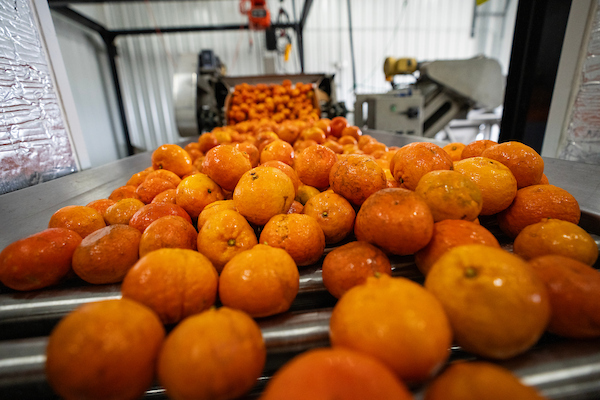
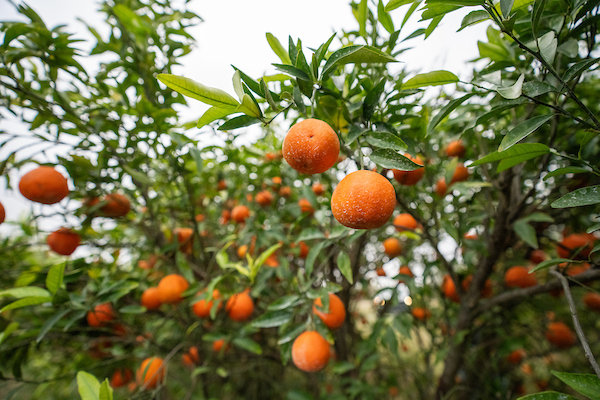
Texas is known for its high quality grapefruit, but oranges from the Rio Grande Valley are also widely known for their flavor. (Sam Craft/Texas A&M AgriLife)
Texas citrus orchards show heavy crop
Texas’ citrus industry is almost completely located in the Lower Rio Grande Valley, with most of its 19,000 orchard acres located in Hidalgo, Cameron and Willacy counties. Most have bounced back from Winter Storm Uri in 2021, but the industry continues to face challenges related to up-and-down prices and water availability, Anciso said.
After the winter storm, Texas fresh grapefruit production fell to 1.6 million 40-pound boxes for the 2021-2022 season, down 33% from the previous year. Orange production was about 400,000 boxes of fresh fruit, down 62% the same season.
Lingering effects still impact production in older-growth trees, but total fresh fruit production hit 4.1 million boxes in the 2023-2024 season. Production dipped some during the 2024-2025 season to 3.6 million boxes, and Anciso said it was too early to tell where the final harvest will land this year.
“There is a heavy fruit crop, and a long way to go until harvest wraps in May,” he said. “With a little rain or an additional irrigation allotment, we might see the fruit gain some size and continue to progress.”
Water uncertainty continues for Texas citrus
Anciso said year-over-year declines in Florida citrus production has presented an opportunity for Texas producers to gain market share. Texas ranks behind Florida and California in citrus production, with a total economic impact exceeding $300 million annually.
But longer term, Anciso said access to irrigation water remains the industry’s biggest challenge. Falcon Reservoir, which provides most of the region’s agricultural water allotments, rose from 9% capacity to around 15% capacity after Amistad Reservoir captured heavy rainfall and released water earlier this year, but overall supplies remain critically low and uncertain.
“Citrus producers are feeling the squeeze,” Anciso said. “But they’ve faced challenges over the years, and there are always issues for farmers whether it’s Mother Nature or markets.”
AgriLife Extension district reporters compiled the following summaries:
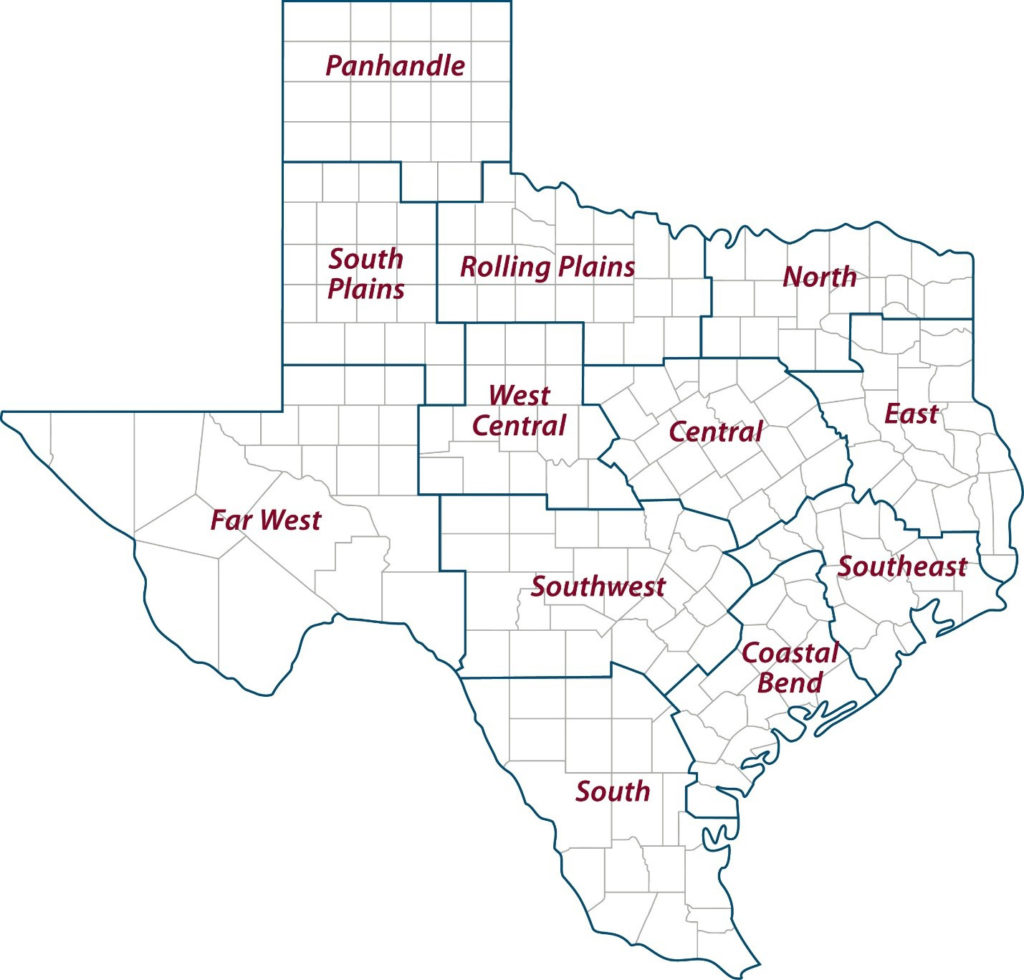 A map of the 12 Texas A&M AgriLife Extension Service districts.
Panhandle
The district experienced dry conditions and moderate temperatures, permitting the final maturity and harvest of most feed grain and oilseed crops. Soil moisture was very short to adequate. Pasture and rangeland conditions were poor to good. Crops were in fair to good condition. Most growers had sufficient soil moisture at planting to germinate small-grain seeds and achieved adequate seedling establishment. Acres planted to small grains were off to a good start. Warm-season crops grown for forage and silage were harvested. With the hot and cold temperature swings, cattle producers were battling respiratory illness in stocker calves.
South Plains
Very dry conditions continued across the district. Winter wheat was planted after cotton and sorghum harvests but had not emerged due to the lack of rainfall. Fluctuation of temperature lows from the 30s to 50s occurred. The lack of moisture was tough on rangelands. Cotton harvest was in full force, and yields in irrigated fields were slightly better than expected, with exceptional grades. Dryland acres were being harvested with better-than-expected yields reported. Gins were working around the clock to keep up. Cattle were turned out on wheat, corn and sorghum stubble. Black-eyed pea harvest concluded. Post-harvest fieldwork continued. Cattle prices were up, but the market for grazing leases was saturated by increased wheat acres. Record heat took a toll on fresh calves and the moisture.
Rolling Plains
Dry, unseasonably warm conditions continued, putting stress on forage and crop production and raising fire concerns. Pasture conditions remained poor, and many producers were relying on supplemental hay. Wheat planting neared completion, but emergence was spotty and stands ranged from very poor to fair due to a lack of moisture. Some farmers were dry sowing, delaying planting or fallowing fields while they waited for sufficient rainfall. Timely precipitation forecast later in the week had potential to significantly improve wheat outlooks. Cotton harvest was progressing well, with yields reported as good to surprisingly strong. Most fall calves were moved to market, followed by spring calves, and livestock remained in generally good condition with some feed supplementation.
North
Topsoil levels and subsoil levels were short to adequate across the district. Pasture and rangeland conditions were poor to good. Soil moisture conditions were dry in many areas, and the weather remained dry, warm and windy. Hay feeding increased in some counties. Cool-season pasture grasses emerged but were exhibiting increased drought stress. The recent freeze halted most warm-season grass and weed growth. Winter vegetables were progressing well in some parts of the district, while some winter pastures were awaiting rainfall to germinate. Tomatoes and peppers were still producing in the warm weather. Livestock conditions were good.
East
Fluctuating temperatures and lack of rainfall slowed winter forage growth across the district. Lake, pond and creek water levels were low. Livestock were in fair to good condition, and producers in some areas began supplemental feeding. Cattle markets remained strong. Feral hogs were very active in pastures.
West Central
Conditions were unseasonably hot and dry across the district, and stock tanks were extremely low. A hard freeze knocked warm-season grasses into dormancy. Wildfire danger was high due to dry conditions and fuel loads. Rangeland and pastures were negatively impacted by heat and low moisture, and grass quality deteriorated considerably. Topsoil moisture has dried out since the recent rains. Producers were planting small grains shallow, and seeds struggled to emerge. Emerging wheat fields were struggling, especially earlier plantings. Some cattle were turned out on wheat fields. Cotton harvest was progressing, and some areas were finished with slightly below-average yields reported. Pecan harvest was below average to average. Supplemental feeding for livestock was in full swing after the first freeze, and cattle markets improved.
Central
Conditions remained dry, and rainfall was needed. Temperatures warmed up after a brief cool front and frost. Temperatures, combined with a lack of moisture, pushed most grasses into dormancy. As a result, pasture and rangeland conditions were beginning to decline, with forage availability tightening. Ryegrass was emerging, and dry conditions were hurting dryland small grains. Second-crop corn silage was hit hard by frost. All major row crops, such as corn, cotton and sorghum, were fully harvested, marking the close of the summer production cycle. A handful of producers cut and baled hay, trying to capture what remained of late-season growth. Producers were dry planting wheat. Some early planted fields emerged, but most small grains needed moisture to establish a healthy stand and sustain early growth. Livestock were doing fair on pastures with supplemental feeding. The cattle market continued to hold strong.
Southeast
Drought conditions remained, though rain and cooler temperatures were expected in the forecast. Soil moisture conditions were adequate to surplus, but conditions worsened rapidly in parts of the district. The planting of small grains and ryegrass for grazing was delayed, and what was planted was slow to germinate, except in areas that received recent rainfall. Pastures were in good to excellent condition but started going dormant, prompting producers to begin feeding hay and cubes. Row-crop harvests and fieldwork were completed. Dry conditions led to pond levels dropping.
Southwest
Warm and dry conditions persisted across the district, with no precipitation recorded. Soil moisture levels began to decline. There were strong chances of rain in the forecast. A brief period of cooler, more seasonal weather occurred midweek. Overall, temperatures remained near normal, accompanied by high relative humidity. Daytime highs averaged in the low- to mid-80s. Aquifer levels were near historic lows, limiting irrigation capacity. Winter wheat, oats and rye were being planted, though wheat and oat plantings were delayed due to drought conditions. The drought severely impacted rangeland and pasture conditions, resulting in heavy reliance on supplemental feeding and reductions in herd size. Producers continued to provide supplemental feed for both livestock and wildlife. Low-lying areas experienced a killing frost, while upland vegetation remained active. Livestock markets were high to steady, and overall livestock conditions remained good. Whitetail deer were in rut, though activity slowed with warmer temperatures. Hunters reported harvested deer were in good condition. Dove remained active, while turkey activity was limited.
Coastal Bend
Extreme drought and heat persisted across the district, with almost no rainfall since early August. A burn ban remained in effect in some counties. Soil moisture was critically low, though the lack of precipitation allowed for fieldwork. Cotton yields were good to excellent, while the pecan harvest was underway with varying results. Winter crop planting, particularly wheat, oats and ryegrass, was minimal due to poor soil moisture, and fewer acres were expected to be planted. Pasture conditions continued to deteriorate. Most pastures were dry and offered little forage. Hay inventories were declining rapidly, prompting concern among producers. Some producers resorted to hauling water due to insufficient water levels in stocker ponds. While a few cool-season forages were planted, many producers were redirecting resources toward feed rather than forage establishment. Over half of cattle producers began feeding hay, and many were also relying on supplemental feed.
South
Extremely dry conditions persisted throughout the district, with no measurable rainfall recorded and no rainfall in the extended forecast. Conditions cooled in some parts of the district, with temperatures ranging from the low-40s to daytime highs in the low-90s. Topsoil and subsoil conditions were very poor. Strawberry planting was almost complete, and plants were greening up and growing good overall. Peanut harvest was underway, with a little over 50% of fields being harvested. Winter small grains started to be planted after peanuts. Turfgrass producers continued to harvest grass, but production was slow compared to years prior. A small group of producers planted fall corn, and it was progressing fairly well, though some fields were stressed. Onions were progressing well at this time, but lack of moisture was a concern. In the citrus industry, growers began harvesting early oranges and grapefruits, with harvest expected to continue through next April. Leafy greens were in good condition. Cabbage and bell peppers were being harvested. Row crop producers continued land preparation for the next year’s planting season, with some sitting idle due to drought conditions. Cool-season vegetable crops progressed well, and pest pressure remained low. Only a few hay producers were still baling remaining meadows. High winds, low humidity and no rain contributed to declining rangeland conditions. Pastures were showing signs of moisture stress and, in some cases, damage from overgrazing as high heat continued. Supplementation of beef cattle herds increased over the past month to maintain body condition. Several producers were already weaning calves to reduce lactation stress on cows. Some producers were hauling water, and hay was in great demand. Cattle prices decreased at local auctions, as producers reduced herd sizes. Deer producers were feeding heavily, and water sources were becoming limited for wildlife.