
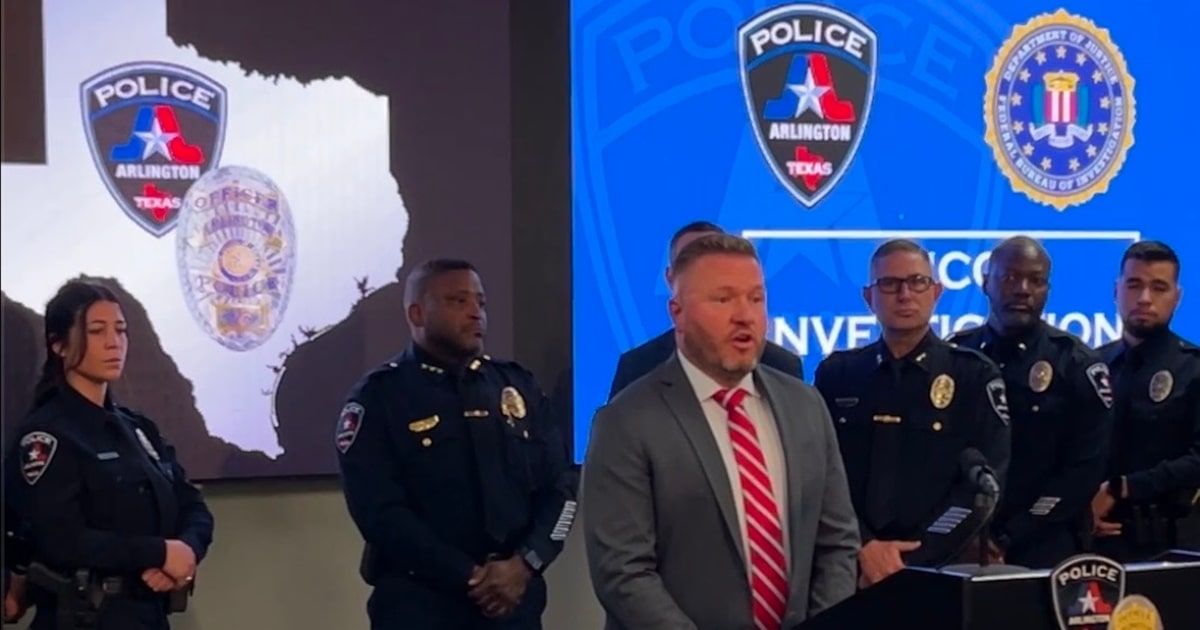
The arrest of 21 alleged gang members this month following a monthslong investigation by Arlington police and the FBI is good law enforcement work.
How the case is prosecuted and the facts around the actions of each indicted person will tell us whether justice is being fully served.
The allegations are serious and indicate that gang violence, increasingly with firearms, continues to seep into our schools.
Our pause is the use of the RICO statute. Short for the Racketeer Influenced and Corrupt Organizations Act, RICO is a powerful prosecutorial tool intended to break up and punish sophisticated criminal conspiracies.
Opinion
Seventeen of the suspects arrested are now charged under RICO. Whether their actions warrant the designation is something for judge and jury to determine.
Given the alleged level of criminality, it could be an appropriate strategy. The charges point to a well-developed criminal ring with easy access to guns and a savvy social media presence.
According to the criminal complaint, the street gang Kiccdoe was involved in nearly 200 crimes in North Texas, including a fatal shooting at Bowie High School in April 2024, a crime that triggered the FBI’s involvement.
The 2024 killing of an 18-year-old was an outrageous crime that traumatized students and staff. Following the murder, there were multiple retaliatory shootings, according to investigators.
But is Kiccdoe an organized criminal conspiracy under the law? The Supreme Court has established some limits for using RICO: There needs to be a pattern of illicit activity and an enterprise used for unlawful purposes.
Authorities traced this gang’s origins to East Arkansas Lane in eastern Arlington in 2022. Since then, the gang has allegedly terrorized Arlington’s communities, with attempted murders, drive-by shootings, robberies, assaults and firearm offenses, while they trafficked fentanyl, marijuana and other narcotics. They allegedly used social media to advertise narcotics and to tout their guns, drugs and cash.
Using RICO to break up gangs is effective because a crime in furtherance of the conspiracy can lead to a much longer prison sentence. That often gets alleged co-conspirators to flip and testify for the government.
The question that arises with suspects as young as these, between 18 and 22 at the time of their arrest, is whether they were knowingly engaged in a criminal conspiracy.
We have seen RICO cases where charges were overly broad and young defendants were wrapped up as co-conspirators when they were really petty criminals in the wrong place with the wrong people.
The evidence must support the allegations of conspiracy. If it does, then RICO is appropriate and an important law will have shown its value. If it doesn’t, prosecutors risk putting the law under the spotlight once again.
Meanwhile, the case is a reason to pause and ask how we can stop young men from entering this life in the first place. Early and persistent anti-gang education is a burden for our schools. But stopping these crimes before they start is an ounce of prevention we still need.
We welcome your thoughts in a letter to the editor. See the guidelines and submit your letter here.
If you have problems with the form, you can submit via email at letters@dallasnews.com