
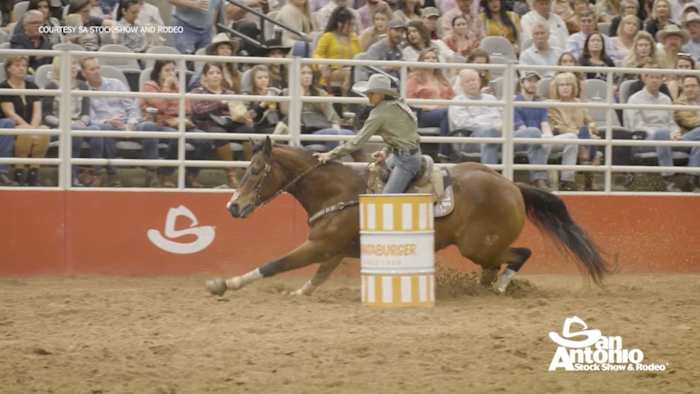
A major qualifying event for the San Antonio Stock Show & Rodeo was canceled this week due to a growing outbreak of Equine Herpesvirus-1, an illness that veterinarians say has already claimed the lives of several horses.
The Uvalde Rodeo Qualifier was scheduled to start this week and run through Saturday. But organizers — including the San Antonio Stock Show & Rodeo, the Women’s Professional Rodeo Association (WPRA) and the Professional Rodeo Cowboys Association (PRCA) — announced on Facebook that they jointly agreed to cancel the event in order to prioritize animal safety.
“None of the horses that have been infected with the disease ever made it to Uvalde,” said Chris Derby, chief marketing officer for the San Antonio Stock Show & Rodeo. “We did this as a precaution; we didn’t have any issues at our event.”
The qualifier typically gives eligible PRCA and WPRA members a chance to compete for coveted spots in the San Antonio Rodeo. Derby said organizers are working on how the cancellation will affect the contestant field for February.
“With this cancellation, it was all about the safety of our animal athletes,” he said.
What to know about EHV-1
The current EHV-1 outbreak may be linked to a large rodeo event in Waco earlier this month. According to the WPRA World Finals and Elite Barrel Race, which ran Nov. 5–9, horses that attended began showing symptoms after the competition.
“It’s easily transmitted, which is part of the problem,” said local veterinarian Michael Martin. “There’s already been several horses that have died, so it can be quite deadly.”
Martin said exact case numbers are unclear, but he noted that while humans are not at risk from the virus, people can spread it between horses via clothing, hands or equipment.
EHV-1 can cause respiratory illness and, in severe cases, Equine Herpes Myeloencephalopathy — a neurological disease marked by high fever, lack of coordination, nasal discharge and other symptoms, according to the Texas Animal Health Commission. It can also cause neonatal death in pregnant mares.
The virus spreads through horse-to-horse contact but can also be transmitted through contaminated feed, equipment and human handling. Washing hands thoroughly and isolating sick horses are key to preventing further spread, the agency said.
Some horses with neurological complications may require intensive veterinary care or hospitalization.
Despite this week’s cancellation, Derby said the San Antonio Stock Show & Rodeo expects to return to Uvalde next year and does not foresee issues for February’s main event.
“I see no issues in February coming in,” he said. “But we will definitely keep track of it.”
Read also:
Copyright 2025 by KSAT – All rights reserved.