
Fewer than 50% of patients who experience traumatic brain injuries — whether from falls, sports injuries or car wrecks — don’t receive any form of follow-up care after leaving the hospital.
But even relatively minor head injuries can leave lasting physical, emotional and cognitive challenges.
To address this issue, new national medical care standards were crafted for health care providers treating patients with traumatic brain injuries with the help of a San Antonio doctor.
“A lot of times people will have a traumatic brain injury, be seen in the emergency room, and half of those patients are never seen again,” said Dr. Monica Verduzco-Gutierrez, a UT San Antonio brain injury medicine specialist who was among the committee of national experts that crafted the new guidelines. “We know that they’re suffering, and we know issues are happening, but they are not being seen or being taken care of.”
Traumatic brain injuries, or TBIs, affect 50-60 million people worldwide and hundreds of thousands of people in the U.S. every year. In 2021, there were nearly 70,000 deaths related to traumatic brain injuries in the U.S., according to the Centers for Disease Control and Prevention.
Most often resulting from car accidents and falls among the elderly, these injuries can pose long-term cognitive, emotional and physical consequences. In San Antonio, where Verduzco-Gutierrez has been practicing for over five years, she has seen the most traumatic brain injuries from falls among the elderly and children.
No such thing as ‘mild’
A TBI’s severity is measured by the Glasgow Coma sum score ranging from 3-15. Lower scores are associated with severe brain injuries when patients are unresponsive or even in a coma, and a higher score describes an injury like a concussion.
Scores of 13-15 are classified as concussions and typically described as “mild” or “moderate,” labels that the new guidelines drop.
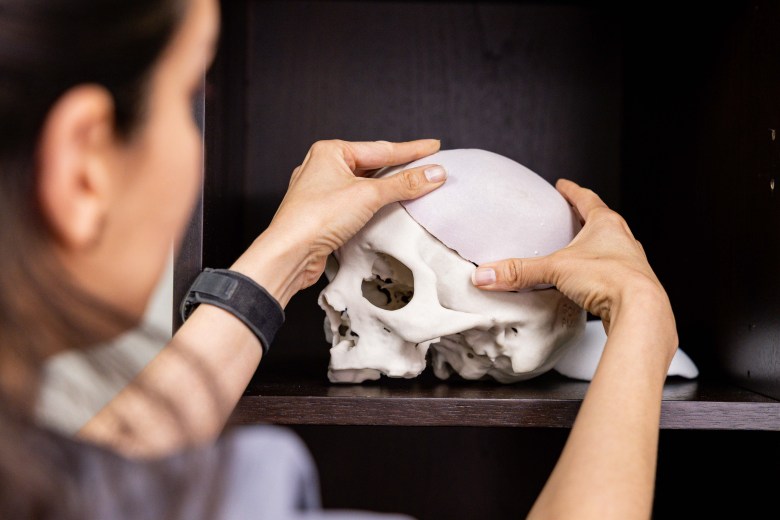 Verduzco-Gutierrez demonstrates the differences between a craniotomy and a craniectomy on a model skull displayed in her office at the UT Health Medical Arts & Research Center. Credit: Amber Esparza / San Antonio Report
That’s because the description trivializes what can still be impactful and serious injuries that would benefit from follow-up care, either from a primary care doctor, neurological specialist or mental health counselor, Verduzco-Gutierrez explained, depending on the symptoms.
This group of patients is the least likely to receive that care, partially because most of them do recover from their injuries in days to weeks. But more than 30% of these patients will experience lingering cognitive, physical and emotional symptoms from their head injuries that impair everyday function in the months that follow, and 22% will experience these symptoms a year from their injury, a 2014 research paper found.
“For some patients, it isn’t mild,” Verduzco-Gutierrez said. “It downplays the seriousness. We really want people to take it seriously.”
Social factors affecting brain injury
Following their injury, patients with TBIs might experience sleep disturbances, fatigue, irritability, headaches, memory and concentration difficulties. The risk for longer-term complications increases with the severity of the injury, history of head trauma, presence of other mental health challenges and several other factors.
The are 11 recommendations in the new standards.
Verduzco-Gutierrez’s expertise was most utilized to craft a recommendation for providers to screen patients for social determinants of health, the non-medical factors of care like poverty, housing, food and transportation access, among other social contributors to poor health outcomes.
“Do they have housing? Are they able to get transportation to these appointments? Do they have financial difficulties to be able to pay for some of the things that you’re recommending?” Verduzco-Gutierrez said. “Are they worried about losing their job because of their head injury, and they can’t go to work right away? What kind of resources can you get for them?”
The standards also carve out special considerations for patients who experienced head trauma from domestic violence, patients who are at increased risk for mental health challenges like post-traumatic stress disorder and require additional efforts from health care providers.
“If we don’t identify and address these barriers, even the best medical plan can fall short,” Verduzco-Gutierrez added.