
In the middle of a hot summer night in North Texas summer, a pair of 13-year-old boys were goofing off on a gigantic jungle gym.
The best friends were inseparable on idle days like these, up for some mindless mischief that would maybe irritate their parents or the neighbors but not land them in any real trouble.
Squatting at the top of the playground equipment at Celebration Park in Allen, one of the teens — indisputably considered the edgier of the two — unzipped his pants and released a flow of urine that rained down over the edge of the structure.
“He thought it was funny. He thought it was cool,” recalled Anthony Gorczyca, his childhood friend, “because that’s not what you’re supposed to do.”
Breaking News
Gorczyca, now 29, matured past the age of such juvenile jokes and boorish behavior. He looks back at such moments now — with the knowledge of what became of his friend — and says he feels compelled to share a cautionary tale.
His friend’s behavior over the following years became increasingly erratic, more disturbing.
It reached its apex on an early morning in late September when Joshua Jahn positioned himself on a rooftop, pulled out a rifle and opened fire on a Dallas Immigration and Customs Enforcement field office. He injured three detainees, killing two. Gorczyca’s childhood friend then turned the gun on himself.
The shooting reignited a national discussion over immigration policy, over how political disagreement has turned violent and over how such violence is increasingly by young, disaffected males.
For Gorczyca and eight other members of a group of friends who grew up with Jahn, it was something more — and something more intimate. Their one-time friend’s involvement sparked numerous conversations as they struggled to process emotions and make sense of what happened. All of them are 29 years old, graduates of the Allen High School Class of 2014. Each comes from middle- to upper-income families of mostly college-educated parents who ensured their boys would grow up with good schools and in a family atmosphere.
The young men shared their thoughts with The Dallas Morning News. They also provided The News with video and photos of times they had spent with Jahn at the park, at home, at birthday parties, on road trips and other get-togethers before and after high school. A few of the young men spent hours in interviews with The News, recalling those moments.
Gorczyca became the group’s de facto spokesman, in large part because he initiated the conversations and was among those who had known Jahn since elementary school. He also appears to be among the last to have made contact with him online, though none of them had any real contact with Jahn in recent years.
There is no disagreement among them that “Josh,” as they knew him, committed a reprehensible crime. But, Gorczyca said, they can relate to the struggles he faced leading up to that moment.
They understand perhaps better than anyone the online influences and myriad factors that shaped their friend because these are the same forces that have shaped an entire generation of boys and men who often feel unmoored and unrecognized.
“Maleness is bound up with this broad idea of utility,” Gorczyca said. “You’re only as valuable as you are useful. If you fail to be useful or you underperform, you will be discarded – deemed unworthy of even basic compassion.
“I think most men have internalized this idea that we’re not inherently valuable; we are spare genetic material.”
In its effort to explore these beliefs, The News spoke to a dozen experts about why boys and young men are despairing. Among them were national, state and local psychologists, social workers, anthropologists, psychiatrists and criminologists who work with male prison inmates. The News also interviewed attorneys who have launched nationwide class-action lawsuits against social media platforms, alleging their influence caused irreparable harm to boys and men.
Most often, the experts say, young men today have sought belonging in an online world that combines the social isolation that comes with sitting in front of a computer or on a phone with the faulty core beliefs and unrealistic expectations promoted by influencers.
Now as young adults, those core beliefs have become incompatible with the real world, said Neely Myers, a medical and psychological anthropologist who is also the director of the Mental Health Innovation Lab at Southern Methodist University.
“These are toxic pathways to social belonging in worlds that don’t even exist,’’ Myers said. “It’s creating this very false way of getting social approval that’s actually breaking down a sense of what is beautiful, good and true and giving these boys a sense of beauty and truth and goodness that is dark.”
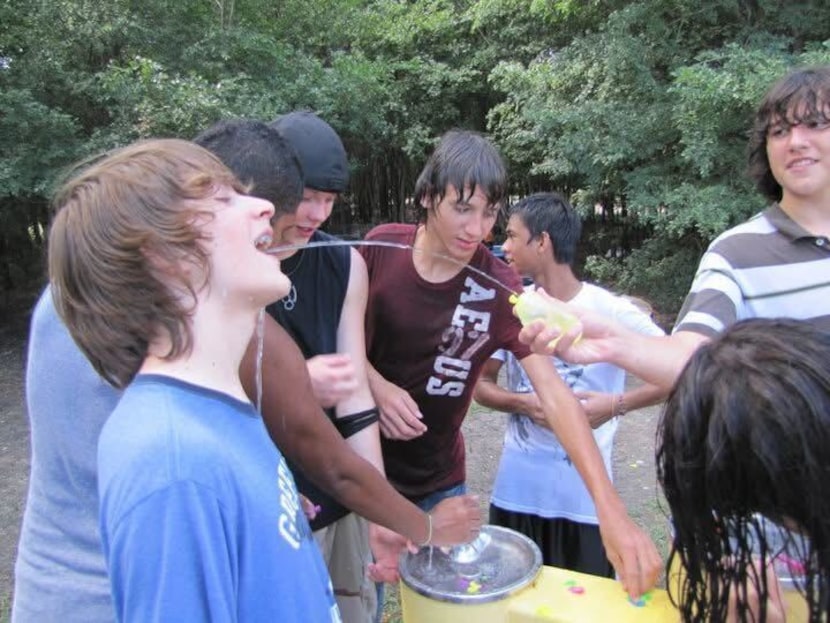
In this undated photo, Joshua Jahn sprays water in the face of friend Anthony Gorczyca, while the boys and other friends hang out in Allen.
Anthony Gorczyca
The boys in Gorczyca’s group say they are all too familiar with the harmful messages viewed time and time again on the internet. They have a term for it: “social rot.”
They didn’t see it that way growing up. They just considered it a part of everyday life.
Jahn grew up just like they did, his friends said. He had hopes for the future. He was popular with girls and loyal to his friends. He had an anti-authoritarian streak and was a daredevil and prankster. He also had a knack for computers.
But if there was something illicit or forbidden, they said, he was the one in the group who would push limits, discover it and share it with his friends.
He introduced the group to smoking pot and fringe websites. It was widely known throughout high school that he used drugs, including LSD, Gorczyca said, but he could also buckle down enough to be admitted into the mechanical engineering program at the University of Texas at Dallas.
Like some in the friends’ group, including Gorczyca, the moves he made to try to transition into adulthood collapsed.
Jahn dropped out of college two years after beginning his studies in mechanical engineering and documents show he failed most of his classes. He tried various Plan B’s, but they never stuck — installing and assembling solar panels, working gig jobs at Domino’s and Target. He tried stand-up comedy, but he bombed because he wasn’t as funny as he thought he was, said Mitchell Ryan, who met Jahn as a freshman in high school.
In more recent years, after Jahn had lost touch with most of his friends, he told Gorczyca he had tried cannabis farming. Sometime around 2017, he drove from Texas to Washington state. He spent months sleeping in his car while working at a legal cannabis farm, Ryan Sanderson, the farm’s owner, told The News.
Jahn eventually gave up and went back home.
Jahn’s parents did not respond to calls and emails for this story. However, in an interview with the FBI shortly after the shooting and obtained by The News, Andrew and Sharon Jahn confirmed their son had lived with them until the morning of the shooting.
They described him as a loner and were generally not aware of his daily activities. He did not work and was provided for financially by his parents. According to them, Jahn did not have any friends or romantic partners they were aware of. They said he spent much of his time on his computer playing games and was “obsessed” with AI technology.
“The offender would occasionally discuss current events with his mother,” according to the FBI report, “however, did not engage in conversation often.”
Consistent with the FBI interview, his friends said they had only sporadic contact with him — some not at all. In recent years, what they do know from their limited interactions is that Jahn became more withdrawn and isolated. Their only contact was online. It seemed that’s where he lived.
Nearly two months since the shooting, the act of violence at the Dallas ICE facility has largely faded from most social discourse. His friends believe his final act was more about ending his personal turmoil than making a statement, ideological or otherwise.
“He may have been inspired by some other act of violence,’’ Ryan said, “but before the spectacle, the politics, I think the initial decision was probably suicide.”
He also suspected Jahn “wanted to kind of go out in style and screw with people one last time.”
Disturbing discoveries
As young children, Jahn and Gorczyca at first hated each other.
Gorczyca recalls Jahn throwing a kickball at his head when they were in the fourth grade at Anderson Elementary School in Allen. Fights over who could be friends with whom broke out in the lunchroom and led to a trip to the principal’s office. Their parents became involved.
The boys ultimately stopped fighting, Gorczyca said, and at first, they just tolerated each other. That is, until they discovered they liked the same video games and quirky YouTube videos. They were part of a generation that had received Nintendo GameCubes for Christmas in the first grade and had become experts at Super Smash Brothers by the time they were 9 and 10 years old.
As they got older, they strategized on how to persuade their parents to let them play M-rated games such as Halo, Grand Theft Auto and Call of Duty. In their adolescent world, that was a rite of passage.
By the summer of their 13th birthdays, the two boys were inseparable. They lived within biking distance from one another and spent almost every day together, burning hours on a desktop computer in Jahn’s room.
They soon discovered the internet wasn’t just something to use for help with homework or to look up funny videos. It was also the source for information you can’t view anywhere else. It was a place where they could be exposed to violence and pornography.
“Really gnarly, nasty stuff,” Gorczyca said, “like sort of the darkest stuff that exists at the fringes of our collective subconscious.”
Ryan said he, like Gorczyca and Jahn, also was aware of the illicit material on the image board 4chan. The website allowed users to post anonymously, they explained, so users didn’t have to share a screen name that could be tied to their identities.
In 2010, 4chan hadn’t really penetrated the mainstream discourse very much.
“It was, you know, ‘Check out this crazy website I just found,’ ” Ryan said. “You get sucked into it where it’s just the Wild West.”
Gorczyca said there were many spaces on 4chan geared toward males.
“The whole culture behind it is that this place is the only place where you can talk about the ugly truth, right, the ugly truth of who we are. The stuff you can’t really talk about anywhere else, but is nonetheless a part of us in some way.
“And Josh was morbidly fascinated with that idea.”
One day, they stumbled upon a group of videos that became a viral phenomenon on the site. Gorczyca said one in particular, known as “3 Guys, 1 Hammer,” served as his first exposure to unfathomable violence. The images, recorded by two Ukrainian serial killers and leaked to the internet, showed two men who had kidnapped a third man and bludgeoned him to death in the face with a hammer.
Upon hearing about it, Gorczyca said, the friends agreed: “Oh, we have to watch this shocking video.”
Eventually, the video began to play. “It’s like real awful violence, like this guy is getting killed on camera and like it’s right there.”
Gorczyca said he looked away from the video and toward Jahn.
Jahn watched “without blinking or wincing,” Gorczyca said. “ ‘Yeah, that was pretty bad,’ he said in a deadpan voice, seemingly unaffected, as though he had seen worse stuff before.”
Unrealistic expectations
As boys coming of age in the 2010s, the eldest members of Generation Z were always plugged in. They spent their formative years immersed in technology and the expansion of the internet, which had little or no government oversight.
A few years after high school, they also saw #MeToo open up a national conversation about sexual harassment and gender-based abuse.
Rightfully so, a number of men were held accountable for their toxic actions and behaviors, said Rene Garcia, a psychotherapist who serves adolescents and young male clients in Dallas.
Some influencers took the opportunity to spread messages that those men who had committed crimes shouldn’t have to be accountable for their actions, Garcia said, and now it has become a struggle for some men to process those conflicting messages and many others.
A universal life goal as an emerging adult is to partner with somebody, said Greg Matos, a psychologist in Los Angeles who writes in a blog for Psychology Today about the struggle of men and boys and their dissatisfaction with life.
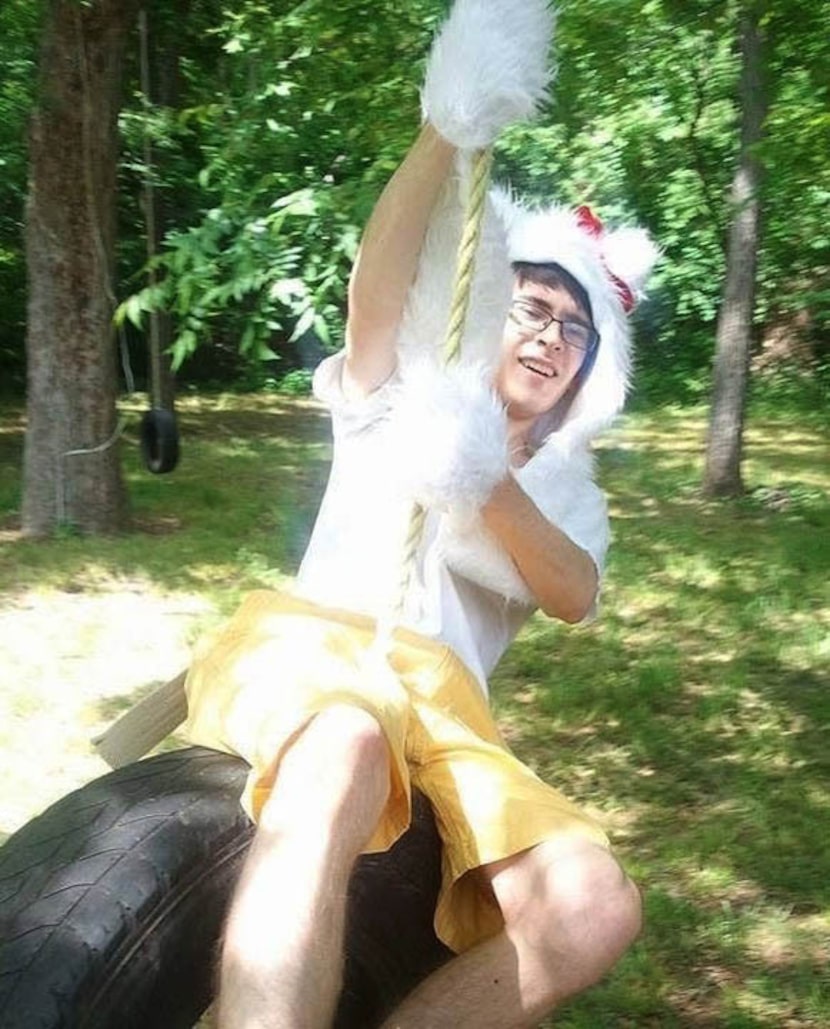
Joshua Jahn is photographed by friend Anthony Gorczyca in Allen.
Anthony Gorczyca
Though the goal might be universal, the reality is not. It’s estimated that by 2050 as many as 25% of young men and boys, Matos said, will go through life without ever having a romantic relationship. That harsh reality is amplified by a barrage of messages from influencers that assert that unless you are wealthy enough or attractive enough, there’s no point in trying; get used to rejection.
Making matters worse, many young males have been overexposed to online pornography beginning as early as age 12. They have learned their mating rituals from unrealistic, sexually explicit, scripted scenes.
So when they try to initiate a relationship in real life, they have no sense of courting steps such as handholding or learning to get to know each other, said Dr. Ishdeep Narang, a psychiatrist in Orlando, Fla., who works with adolescents and young men in their early to late 20s who suffer anxiety and depressive symptoms.
“Intimacy is a very complex thing,” Narang said. “You have to learn skills to be awkward, to talk to someone, how to handle rejection, how to be vulnerable, how to communicate.
“They are skipping all that skill-building.”
The often ensuing rejection, Narang said, leads to panic — and a sense of unworthiness. Or something more violent for those who take from those scripted scenes a sense of not just unrealistic expectations, but entitlement.
Then there is the internet’s unrelenting reminder of unrealistic expectations: influencers.
Influencers depict themselves in wildly successful terms — fashionable, good-looking, happy, well-adjusted, rich — without context for the real-world struggles that may have led to those successes, said Melissa Johnson, a therapist and clinical social worker at Victory Starts Now, a Los Angeles nonprofit that helps former prison inmates rebuild their lives.
“We don’t get to see all the rough parts and all the kinds of backslides that they went through to get to those successful points,” she said. “We see all the highlights.”
So, “of course,” she said, “they’re going to feel like they don’t reach that expectation.”
By middle school, parents in Allen had already begun to set expectations for their sons. And their sons had already begun to set expectations for themselves.
Ryan’s parents told him he could go to college and they would gladly pay for it, or he would be required to pay them rent to live at home, he said. “They just wanted to make sure I was doing something,’’ he said.
He wasn’t thrilled with school. So at 15, he started working. The experience led to full-time work and steady employment. He is now in the remodeling business.
“I’m not saving lives. I’m not changing the world,” he said. “But I’m supporting small businesses.”
At age 12, Gorczyca visited the University of Texas in Austin with his parents, who both went there. That became his expectation.
When he enrolled at UT, he was passing his classes, but he felt discouraged because he wasn’t passing with flying colors like his girlfriend at the time. He also often would compare himself to other students who started coding in middle school. Many of them were on their way, he presumed, to receiving funding from a venture capitalist and becoming millionaires.
“It was isolating,” Gorcyzca said, “and I felt like no matter what I tried to do, I couldn’t do the right thing.
“I felt very much like a fish out of water, I was just here, and they were coding at 12, making apps. They were like, ‘Oh, I am going to save the world.’ ”
He started to realize that some of his beliefs created by the internet were becoming harmful to him.
“A lot of your life has been reduced to this zero-sum game where the winner takes all,’’ he said, “when you know the value of human life is obviously not that, but that’s one way to frame it, and I think a lot of young men internalize that and it messes with them.
“And I think it messed with me, too.”
About the same time, his parents filed for divorce, and the girl he had been dating for six months was giving him the silent treatment.
“Everything seems like it doesn’t fit,’’ he said. “And all the signals you’re getting is that you’re on the wrong path.”
Gorczyca spent sleepless nights filled with panic attacks. One night in a bathroom at his dorm room, he said he tried to hurt himself by digging his fingernails into his wrists. He ended up that night in a hospital psychiatric ward and subsequently fell behind in his classes.
He ended up dropping out of UT but returned a few years later to complete a degree in philosophy with a minor in computer science. Before his return, he said he binge-consumed drugs and alcohol on a daily basis and didn’t know how to reach out for help. Every resource seemed either overwhelmed with more vulnerable people or insufficiently equipped to grapple with his underlying emotional issues.
He is now clean. He managed a popular Dallas doughnut shop until it closed this summer. He has since looked for a steady job.
No exit
During their transition into adulthood, almost every young man in the group experienced some sort of personal or professional failure that made him feel inadequate compared to what he was seeing on internet platforms.
Some struggled with substances. Others with academics. Most ultimately found their way.
Jahn, throughout his childhood, as a teen and in the years leading up to the tragedy at the ICE facility, appeared to display some of the red flags associated with people who are about to commit a violent act, said Kenya Brumfield-Young, an assistant professor of criminology at St. Louis University who studies how digital content can lead to repeated or deviant delinquent behaviors. Brumfield-Young based her comments on what she had read about the incident as well as information from Jahn’s friends that was shared with her by The News.
Gorczyca said Jahn had a morbid curiosity with dark spaces on the internet.
“He kept going to these sites over and over again,” Gorczyca said. He was always someone who wanted to understand what existed at the limits of human experience, of human evil, his friends said. “How much adrenaline can I feel?”
Naturally, Brumfield-Young said, his brain craved more.
“It’s a rush of dopamine,” she said, “and over time, the brain will demand larger hits to receive a similar rush.”
Eventually, Gorczyca said, “Josh must have gone into quite an abysmal rabbit hole.”
His friends said it happened over time, but the signs were there early on.
In the sixth grade, Jahn proposed an independent study project to his teachers to build a map of his elementary school inspired by a single-shooter video game that allows the player to roam the hallways, enter classrooms, teacher lounges and other school facilities for the purpose of locating targets, Gorcyzca said.
Teachers told Jahn no.
He also liked to be an exhibitionist, friends said, almost always taking the lead among his friends to introduce them to inappropriate, even criminal, activity.
He stole candy bars and alcohol from convenience stores, they said, and sprayed graffiti on the back of the only Walmart in Allen.
When he was 15, a friend found child pornography on Jahn’s iPod Touch.
By high school, he was a well-known drug user who experimented with Salvia divinorum, also known as magic mint, a plant that contained a compound known for its hallucinogenic effects. He was on LSD during their high school graduation ceremonies at the American Airlines Center in Dallas, Gorczyca said.
“It’s almost as if he’s looking for something,” said Myers, the medical and psychological anthropologist at SMU, “he’s trying to understand something.
“It almost seems like a relentless effort to fill some kind of hole.”
Society tends to ostracize young men like Jahn and think they’re monsters, said Johnson, the Los Angeles therapist who works with incarcerated young males. They are seen as not even human, and so they separate them from the general population.
The reality is, she said, “if we walked in his footsteps, we would end up exactly where he ended up.
“We are all the same person, and some get help and some don’t, and that’s the real difference here.”
Jeff Nadrich, an attorney in Los Angeles who has launched a nationwide class-action lawsuit against social media platforms for what he says are toxic messages, said the problem impacts boys and men from all socioeconomic brackets. “They just accept ridiculous things at face value.”
Those who knew Jahn well understood that.
“People who do stuff like this, the mass shootings and stuff, they laugh at the same jokes you do,” Gorzyca said. “They watch the same movies you do. They listen to the same music. They show you music that you connect with. They’re not monsters. They’re regular people who decided to do something really bad.”
The friends remember Jahn at his best, a capable, smart guy who could have given a lot to the world “had he not decided to do something so stupid and evil,” Gorzyca said. He was skillful with computers, able to hide his digital footprint. He liked music and art, had fun with his friends and cared about them. He would step up on behalf of a friend, and the Jahn they knew had a moral sense about him.
His parents were asked by the FBI after the shooting if they had seen signs of physical or mental trouble. They said he had never been diagnosed or treated for any mental or physical disorders.
His parents said he was “completely normal” until he went to live in Washington state about four to five years prior. He moved back home because he could not keep a job. When he returned home, he told his parents he had been exposed to radiation from a nearby facility and was suffering from radiation sickness. He also said he had become allergic to plastic and would often wear cotton gloves to prevent further exposing himself.
It’s unlikely Jahn would have asked for help from a mental health expert, his friends said.
“There’s a stigma of reaching out and asking for help,” said Ryan. “And then what kind are you going to get if you don’t have health insurance?
“We’re just guys. We’re just trying to keep our head down and survive. We’re really short on solutions.”
Maybe, one answer, Gorczyca said, is “resilience and then faith in people who immediately surround you.”

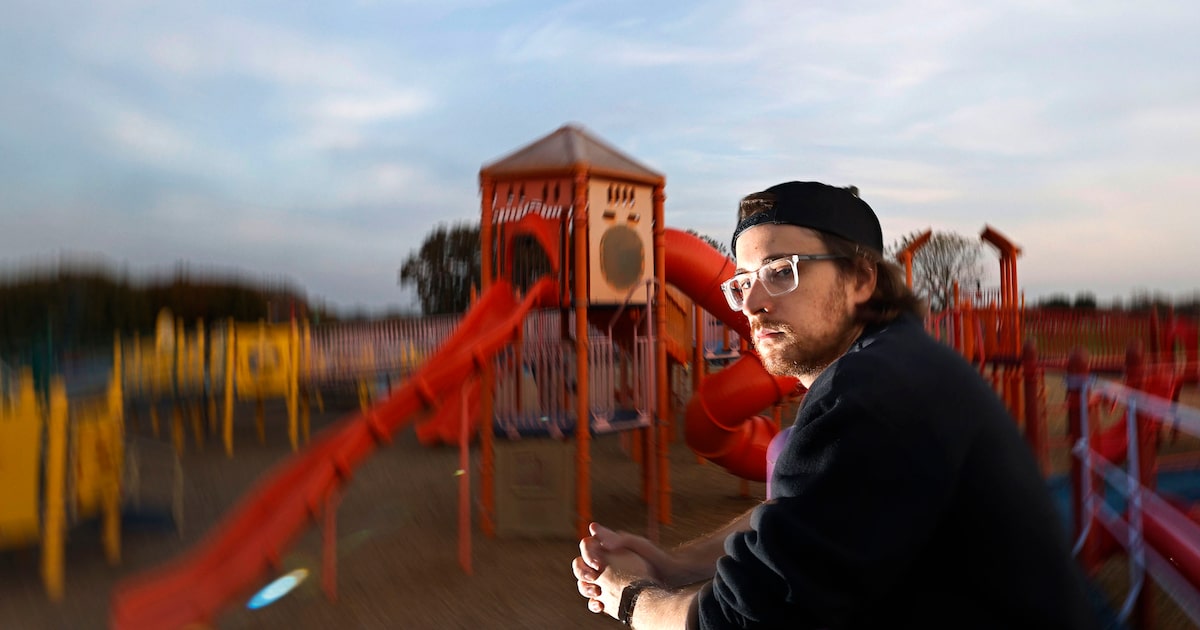
Anthony Gorczyca, a childhood friend of Joshua Jahn, who opened fire on a Dallas Immigration and Customs Enforcement field office, poses for a photo, Tuesday, Nov. 18, 2025, at Celebration Park, in Allen. Gorczyca and Jahn had spent time at the park when they were teenagers.
Chitose Suzuki / Staff Photographer
Misunderstanding Josh
Phone calls, text messages and comments flew and blew up social media across Dallas when the ICE shootings hit the news.
Gorczyca texted a photo of one of the news stories to Ryan and the other friends. He wrote in the text, “He’s dead.”
His friends reacted in various ways: in a daze, numbness and anger.
“My initial thing was anger,” Ryan said, “then just kind of in a daze, you know. But it was honestly the same reaction I get anytime something like this happens.”
Still, the Dallas shooting was different. It was about someone they had known, someone who was anti-establishment but would have never shot up an ICE facility for political reasons. And the news media blew it, they said, by creating the perception that his actions were in furtherance of one political group or another.
Some information on social media posted by people who didn’t know Jahn was entirely wrong, Gorczyca and Ryan said.
“You watch the big media spectacle and the politicians blaming each other, and they don’t even know how to pronounce his last name,” Ryan said. “All these people who think they know Josh and they don’t.
“That’s not how he operated. He had an independent streak and he could give a f— about party affiliation.”
What they knew for sure about him, they said, is he would die young.
“We all were certain he would get shot in a drug bust,’’ Ryan said. “It’d be something dumb like that.
“But I didn’t think he was going to commit murder.”