Texas A&M AgriLife is partnering with beef producers across Texas to optimize production efficiency and sustainability of cow-calf and stocker operations.
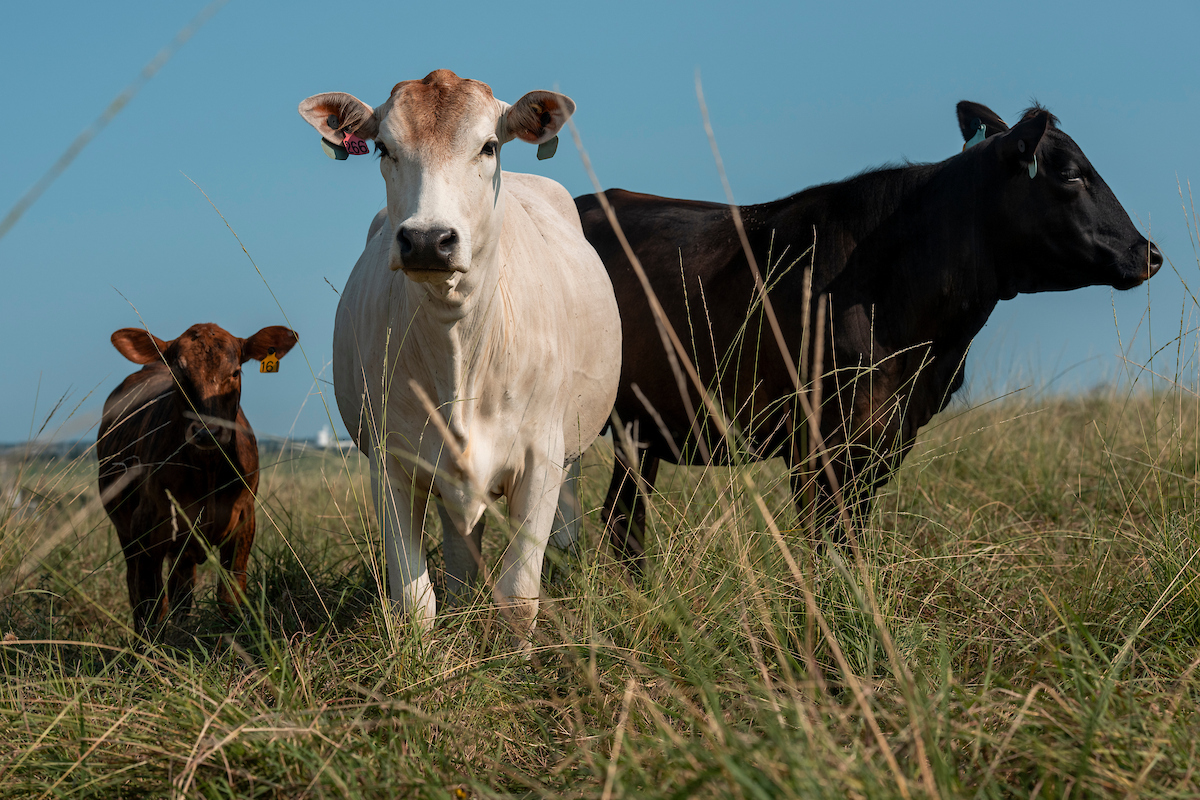 Texas A&M AgriLife is working with cattle producers to improve efficiency and reduce inputs on grazing land, helping sustain beef stocker operations. (Michael Miller/Texas A&M AgriLife)
The Texas Beef Cattle Efficiency Initiative is designed to help ranchers identify and adopt management practices that deliver measurable efficiency gains, lower input costs and safeguard grazing land resources.
Leading the educational project are Jason Smith, Ph.D., Texas A&M AgriLife Extension Service beef cattle specialist and associate professor, Texas A&M Department of Animal Science, Amarillo, and Jeff Goodwin, Ph.D., director of the Texas A&M Center for Grazinglands and Ranch Management and assistant professor, Department of Rangeland, Wildlife and Fisheries Management, Bryan-College Station.
“By working directly with individual cow-calf and stocker operations, we can help ranchers gain the knowledge, tools and support necessary to improve production efficiency in areas that they identify as valuable,” Smith said. “In addition to added revenue and decreased input costs, the ranchers who participate in the project should expect to learn how to adopt practices that support the long-term sustainability of their operation.”
Goodwin said the program focuses on building producer knowledge and confidence.
“Through collaborative projects like this, we can contribute to a stronger, more resilient Texas beef supply chain,” he said
Matching operations with practices that make cents
The project, supported by funding from the Foundation for Food and Agriculture Research, McDonald’s Corporation, and Golden State Foods, is designed to provide Texas beef cattle producers with customized programming and educational resources, allowing them to choose the strategies that best match their goals.
Many practices are already recognized as “best practices,” Smith said, but adoption can be uneven due to barriers ranging from cost to uncertainty about results.
“Because of the variety that exists in grazing beef operations, most things are not one size fits all,” he said. “Producers may adopt certain practices, but not others due to simple barriers that need to be overcome. We want to help connect the dots at the ranch level to help producers identify other practices that may benefit their operation.”
In addition to the tangible economic benefits from these practices, producers participating in the project should also expect environmental gains, such as reduced nutrient losses and improved grazing land health, he said.
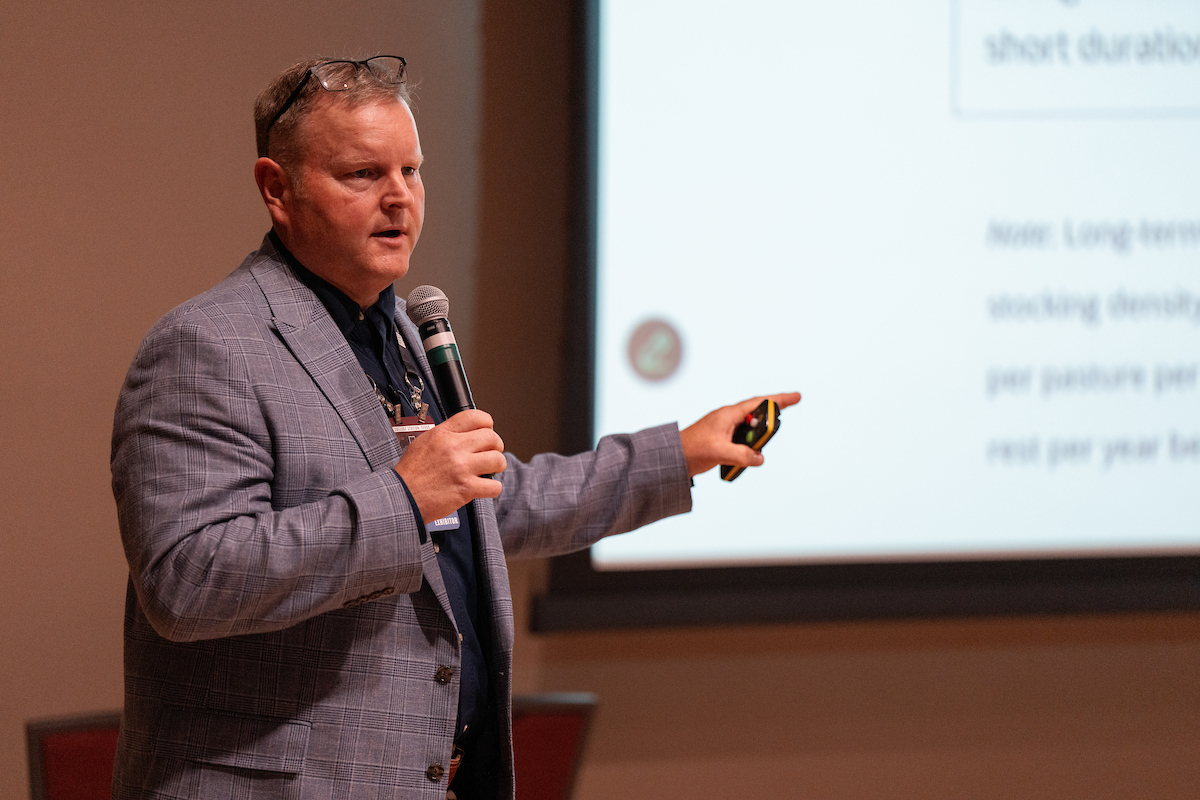
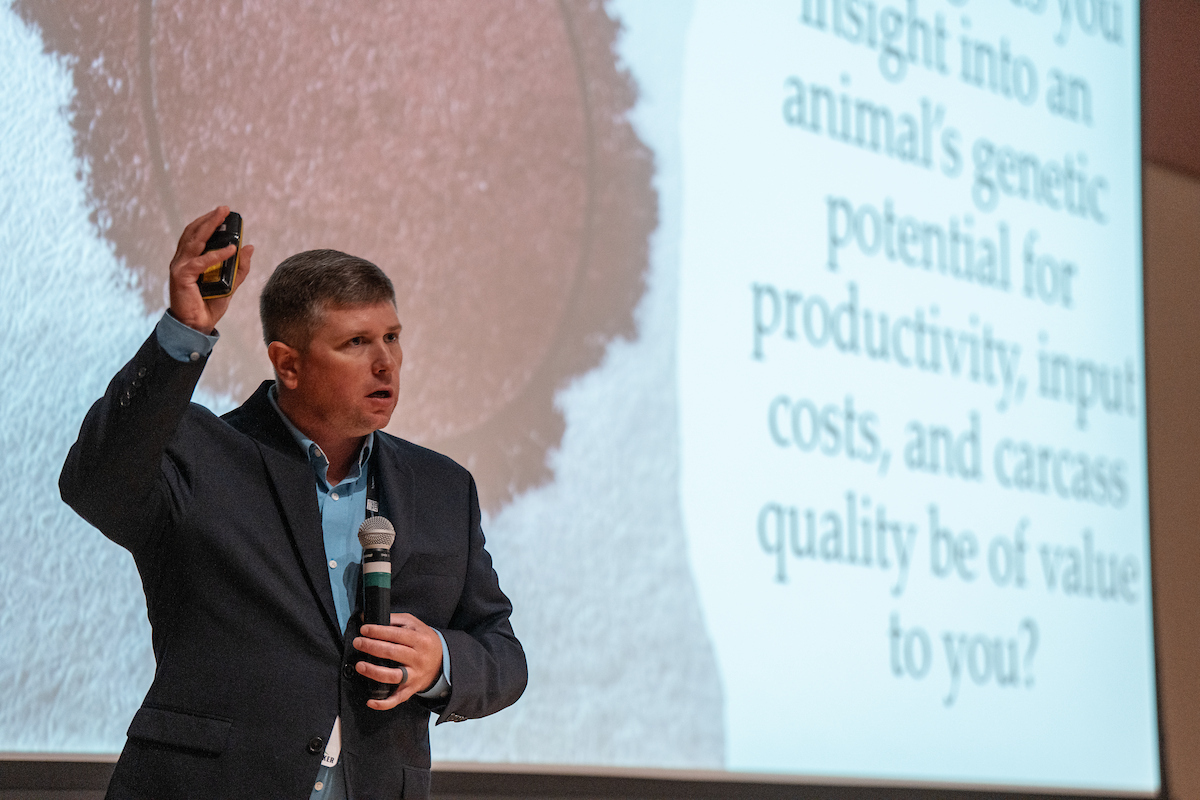
Jeff Goodwin, Ph.D., left, director of the Texas A&M Center for Grazinglands, and Jason Smith, Ph.D., right, Texas A&M AgriLife Extension Service beef cattle specialist, are providing beef cattle producers with customized programming and educational resources to improve operational efficiency. (Courtney Sacco/Texas A&M AgriLife)
Detailed record-keeping to document changes
The project focuses on all aspects of management, including nutrition, grazing management, genetic selection, health, reproduction and handling. A central component of the program is providing participants with access to record-keeping tools to inform both individual-animal and herd-level management decisions.
“Good records that can be objectively evaluated, then used to make decisions, can put managers in the driver’s seat of herd productivity,” Smith said.
One example is optimizing cow size. The industry trend has been for mature cow weights to increase over time. On average, larger animals require more forage or supplemental feed without consistently weaning enough additional calf weight to offset the added cost.
Within the context of this example, participants will learn how to use sire and replacement heifer selection to optimize cow size, he said.
“If the operation can moderate cow weight and maintain productivity, that is expected to translate to input cost savings,” Smith said. “Reducing cow forage intake by 17% means the operation could potentially run 12 cows on the same forage resources previously required to support 10. The cost savings and additional revenue generated in that situation are incredible.
“That kind of savings could be achieved by moderating mature cow size from 1,600 pounds to a little over 1,300 pounds. And there are a lot more 1,600-pound cows out there than we often recognize.”
Soil health and grazing efficiency
Another component of this project is identifying grazing management strategies that improve the production system’s efficiency while advancing the health and function of the land.
“Soil health is a central indicator of grazing land health,” Goodwin said. “Defining efficient grazing strategies that positively influence soil, plant communities and livestock performance is imperative to increasing the resilience of beef cattle operations.”
Selected participants in the project will have the opportunity to participate in grazing land soil health research on their ranches to help identify grazing efficiencies and strategies with real-world, positive impacts.
Goals for long-term impact
Two major goals of the project are to benchmark current practices in an operation and monitor changes over time. By working with producers and documenting outcomes, the team will not only help producers recognize the impact of their choices but also identify adoption barriers that can be addressed through education and support.
“The best management practices we emphasize are backed by science, field-proven and expected to benefit the operation in real, measurable ways,” Smith said. “Our role is to help producers adopt those practices that promote production efficiency in ways that strengthen their bottom line and support their ability to keep doing what they’re great at, for a long time to come.”
Producers interested in learning more about the Texas Beef Cattle Efficiency Initiative can request additional information by emailing [email protected].