
WASHINGTON – The Trump administration will announce Thursday it has approved a plan to spend about $1.2 billion in federal funding on improving broadband access across Texas, delivering high-speed internet to homes and businesses in hard-to-reach locations.
That amount is substantially less than the $3.3 billion allocated to the state under President Joe Biden through the Broadband Equity Access and Deployment Program, which was included in the 2021 bipartisan infrastructure law.
Other states also have seen their final BEAD plans approved at amounts well below their previous allocations. Trump officials described that difference – $8 billion total nationwide so far – as savings to taxpayers accomplished by ditching cumbersome rules placed on the program under Biden.
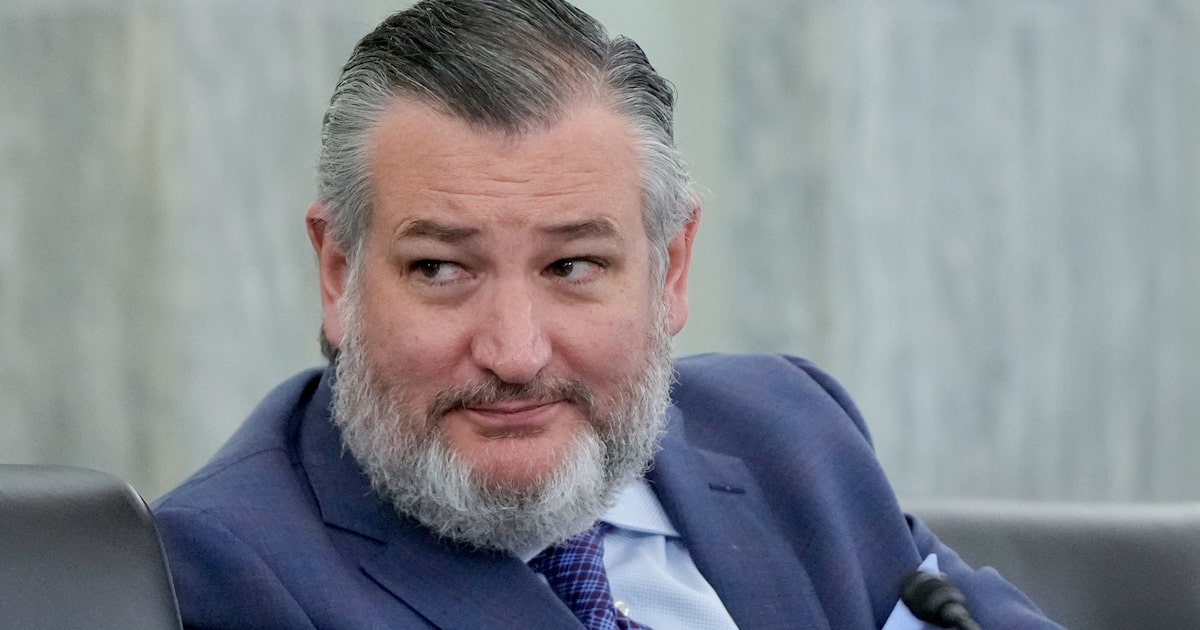
U.S. Sen. Ted Cruz, R-Texas, is chairman of the Senate Committee on Commerce, Science, and Transportation, which has jurisdiction over telecommunications.
Political Points
Cruz has pushed to overhaul the program to strip out the requirements implemented under Biden.
“My work on the Commerce Committee to hold the BEAD program accountable has spared taxpayers from paying for internet to mansions and vacation islands while still securing over $1 billion in funding for Texas,” Cruz said in a statement. “By refocusing the program on its core mission of digital connection, instead of the Biden administration’s costly and burdensome regulation, we have freed states like Texas to responsibly use this money to expand internet access to rural communities.”
Texas is the 19th state to win approval of a final plan, according to the National Telecommunications and Information Administration.
Texas was the last state to submit its initial proposal under the previous rules.
It was able to speed up its timeline under the new process, which included a “Benefit of the Bargain” phase intended to reduce costs, according to the Trump administration.
Assistant Secretary for Communications and Information and NTIA Administrator Arielle Roth said in a statement the timeline is a testament to the quality of Texas’ plan.
“They say everything is bigger in Texas, and we certainly saw that with the effort put forth in their BEAD Final Proposal,” Roth said. “Texas worked incredibly hard to deliver the Benefit of the Bargain — ensuring a fair evaluation of diverse technologies while securing over $2 billion dollars in savings.”
The $42.5 billion BEAD program was a favored talking point of the Biden administration and supporters of the infrastructure law, cited as evidence they were working to push broadband access to far-flung corners of the country and foster economic development in rural areas.
Implementation of the program came with a gauntlet of bureaucratic obstacles, however, and Republicans mocked the lack of actual broadband connections.
As years rolled by, the program also drew derision from the other side of the ideological spectrum.
Comedian Jon Stewart and journalist Ezra Klein highlighted the program as a prime example of Democrats getting in their own way, unintentionally sabotaging the program by piling on unrelated requirements dealing with climate change and labor.
Then-Texas Comptroller Glenn Hegar wrote letters to Cruz and other Texas Republicans on Capitol Hill, advocating for reforms to drop “unnecessary red tape and social initiatives” from the BEAD program.
In June, U.S. Commerce Secretary Howard Lutnick announced a move to scrap the requirements and have states submit revisions to their plans.
In addition to ditching what the administration describes as extraneous requirements, the new approach is designed to be technology neutral, allowing states to spend on low-Earth orbit satellites and other approaches instead of prioritizing fiber optic cable.
U.S. Sen. Maria Cantwell of Washington, the top Democrat on the Commerce Committee, was critical of Lutnick’s approach when he announced it.
“Forcing states to throw out years of careful planning and restart their selection process is bureaucratic whiplash that will delay broadband deployment by at least another year, maybe more, leaving rural families and small businesses disconnected while politicians play games with their future,” Cantwell said at the time.