
On a bright fall morning about an hour west of Austin, Mark Rivers stands on a concrete deck that will soon become the restaurant terrace of the newest—and most ambitious—Canyon Ranch resort ever built. A seven-acre pond stretches off to the left, against a backdrop of oak-studded hills laced with walking trails leading to a 1.7-mile stretch of Lake Travis coastline. “Is there a better seat in the Austin area?” asks Rivers, the company’s CEO.
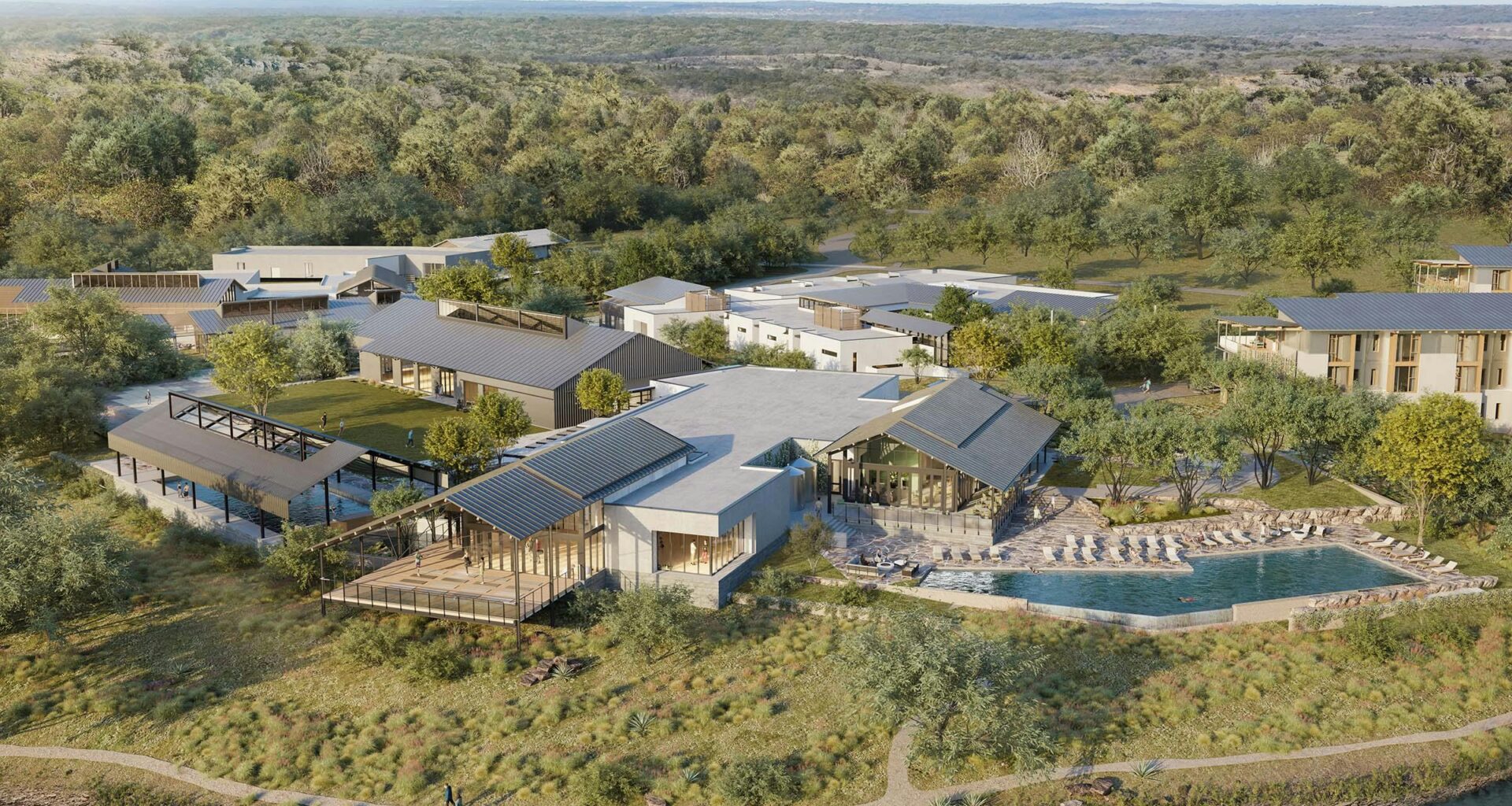
Formerly a hunting ranch known as the Flying X, the 600-acre property near Spicewood will house the first ground-up Canyon Ranch location ever built in the company’s 46-year history. Come September 2026, guests will be able to paddleboard and kayak on the pond or sit at outdoor tables on a lawn that slopes down to the water. They’ll exercise in the 15,000-square-foot fitness center or get pampered in one of the 37 spa treatment rooms. It will be the largest spa resort in Texas. And it’s a homecoming of sorts.
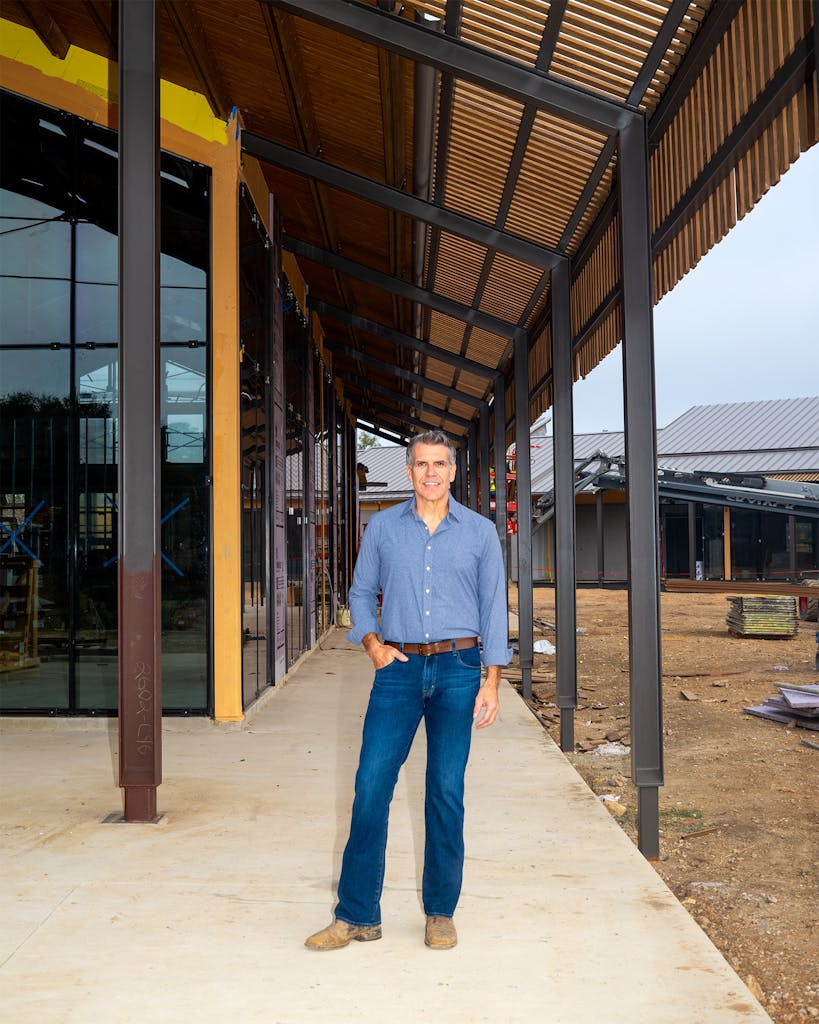 Canyon Ranch CEO Mark Rivers.Mia Baxter
Canyon Ranch pioneered wellness resorts with its original location, on a former dude ranch outside Tucson, Arizona. After decades of being synonymous with the Arizona desert, Canyon Ranch is now a Texas company. Billionaire real estate mogul John Goff bought it from founders Mel and Enid Zuckerman in 2017 and has since focused much of its growth on Texas, moving the headquarters to Fort Worth, establishing a wellness club at his Crescent Hotel there, and now adding this resort, whose total development Rivers estimates will cost $500 million. “He has got a passion for Texas that knows no bounds,” Rivers says.
Hill Country Vernacular
To design a quintessentially Texan wellness experience, Goff turned to one of the state’s most acclaimed architectural firms, San Antonio–based Lake Flato. Cofounder David Lake got involved even before a location was selected. “We looked at several sites,” Lake explains. “Being proximate to water . . . was really important.” Building in the Austin area was also critical, because it’s within reasonable driving distance of four major metro areas. That Austin has become a center of gravity in the wellness economy—rife with podcasters, supplement companies, longevity clinics, better-for-you food start-ups, and biohackers—didn’t escape the company’s notice either.
Rather than build a single monolithic structure, the team designed the resort as a village of what Lake calls “farm-like buildings” arrayed in a crescent formation. (They’ve all been constructed but are unfinished.) “We wanted it to feel like visiting a friend’s ranch,” Lake says. The arrival building, called the Ranch House, sets the tone with a welcoming front porch. Lake Flato’s central design philosophy, one that the firm has perfected across Texas in structures such as Austin’s Central Library and the reimagined Witte Museum, in San Antonio, is about blurring the lines between the indoors and outdoors. Here, that approach forms the connective tissue between the buildings. Clerestory windows flood rooms with natural light. Porches and breezeways create hybrid spaces. A muted color palette of earth tones and grays will blend with the environment.
Lake credits the legendary architect O’Neil Ford, the godfather of Texas modernism, with instilling in him a belief that buildings should reflect their purpose and reveal how they’re made; he calls it “honest” architecture. Exposed roof trusses in the barnlike fitness building emphasize the openness of the space. A large turf lawn for functional fitness training will flank one side of the building, and just beyond that, a long gable roof with open sides will shade the lap pool (which will also host nighttime floating-meditation sessions).
“The whole point is when you move from fitness to the spa or spa to fitness, you’re moving outdoors; you’re having a calming wellness moment,” Lake says. Even the spa treatment rooms, rather than being tucked away in isolated rabbit warrens, branch off from hallways that end with windows that look out on courtyards full of native plants. “You’re not walking to a dead end,” he says. “You’re always walking towards light.”
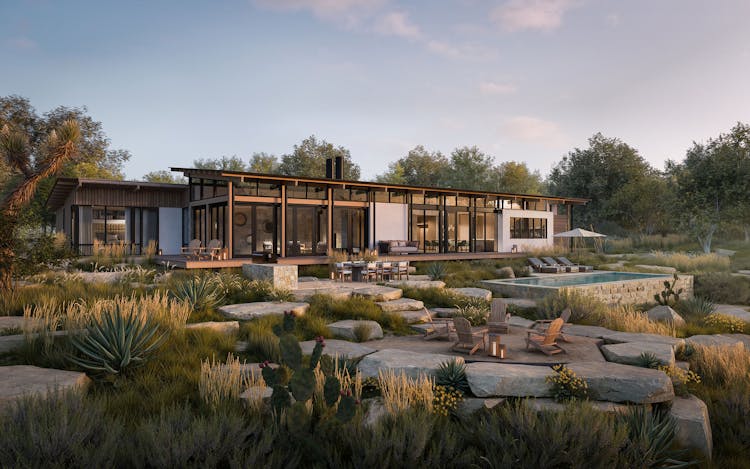 A rendering of a residential exterior. Courtesy of Canyon Ranch
 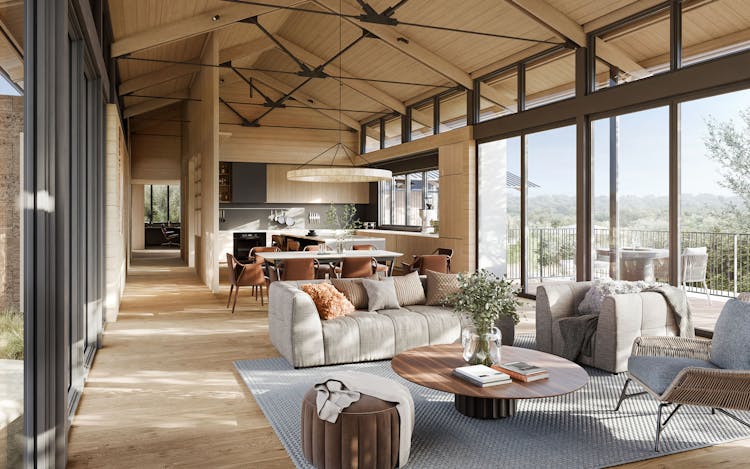 A rendering showing the interior of a residential space. Courtesy of Canyon Ranch
Wellness, Texas-Size
While many luxury resorts now offer wellness amenities, few have Canyon Ranch’s pedigree. The global wellness economy is estimated to be worth a mind-boggling $6.8 trillion, and Canyon Ranch can claim a lot of credit for turning wellness into a lifestyle. At its resorts in Tucson and western Massachusetts, the company has added an ever-expanding suite of services that range from acupuncture to spiritual healing. The new Hill Country location will double down, with concierge medical care featuring two on-site physicians and dozens of other clinicians and nurses.
A key innovation here is the Women’s Wellness Collective, a program addressing critical life stages such as the postpartum phase, perimenopause, and menopause, as well as offering sleep and nutrition programs, hormone therapy, and beauty services. Women have long made up about two-thirds of Canyon Ranch’s clientele, Rivers says.
Guests will also have access to more experiential elements, such as equine therapy and a so-called vitality suite full of wellness-tech gadgets like red-light-therapy beds, vibrating Shiftwave relaxation loungers, and Hyperice cold-therapy recovery devices. The property will provide all the trappings of a proper resort in addition to the wellness and fitness offerings: a complex of pickleball, padel, and tennis courts; a resort pool in addition to the lap pool; and multiple lounge spaces and firepits. One of Rivers’s most controversial—and welcome, to many—changes when he took over two years ago was adding alcohol, which was previously excluded from all Canyon Ranch resorts. “You can be social, you can be accessible—you don’t have to be rigid,” he says as he points out the bar space just off the main dining room.
If it all sounds a little exclusive, well, it is. Stays will start somewhere in the vicinity of $1,400 per night and go up from there, depending on the services. Some people will pay a lot more than that to access the resort not just for a weekend but for a lifetime. Wrapped around the central campus, 134 Lake Flato–designed homes, from 2,800 to 4,700 square feet, are selling now in the $3 million to $5 million range. Every home will include a sauna and a cold plunge, naturally, plus outdoor showers and floor-to-ceiling windows, and many will have views of Lake Travis.
Standing on the restaurant deck overlooking the soon-to-be pond and hundreds of acres of rolling hills, riparian valleys, and rocky bluffs, Rivers surveys his creation. Canyon Ranch has always operated with an outsized sense of what a wellness resort can be, but nothing in its history has ever given the company room to realize that vision on this scale, on this kind of land, in quite this way. “We’re leaning into our Texas-ness,” he says.
Read Next