
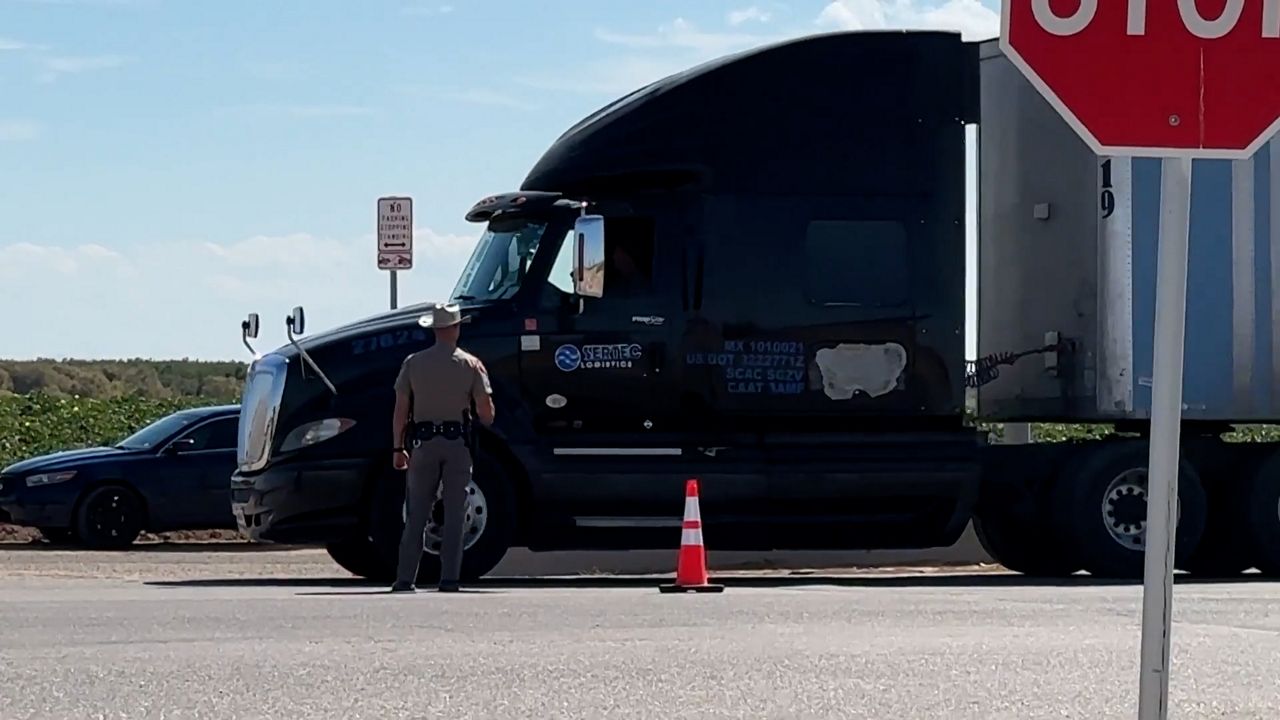
EL PASO, Texas — More than 7,000 commercial truck drivers across the country have been taken off the road this year after failing to meet federal English proficiency requirements, according to U.S. Transportation Secretary Sean Duffy.
The mandate, signed earlier this year in Austin, enforces a long-standing federal rule that commercial vehicle operators must be able to “read and speak the English language sufficiently” to understand traffic signs and communicate with law enforcement.
Federal officials say the requirement is essential for road safety, but some Texas truck drivers, especially those working near the U.S.-Mexico border, argue the new enforcement isn’t fair.
Teofilo Pizano, a veteran truck driver from El Paso with more than 40 years of experience driving in both Mexico and the United States, says the policy misses the mark.
“I believe that language does not impede performing our function of driving safely on the road,” Pizano said.
He argues that traffic signage is already universal enough for experienced drivers to understand, regardless of their first language.
“Drivers from countries with different symbology might struggle to read a sign, but those of us familiar with American vocabulary shouldn’t have any problem with the language,” he said.
Texas Gov. Greg Abbott has also taken steps to reinforce the federal rules.
Abbott recently announced that the state will no longer issue commercial driver licenses to refugees, asylum seekers or DACA recipients, all groups that may face additional challenges meeting the federal standard.
For drivers like Pizano, that approach feels unnecessarily punitive.
“After all these years here in the United States, I can communicate with an officer and answer their questions,” he said. “I cannot have a very in-depth conversation, but I can talk about truck issues, road conditions and all that without any problem.”
Pizano believes that improving training and education within the trucking industry would do more for safety than the English-language enforcement.
“I find it a bit unfair that a person who has no fines, who has a good record on their license and has been working in this field for 10 or 15 years, is not allowed to drive simply because they don’t speak English,” he said.
As enforcement continues, thousands of drivers could face lengthy delays in returning to work unless they meet the federal proficiency requirements, something many border-area drivers say doesn’t reflect their ability to operate vehicles safely on American roads.