
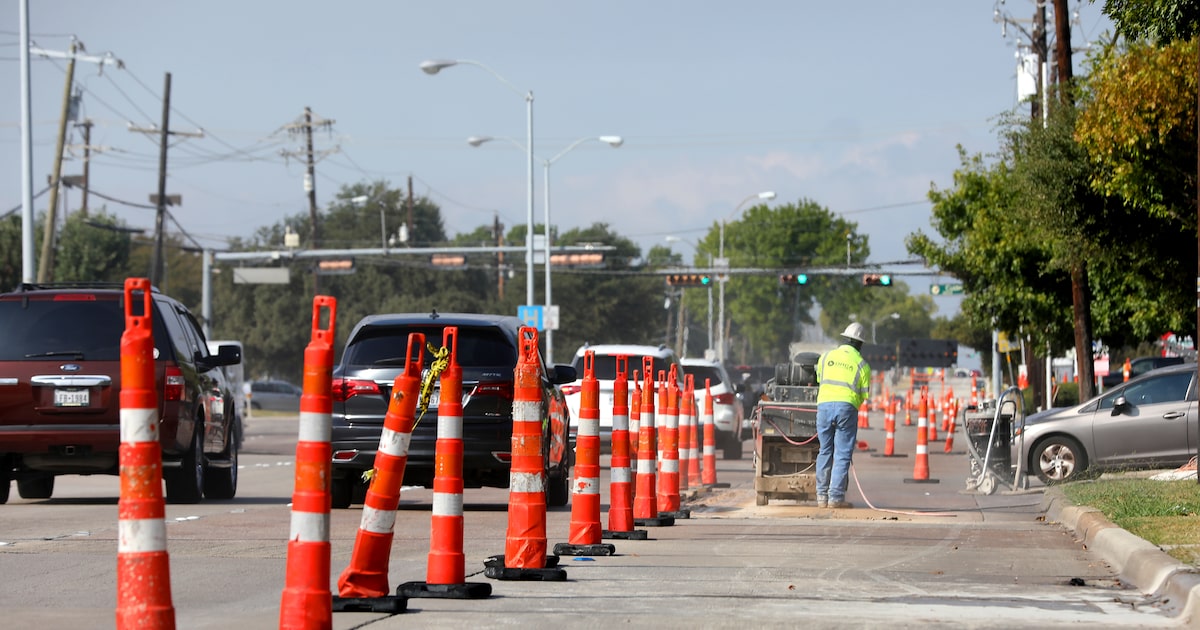
Orange traffic cones have become so prolific on Plano’s roads, Mayor John Muns joked in an address to the city in 2024 that they’re considering designating them as the city’s official flower.
“The hard truth is that the first step to revitalization begins with infrastructure,” Muns said in his speech. “It’s a delicate balance for a city to keep things moving while improving aging assets.”
Residents are familiar with the ongoing closures and construction clogging Plano’s roads.
Ann Boles lives in central Plano and noticed an uptick in road repairs starting around 2021. Her commute to work in east Plano takes two or three times as long as it used to, she said.
Breaking News
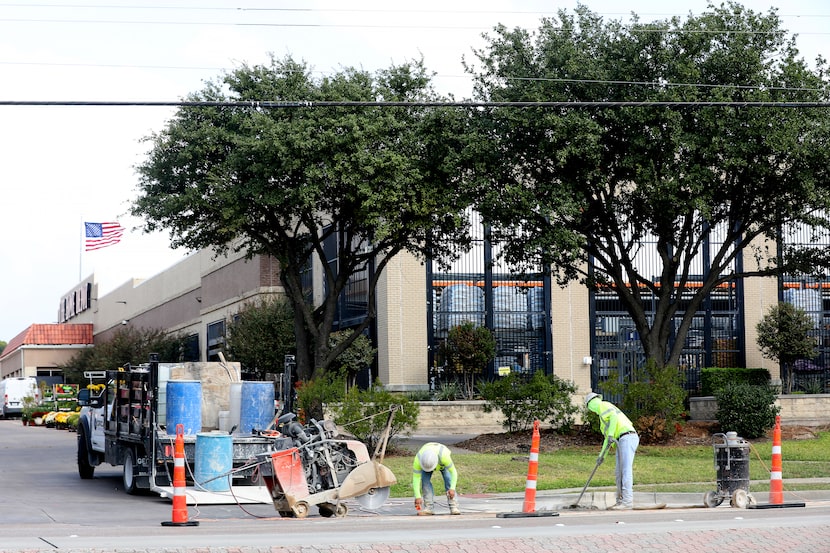
Construction in front of a Home Depot on Parker Road in Plano on Tuesday, Oct. 28, 2025.
Anja Schlein / Special Contributor
“Everything is just a mess,” Boles said. “It just feels like there’s really no place to drive in Plano that doesn’t have construction. … It just never seems to end.”
After a population and economic boom over several decades, the city is nearly built out, and development efforts have turned to redevelopment — much of which is playing out on the city’s streets.
Concrete roads have a lifespan of anywhere from 20 to 40 years, according to the Federal Highway Administration. The city reports over half its roads are more than 30 years old, and need maintenance to extend their useful life.
“A lot of the larger roads, the Coit, the Custers, Plano Parkways … are hitting that end of life,” said Caleb Thornhill, Plano’s director of engineering. “Because Plano boomed in the ‘80s and early ‘90s … that’s why you’ve seen a huge rise in road construction work.”
On average, about 10-20 major road lane miles are under construction a day through the city’s public works and engineering projects — about 1% of the city’s major roads. While it’s a small percentage, disruptions on major roads are more apparent to residents and more disruptive on commutes.
Older sections of the city, such as its east side, have more lane closures and construction disruptions.
Plano has repaired an estimated 500 miles of streets and alleys since 2019, more than 30% of the city’s roads.
It’s expensive work.
Related

Voters have supported bond funding to pay for street projects for years, approving more than $700 million in bonds for street improvements over five elections since 2013. Since 2021, the city has invested more than $305 million in infrastructure rehabilitation. Plano’s five-year community investment program for 2025-2030 includes over $500 million for future road, water and sewer projects, according to city documents.
In addition to repairing roads themselves, water and sewer lines underneath streets require replacement in coordination with major road repairs.
When the city conducts road repairs, staff try to be strategic. They first replace underground utilities, then the concrete, then they apply an overlay in a process that can take several years. If concrete is repaired before an underground water line is replaced, fixing the utility lines could mean tearing up newly repaired roads.
“Instead of waiting for the water line to deteriorate under a major road,” Owens said, “we’re going to replace them proactively.”
Related

The process of strategically addressing this maintenance requires years of planning.
The city is also working to overlay concrete with a thin seal that protects roads from water and extends their lifetime for five to 15 years, Owens said.
Over the next five years, Plano plans to complete at least 40 miles of overlays on major roads, which delays a full road replacement that is more disruptive and expensive. About a third of the city’s major roads have completed concrete repairs and asphalt overlays as of this year, according to city documents.
Repairing major roads in Plano costs $2.5 million per mile, Owens said, to replace panels of concrete then apply an overlay. Fully reconstructing the same mile costs over $15 million.
“It’s fiscally responsible to do it this way,” Owens said.
Sewer and utility construction can take longer than people expect, according to the city, with complex underground networks of utilities that require careful coordination and often are in existing, fully developed neighborhoods.
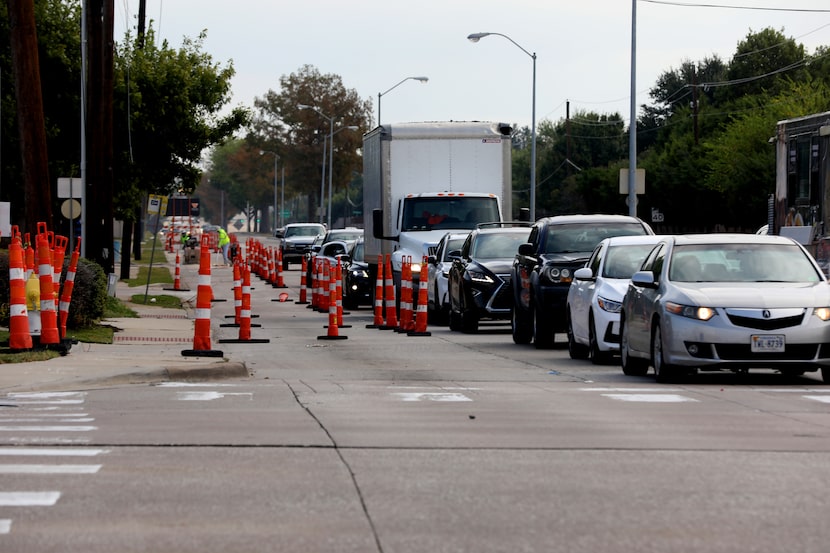
Construction along Parker Road in Plano on Tuesday, Oct. 28, 2025.
Anja Schlein / Special Contributor
Construction must still allow traffic flow, business access and emergency routes. Weather and coordination with outside agencies — like private utility companies and the state transportation department — can also add delays.
Plano’s roads will always be under construction. As infrastructure ages, the city will continually maintain and replace roads, water lines and sewer systems. The orange traffic cones aren’t going away anytime soon.
“There may be an easing up. It’ll never stop,” Thornhill said. “As we continue to get these overlays down throughout the city, the majority of the work will move more into the neighborhoods.”
Email tips on all things Collin County to lilly.kersh@dallasnews.com.