
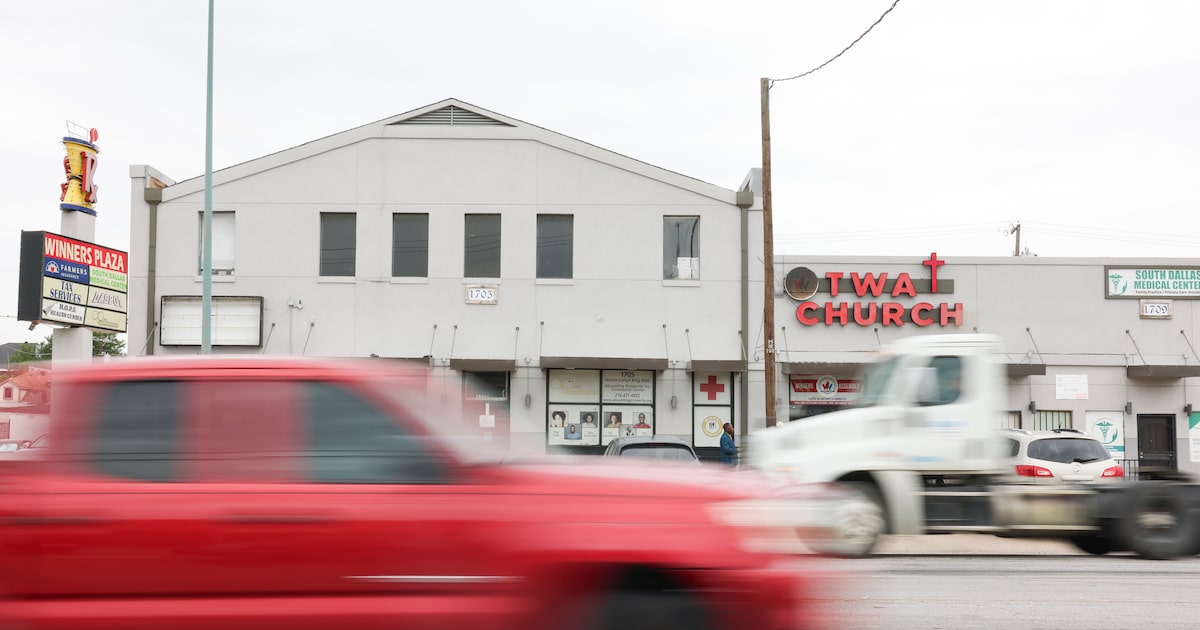

Pastor Austin Anetekhai, among the leaders of The Winners Assembly on Martin Luther King Jr. Boulevard, requested a meeting via text.
“There is a new thinking to our previously proposed 25 story initiative in line with a majority voice of the community,” he wrote, referring to those renderings of the big, shiny tower topped with a helipad recently flattened with ruthless expediency by the City Plan Commission.
Over coffee Wednesday, Anetekhai wanted to discuss what’s next for the 21-year-old church and its Winners Complex, which includes the Abounding Prosperity clinic and pharmacy, at the corner of MLK and Colonial Avenue. We would get to that, eventually, only after we discussed at great length what went very wrong with a plan for a garish high-rise that would have swallowed blocks of South Dallas, including neighborhood anchor Cornerstone Baptist Church.
“After some reflection,” the Nigerian native said with some understatement, “it looks like maybe we were not communicating our intent very well.”
Which is how that ill-conceived concept of an idea of a proposal stuffed with everything from a luxury hotel to a grocery store to a bank to a cancer clinic became a punchline and a cautionary tale: How To Guarantee Your Project Tanks at City Hall.
Opinion
Anetekhai wanted to meet at Ruthie’s on MLK, across from The Winners Assembly, because he’s the head of communications, and the church’s reputation took a walloping in recent months. They’ve been in that community for more than two decades — “doing wonderful things in South Dallas for the homeless, for the helpless,” Anetekhai said — only to have emerged as estranged from their neighbors.
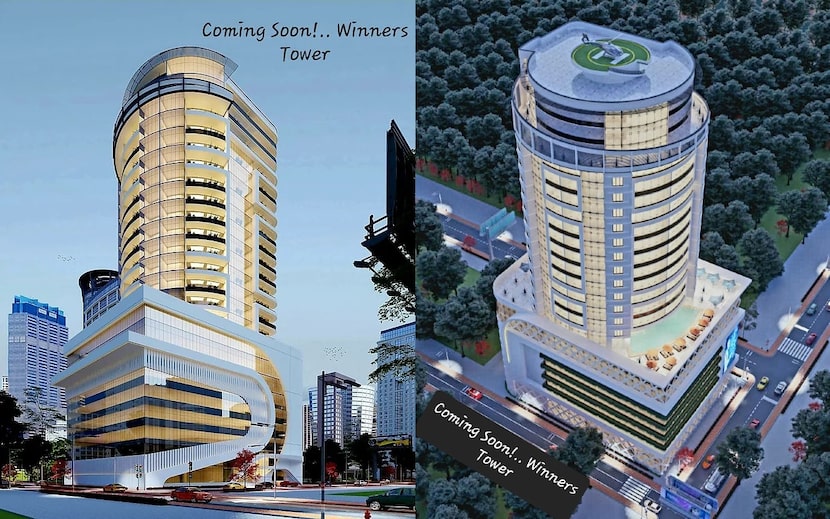
Winners Tower, the 25-story high-rise that The Winners Assembly once hoped to build at the intersection of Martin Luther King Jr. Boulevard and Colonial Avenue
Winners Development Corporation
That was never more evident than when St. Phillip’s School and Community Center Headmaster Terry Flowers walked into Ruthie’s. Flowers and Anetekhai had never met even though there’d been a tense community meeting earlier this year at St. Phillip’s about the 25-story tower.
I made awkward introductions. Anetekhai told Flowers it had become clear “We didn’t communicate well,” and said they “should have consulted the community” before going to the plan commission. The pastor said he wanted to meet with Flowers, who said only, “Let’s make it happen,” before returning to his table.
It should have happened a long, long time ago.
Though the proposed rezoning had been lingering at City Hall for two years, nearly every single business owner and community leader with whom I spoke over the summer knew nothing of the project until a segment ran on WFAA-TV (Channel 8), which presented the project as a nearly done deal. Pastor Chris Simmons at Cornerstone Baptist Church, TWA’s next-door neighbors, laughed it off: “This isn’t going to happen.” Flowers at the time politely called it “unlikely,” but said it should serve as a warning that developers were targeting South Dallas.
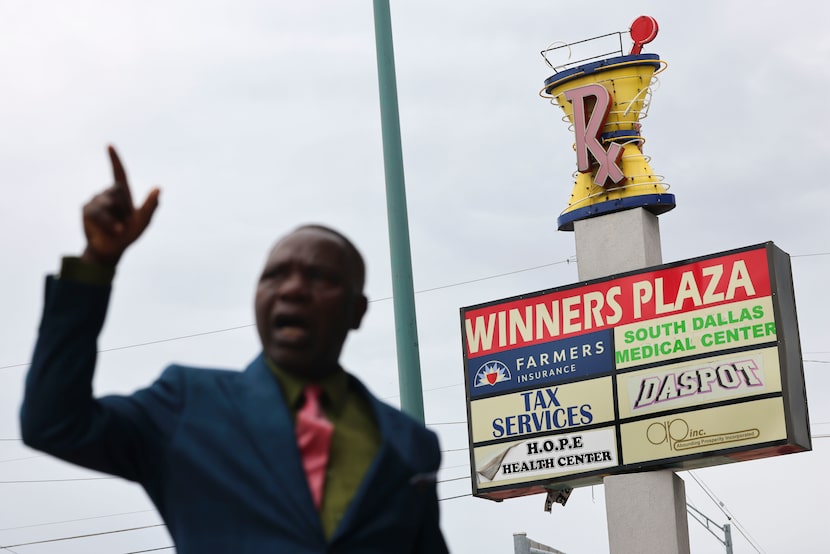
Winners Assembly Pastor Raphael Adebayo had hoped to replace the church’s complex on Martin Luther King Jr. Boulevard with a 25-story high-rise “because God gave the vision” for such a structure.
Shafkat Anowar / Staff Photographer
Anetekhai had tried to get meetings with leadership at Cornerstone, Forest Forward and St. Phillip’s, but the nonprofits responded only with emails full of questions about, among other things, who was investing in the $240 million project, and why TWA was trying to plant a 25-story tower along a stretch zoned for nothing higher than three stories. All went unanswered.
Making matters worse was the man who told me he was behind the project all along: once-frequent mayoral candidate Edward Okpa.
When we spoke in July, I asked Okpa why a small street-corner church now needed such a garish tower lording over the neighborhood. He said he conceived of it years ago, and that it had to be a luxury hotel with all the amenities rather than apartments for the neighborhood “because you’d wind up with Section 8 and low-income housing, and it would become run-down.”
I asked Okpa if he was sure that disparaging description was the best way to sell the project to a community finally beginning to see development after years of disinvestment and neglect.
“The only people who are supposed to be concerned are the people within 200 feet of the church,” said the man who received 2% of the vote when he ran for mayor in 2011.
Anetekhai told me he’d been a banker in Nigeria and left a “thriving oil-and-gas business” when he moved to Dallas more than 20 years ago, following a girlfriend who’d come here first. I asked why someone with his knowhow didn’t bring in a zoning consultant with experience navigating City Hall. He said he’d hired Okpa believing that “he had connections to the people that can make things happen,” referring to Gov. Greg Abbott, who in 2021 appointed Okpa to a six-year term on the State Securities Board.
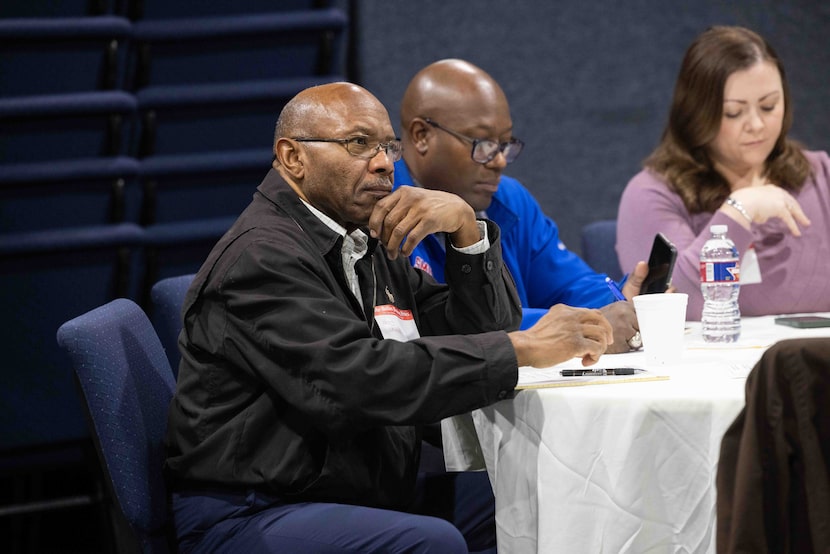
Pastor Chris Simmons (left) attended The Dallas Morning News’ discussion about the future of South Dallas held at his church, Cornerstone Baptist Church, earlier this month.
Juan Figueroa / Staff Photographer
But on Oct. 9, after hearing from Okpa and other supporters of the church, the Plan Commission took about seven harshly worded minutes to dispatch what had been called — ironically, as it turns out — The Winners Tower.
“The community does not trust the leadership,” said Tabitha Wheeler-Reagan, the neighborhood’s commissioner and co-chair of the task force that helped create the recently adopted South Dallas/Fair Park Area Plan meant to purposefully continue MLK’s makeover. “I cannot support this project because this project is not for South Dallas.”
“I am not against growth,” added commissioner Darrell Herbert, council member Zarin Gracey’s appointee. “I believe growth must be rooted in respect, accountability and community. The structure … threatens to overshadow not just physically but symbolically the homes, families and culture that define South Dallas.”
Anetekhai told me Wednesday that Okpa is no longer associated with the project. But there is still a project.
Except this one is going to be shorter — could be 13 stories, could be five. Hard to say just yet. And it’s going to be housing, market rate and affordable. How much of each, hard to say just yet. It’s all still very tentative as church leaders retreat and reassess.
“We just went quiet. We just want the noise to be over,” Anetekhai said. “There was too much bad.”
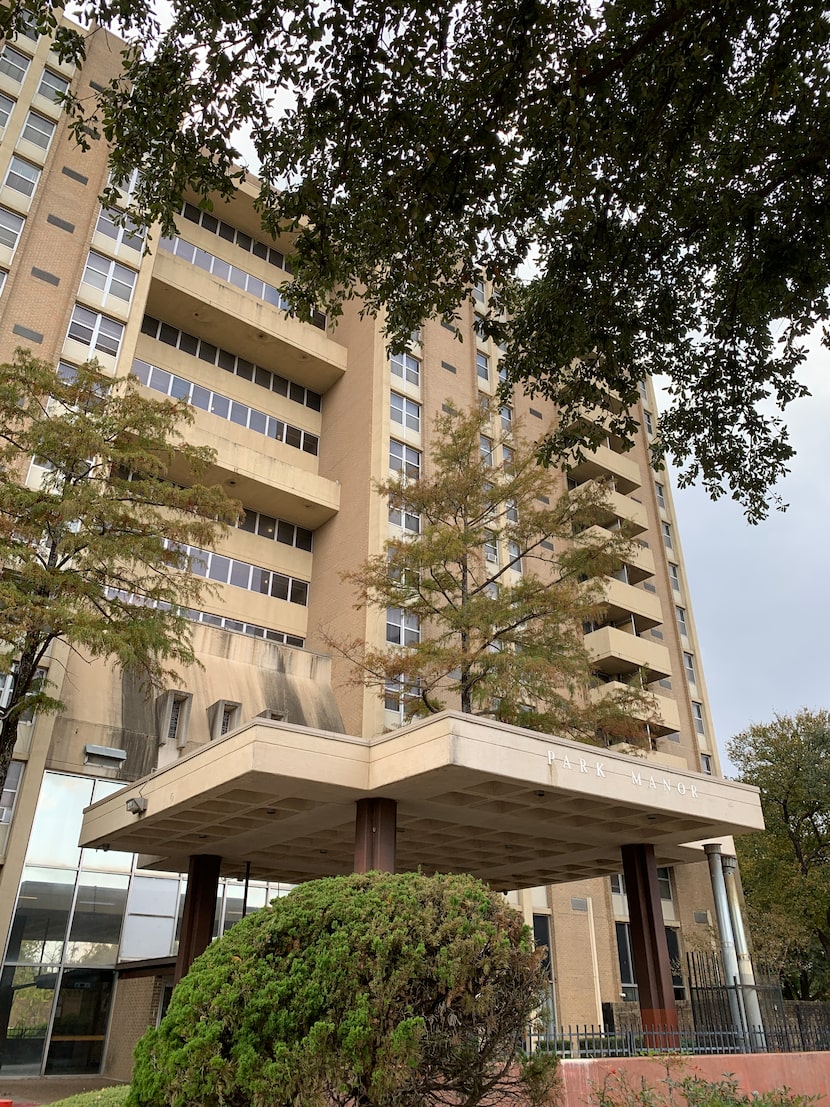
Supporters of The Winners Assembly’s plans for a 25-story high-rise in South Dallas pointed to the Dallas Housing Authority’s 13-story Park Manor, built in the late 1960s, as proof towers were allowed in South Dallas.
Robert Wilonsky
A few times during our sit-down Wednesday, he mentioned that church leaders would like to build something like “the 13-story high-rise on Edgewood,” referring to the nearby Park Manor on Edgewood Street. Repeatedly during the Plan Commission hearing, Winners Assembly’s board members pointed to Park Manor and said there was “precedent for vertical mixed-use density in the area.”
Except it’s not mixed-use. Park Manor, with nearly 200 units, was built with federal money for the Dallas Housing Authority, which is why it’s the sole tower in South Dallas. As the Dallas Times Herald reported in November 1967, when it was announced along with four companion high-rises across the city, “Mayor Erik Jonsson [said] the project proved the city and federal government can work together.”
Park Manor opened in September 1970 for residents who were 62 and older and making no more than $3,600 a year. Now, the tower also accepts residents with disabilities. But its days might be numbered: Wheeler-Reagan said last month that the DHA is “in the process of rebuilding [Park Manor] and moving it somewhere else.” A DHA spokesperson told The News in August only that “Park Manor is being evaluated for future development plans.”
In the meantime, Cornerstone, Forest Forward and St. Phillip’s are each in various phases of planting more housing in a part of South Dallas fast being overtaken by those expensive white boxes that look like they come in the mail pre-assembled.
After Anetekhai and I parted ways, I walked across MLK to Cornerstone, where Simmons told me he doesn’t think even five stories on the small corner is viable, in part because of the parking. But at this point, it almost doesn’t matter. Simmons’ next-door neighbors went to City Hall with renderings of a tower that buried his church, and blocks of the neighborhood, beneath 25 stories of glass and steel. Said Simmons, “It will take a while to rebuild trust.”