
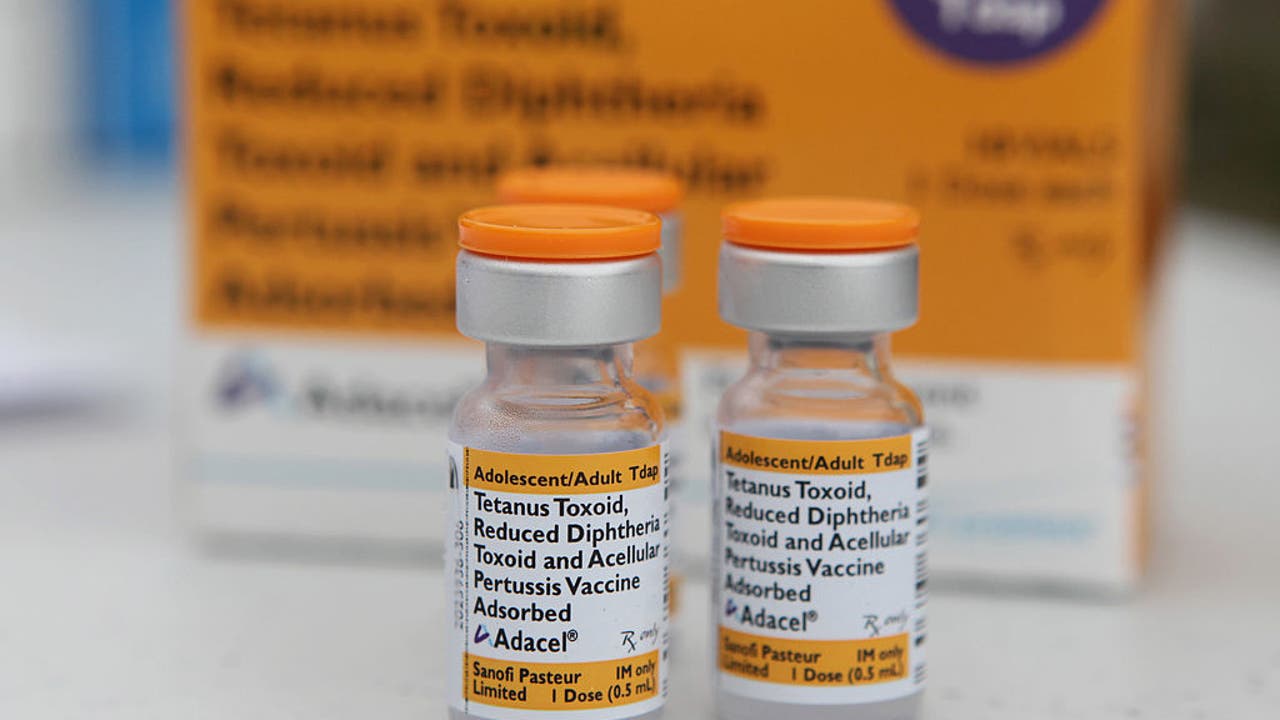
AUSTIN, Texas – Pertussis, also known as whooping cough, is on the rise in Austin–Travis County.
Public health officials are encouraging parents to vaccinate their children and take precautions.
By the numbers:
Austin-Travis County has seen more than 130 cases in 2025, and more than half of those cases involve school-aged children.
The 130 cases represents a 58% increase compared to the entirety of 2024.
What they’re saying:
“With this rise in whooping cough, we’re seeing the resurgence of a disease that is entirely vaccine-preventable,” said Dr. Desmar Walkes, Austin-Travis County Health Authority. “Infants and older adults are especially vulnerable and can become critically ill if they contract pertussis. I urge all parents and caregivers to ensure their children are up to date on their vaccinations to help stop further spread, especially as we head into the holidays.”
What is pertussis (whooping cough)?
What we know:
Whooping cough is a very contagious illness that affects the lungs and is spread by coughing, says APH.
The illness is caused by a type of bacteria called Bordetella pertussis, according to the CDC. The bacteria attached to the cilia that line part of the upper respiratory system and release toxins, causing damage to cilia and airways to swell up.
It starts like a cold, but the cough can last for weeks or even months.
Without treatment, a person with pertussis can be contagious up to 21 days. Early treatment might prevent serious symptoms from developing.
What are the symptoms, treatment, and risk factors for pertussis (whooping cough)?
Dig deeper:
APH advises parents to take their child to the doctor if their child has been exposed to someone with pertussis and has developed symptoms.
Early symptoms (1-2 weeks) Runny nose, sneezingMild feverMild cough Later symptoms (1-10 weeks) A cough that gets worseA loud “whoop” sound when coughingVomiting after coughingFeeling better between coughingTrouble sleeping or coughing worse at nightDifficulty breathing Treatment
Doctors can treat pertussis with antibiotics in patients who have tested positive for pertussis and their close contacts.
People diagnosed with pertussis should stay home from school and work until they have taken all of their prescribed antibiotics and spoken with their doctor.
APH is also reminding the public that in order to reduce the spread of illnesses, you and your family should stay home when you are sick, wash your hands often and stay up to date with your vaccinations.
Risk factors
Babies under a year old are at the greatest risk for getting pertussis and having severe complications.
People with pre-existing health conditions could also be at high risk of a severe infection, including immunocompromising conditions and moderate to severe, medically-treated asthma.
How can I prevent my child from getting pertussis (whooping cough)? 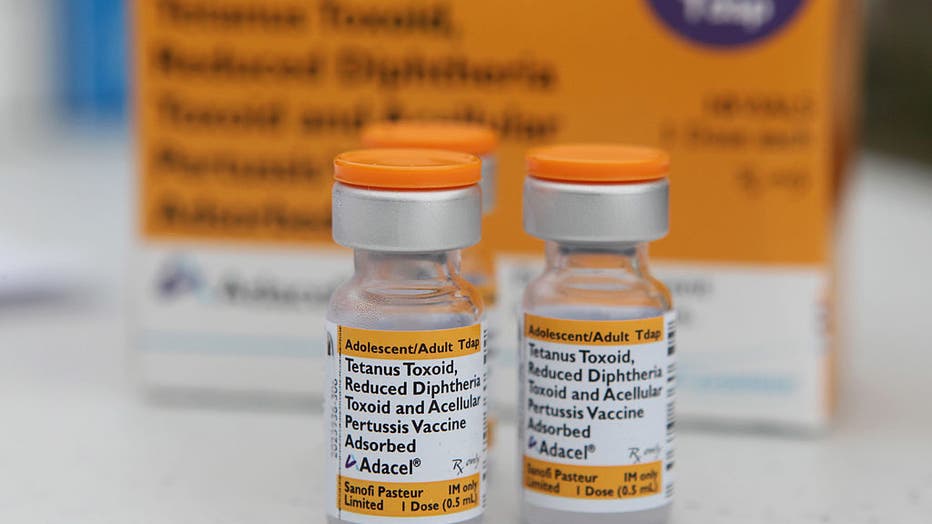
VALLEJO, CA – AUGUST 11: Vials of Tdap vaccinations sit on a table during the Solano County health fair August 11, 2010 in Vallejo, California. California medical officials are urging California residents to get booster shots for whooping cough as th
What you can do:
APH says that vaccination is the best way to protect yourself and others from pertussis.
Children should receive their first DTaP (Diphtheria, tetanus, and acellular pertussis) shots from two months through six years of age, and preteens and teens are eligible for a Tdap (tetanus, diptheria and pertussis) booster.
Adults should talk to their healthcare providers about receiving a Tdap booster if they are around those at high risk. Tdap vaccines are also recommended for pregnant people during the 27-36th week of each pregnancy, says the CDC.
DTaP vaccines are for babies and younger children, while Tdap vaccines are for older children and adults.
DTaP and Tdap vaccines are offered at pharmacies, doctors’ offices and Austin Public Health’s Shots for Tots clinics, says APH.
The Source: Information in this report comes from Austin Public Health and the Centers for Disease Control and Prevention.