
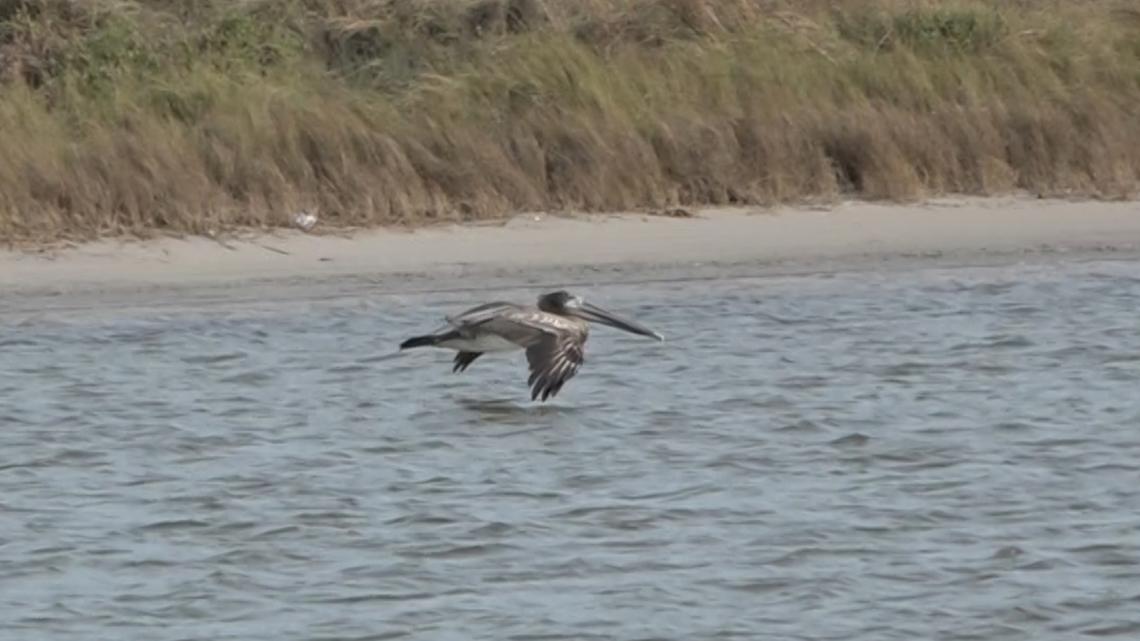
3NEWS joined the ARK team for one of the releases, watching the once-injured birds return to the wild after weeks of recovery.
CORPUS CHRISTI, Texas — Following the severe hailstorm that struck parts of the Coastal Bend, the Amos Rehabilitation Keep (ARK) is now releasing hundreds of birds that were rescued and treated after sustaining severe injuries.
RELATED: Injured bird count rises to 350 after devastating hailstorm across the Coastal Bend
3NEWS joined the ARK team for one of the releases, watching the once-injured birds return to the wild after weeks of recovery.
Andrew Orgill, who has led the rescue efforts from the beginning, said the scale of the emergency was far greater than anyone expected.
He recalled that the initial report was much different than what they saw.
“The initial day we had a call. There might have been 6 to 8 injured pelicans. We came back with 30 and then ended up with 420 at the end of the week,” Orgill said.
Since then, the team has steadily released birds as they regain strength.
“This will be right at about 40 birds that we’ve released. We still have about 90 left that are still undergoing care,” Orgill said.
Many of those still in treatment are showing promising recovery.
“Some of those are starting to fly. A lot of those wing fractures are recovering. The thigh injuries are resolved. The neurological symptoms from head trauma resolved, and a lot of them are doing a lot better than we ever could have hoped for,” Orgill said.
Orgill credited the progress to strong partnerships across the region.
“We’re lucky, we have great partner organizations here and across the state,” he said.
One of those partners is the Texas Sealife Center. Director of Rehabilitation Amanda Terry recalled the moment she got the call to help.
“Andrew called me and said, ‘hey, if you’re bored, you want to come check out some pelicans?’,” Terry said.
When she arrived, she was stunned at the volume of birds needing care.
“Was kind of blown away with the amount, you know, they’re big birds, so 100 birds takes up a lot of, a lot of space but we got through those exams,” Terry said.
For Terry, watching the birds return to the sky makes the work worth it.
“To see these guys get back out and to hear Andrew say that, you know, everybody at the AC is doing well and they’re going to have the same story, that’s why we do this,” Terry said.
Orgill said the hailstorm also highlighted the need to be prepared for future large-scale emergencies.
“It kind of made everyone realize what resources are available, how we could improve or change things if it were to happen again, and if we have a hurricane or something that requires evacuation,” Orgill said.
The remaining birds are expected to join the flock soon.
“2 to 4 weeks we have a pretty good idea of who is going to be releasable at that point, but it’s looking like a lot of them are,” Orgill said.