
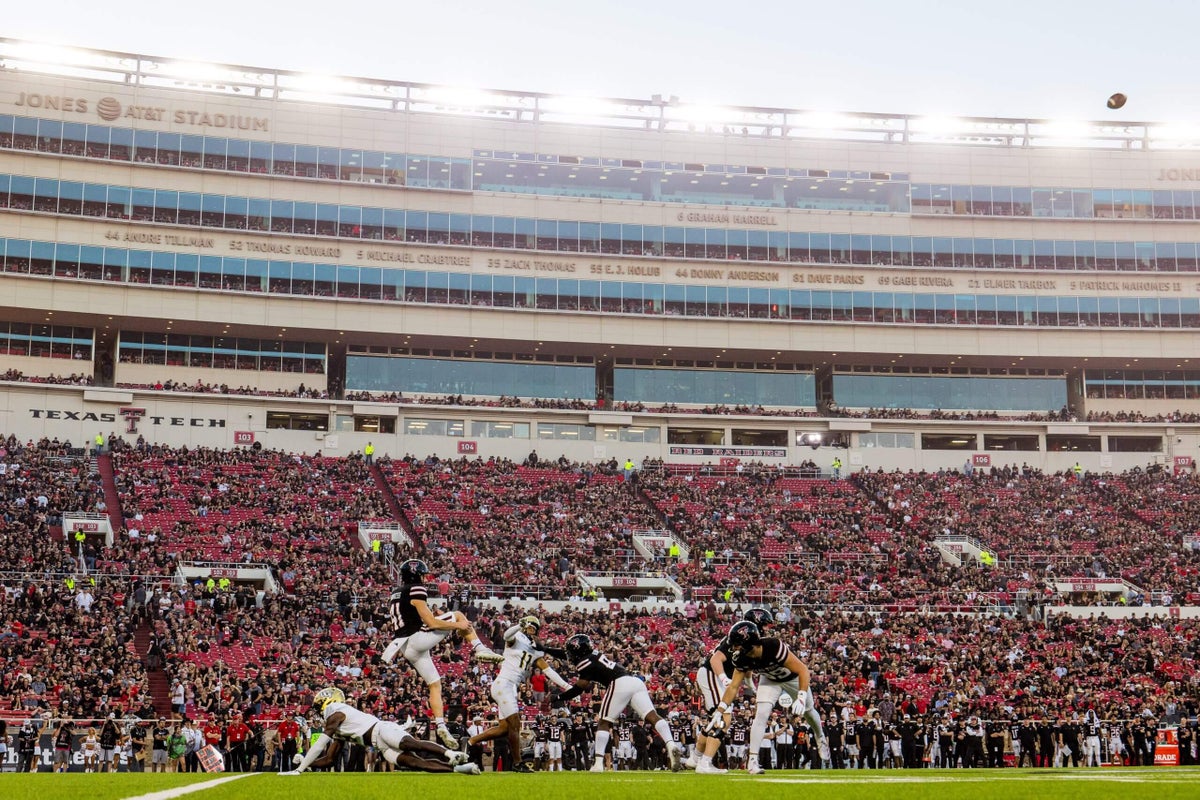
The general counsel for Texas Tech, whose athletic department has thrived thus far in the name, image and likeness era, has advised the school that it should not sign a College Sports Commission agreement requiring schools to comply with its new enforcement model.
On Wednesday, the Power 4 conferences sent an 11-page University Participation Agreement to their schools that requires them to cooperate with investigations, abide by enforcement decisions and not file lawsuits regarding athlete compensation rules that arose from this summer’s House settlement.
Potential penalties would include loss of revenue and postseason bans. The agreement was negotiated by the ACC, SEC, Big Ten and Big 12, where Texas Tech competes, and schools were asked for input during the monthslong process.
In a memo to Texas Tech board chairman Cody Campbell obtained by The Athletic, Texas Tech University System general counsel Eric D. Bentley cites 16 sections of the agreement as rationale for why the school should not sign the agreement. Front Office Sports first reported the memo.
“(The agreement) requires the University, its representatives (which is defined too broadly), student-athletes and associated entities and individuals to comply with not only the current rules, policies, and procedures, but the University must also agree to comply with ‘any other policies and procedures that the CSC may from time to time adopt,’” he wrote. “Under this agreement, the CSC could adopt a rule or penalty that would apply retroactively to the University or its student athletes, impose severe penalties against the University or its student athletes, and the University would have contractually agreed to not take any action against CSC.”
He also raised concerns about a clause that could hold a school responsible if external parties, including state officials, take action against the CSC over an unfavorable decision.
“This clause attempts to penalize the University for appropriate actions taken by the Attorney General to protect state agencies and its citizens, which is obviously unacceptable,” he wrote.
In addition to his role as Board chairman, Campbell is a billionaire Texas Tech booster who has helped raise tens of millions of dollars for NIL deals for Red Raiders athletes. Texas Tech reportedly spent $25 million on its 10-1 football team, which is in line to earn the school’s first-ever Big 12 championship game berth. He has said athletes across all teams are receiving $55 million this school year.
The bulk of those deals came from Campbell’s since-disbanded NIL collective, Matador Club, which front-loaded its 2025-26 payments before July 1, to avoid being subject to CSC’s new NIL Go clearinghouse.
The new system, which requires athletes to submit most third-party deals for approval, was designed in large part to stamp out collectives and prevent schools from going above the $20.5 million revenue share cap that was part of the House settlement.
There is no hard deadline for schools to review and return a signed agreement to the CSC, but the organization has asked schools to respond in two weeks.
The conferences are hoping the participant agreement will put teeth in CSC enforcement of the rev-sharing and NIL rules set up by the settlement. It is unclear what repercussions there would be if schools refuse to agree to the terms.
“The University Participant Agreement formalizes each school’s decision to participate in the new system established by the House Settlement. Each of these institutions has already proactively chosen to participate in the new system — either by opting in to revenue sharing or agreeing to the House settlement,” a statement from the CSC said. “Signing the participant agreement is a logical next step in building a sustainable enforcement system and will allow the College Sports Commission to effectively deliver on what was agreed to in the settlement.”