
Nestled between Highway 90 and Monarch Highway, Burbank High School is surrounded by concrete and city in all directions. It’s also the unlikely home of the only agriculture science program offered by San Antonio Independent School District.
The school sits on 70 acres of land, an unusually large acreage, that was donated with this stipulation: five acres should be used to teach urban high schoolers all about agriculture. The five acres are filled with classrooms, breeding facilities, student project barns and a field for planting.
Promoting an agricultural program in a largely urban core school district can be a feat, said Shelby Parker, agricultural science director at Burbank. That’s why the school hosts “Ag in the City,” a fair where SAISD’s fourth graders can get a taste of urban agriculture.
“Exposure is the big key,” Parker said as students streamed out of buses, taking over Burbank’s farm earlier this month. “We are in downtown San Antonio — kids have never seen some of the things that they’ll see today, and they may never see it after today.”
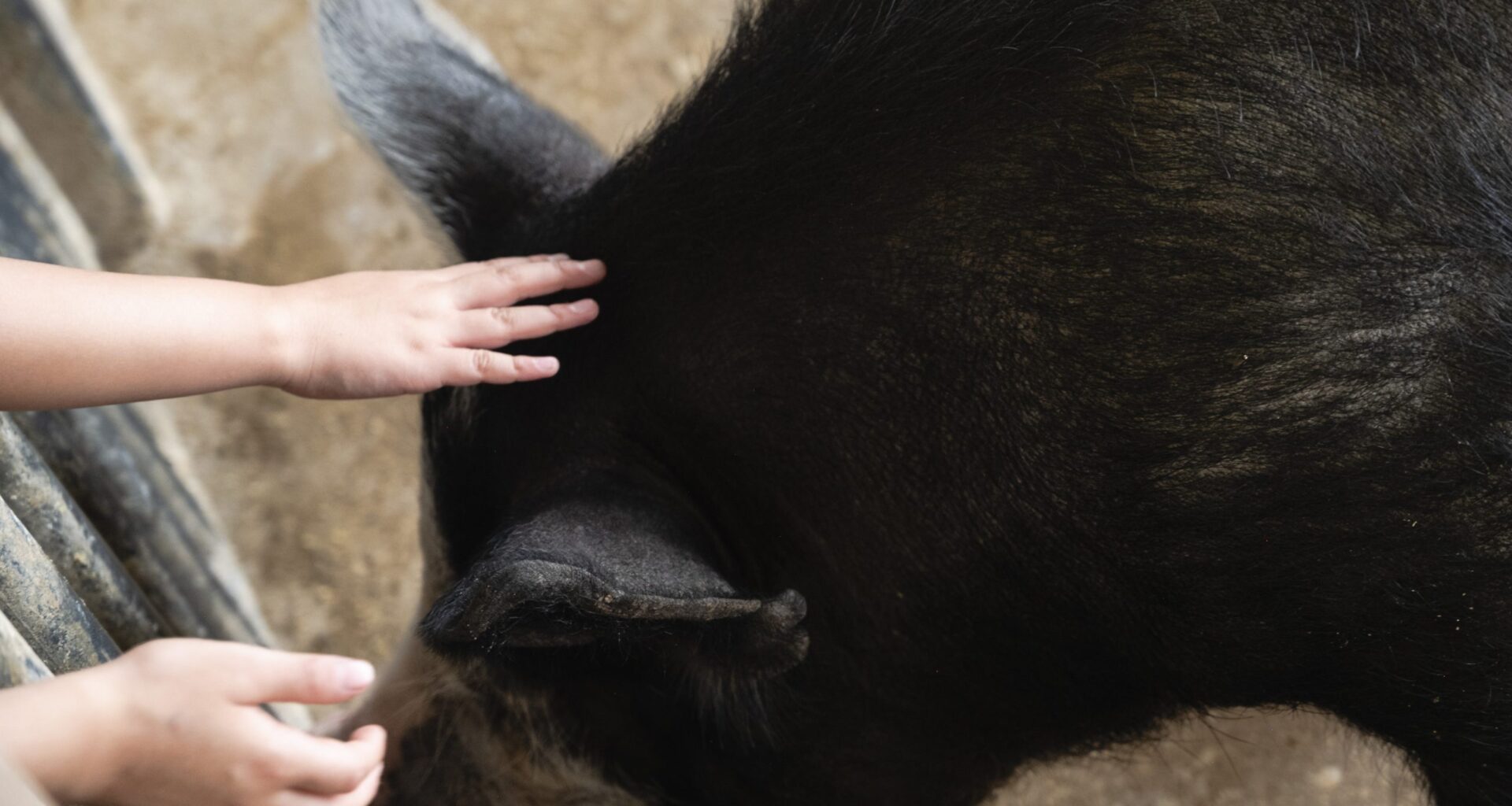
Burbank’s agriculture students greeted the little ones, ready to show off all aspects of life on the farm. The fourth graders lined up to pet Californian bunnies, plant beans in cups, harvest pumpkins larger than their heads and churn butter.
A couple of Burbank students gave wrangling demonstrations on roping dummies, others shaved sheep, offering puffs of wool for students to play with. One senior welded lines on a large metal table, while fourth graders looked on from a safe distance.
“Ag in the City” is a yearly tradition at Burbank that’s ramped back up after a COVID-19 era hiatus and even grown in recent years.
The fair used to be a one-day event exclusively for fourth graders attending elementary schools that feed into Burbank. Recently, the fair opened up to all SAISD fourth graders, stretching to over two days and serving nearly 2,000 students.
Fourth grade is a prime opportunity to get students hooked on agricultural science, Parker said, since curriculum standards for that grade align with what’s being taught at the high school level.
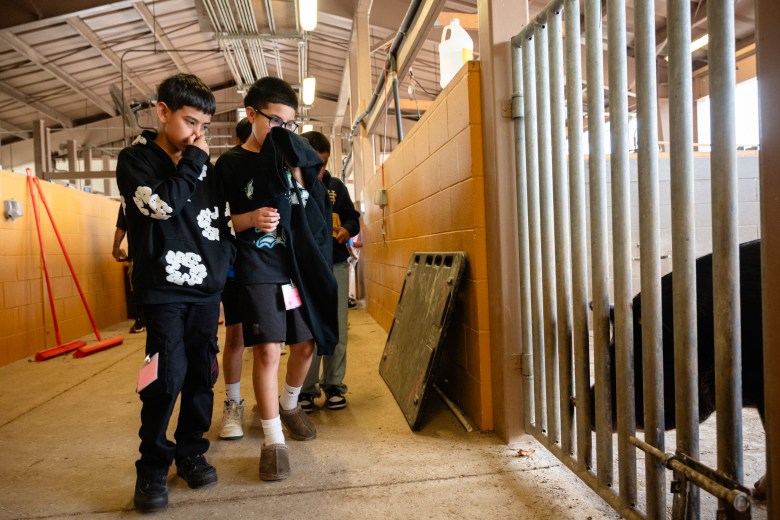 Franklin Elementary School fourth graders cover their noses as they explore the pig barn during the Ag in the City event at SAISD’s Luther Burbank High School. Credit: Jo E. Norris for the San Antonio Report
Following the “Texas Essential Knowledge and Skills” guidelines, fourth grade students learn about scientific and engineering processes, some physics and scientific methods along with organisms and the environment.
Visiting Burbank’s student-run farm gives fourth graders a chance to make connections between what they’re learning in classrooms and the real world, Parker said.
In addition to offering potential career pathways to students, Parker said the agriculture program offers connections to the area’s “urban lifestyle,” showing students can be connected to agriculture even when living in or around downtown.
Ag science offers several pathways
Agriculture students at Burbank can pick from three pathways: animal sciences, plant sciences or welding. From the school’s 1,400 enrollment, almost 340 high schoolers are in the program.
Most of the foods Burbank students harvest — pumpkins, watermelon, broccoli, and cabbage, to name a few — are donated to the San Antonio Food Bank, others are sold at farmers’ markets.
Student projects reach far outside the Bexar County area, however.
So far this school year, more than 50 of Burbank’s ag students have signed up to show livestock and welding projects at local and state fairs.
“Before, we would only show in Bexar County and San Antonio. But I said, ‘if we have kids that want to show, why limit them?’” Parker said.
Makayla Rodriguez, 14, shows rabbits and wants to be a veterinarian. A freshman, she enrolled at Burbank specifically for the ag program. When showing rabbits for competition, judges look at the animal’s fur and skin color and overall shape, Makayla explained.
“The best ones would be killed for the best meat, that’s how it is. Or breeding rabbits, they will find the best male or female to breed together,” she said.
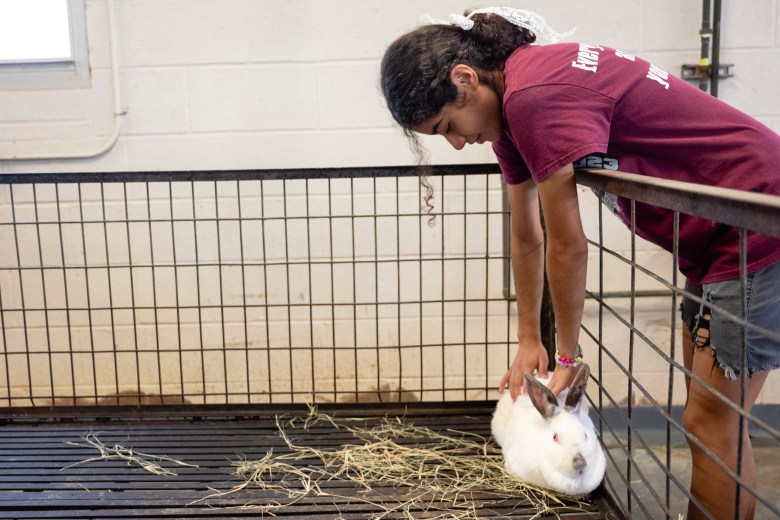 Makayla Rodriguez, 14, gently pets a rabbit in a quiet moment during the Ag in the City event. Local fourth graders came to Burbank’s five acre farm to learn about animal sciences, applied agricultural engineering, and plant sciences from high school students in the programs. Credit: Jo E. Norris for the San Antonio Report
The high school students learn how to breed and care for several livestock animals, including pigs, chickens, goats, sheep and ducks. Parker was especially proud of the farm’s Nigerian dwarf goats, due to give birth any day.
Burbank’s agriculture program offers a veterinary assistant certification, but the district is currently reevaluating the pathway based on updated state standards for industry-based certifications, Parker said.
Lucero Alvarado, a 15-year-old sophomore, talked the crowd through a welding demonstration. Inspired by her blue-collar dad, Lucero takes floral design and welding classes.
“I’m trying to be like the son he never had,” she said.
Lucero wants to go to study law or business. If that doesn’t work, she’ll have welding skills to fall back on, she said.
Parker said Burbank offers the AWS certification, and welding students learn almost all types of welding except underwater welding, because it’s a very advanced level of welding.
Welding students show their projects, too. Burbank plans to show trailers and other tools that students welded at the 2026 San Antonio Stock Show and Rodeo.
Burbank also offers Texas Floral Level 1 certifications. Eventually, Parker hopes Burbank’s floral program transforms into a fully functioning floral shop for the local community and SAISD.
“We’ve already been taking a few orders, but if it’s completely student-run, they get those agribusiness pieces of it too,” she said.
And next year, Burbank will offer dual credit courses for college credit in all three agricultural pathways, expanding career and college opportunities for Parker’s students.
One thing that probably won’t change at Burbank’s agriculture program is “Ag in the City.” Parker said it leaves a lasting impression on the fourth graders and helps the high schoolers take ownership of their work on the farm.
“It’s the days after ‘Ag in the City’ that really matter — you see the impact that this makes, not just on the fourth graders, but on our high school kids — the leadership skills that they get,” she said.