
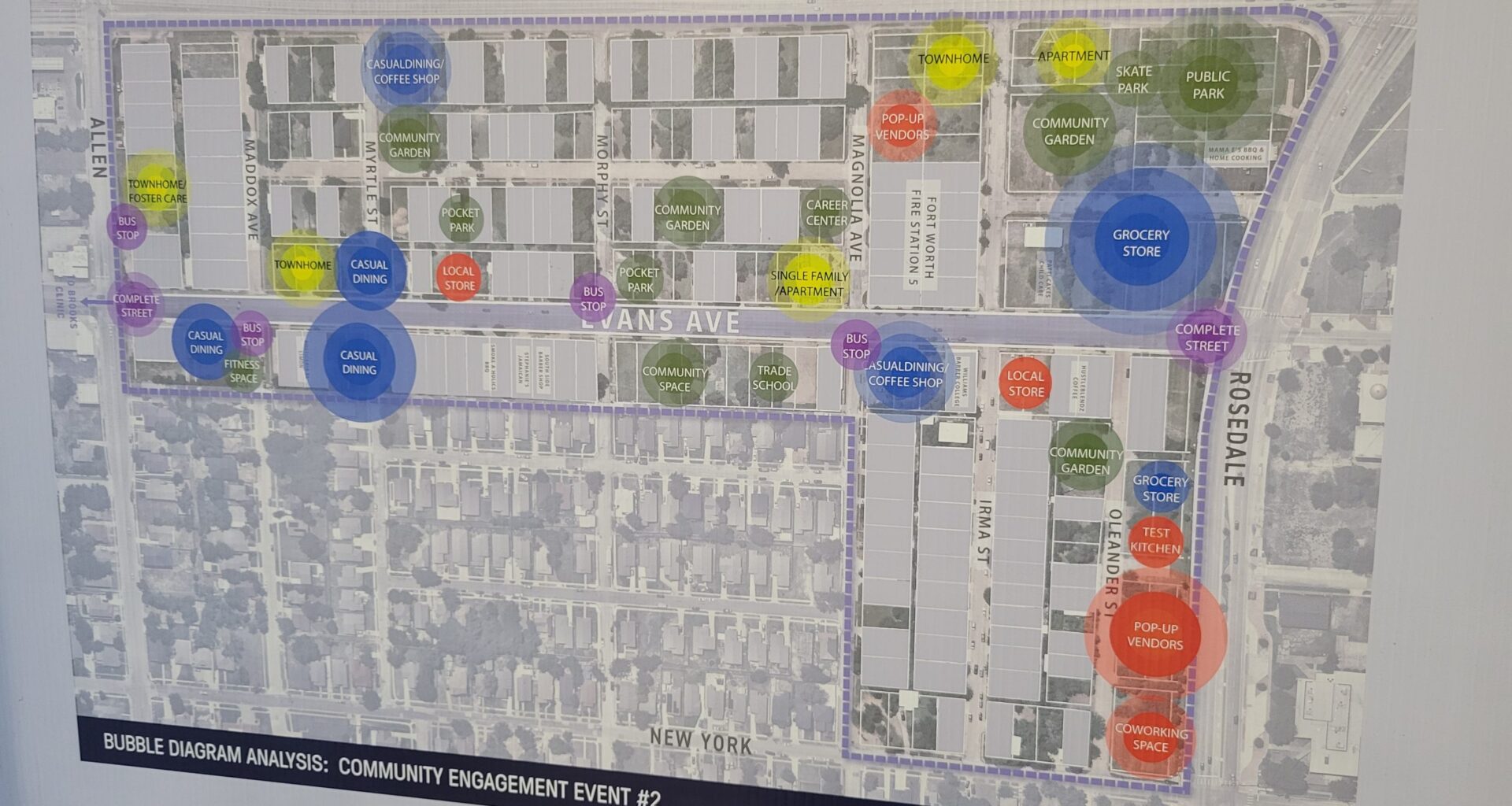
Evans Avenue — once a main street for Fort Worth’s Historic Southside community — is lined with grassy lots and scattered boarded-up buildings, reminders of the homes and businesses that thrived in the neighborhood decades earlier.
But long-promised progress could be coming soon.
Construction for a $63 million mixed-use urban village is expected to start next year north of the intersection of Evans and East Rosedale Street. The village is expected to transform the area with new housing and retail shops, city and community leaders said.
During a recent bus tour of the area this fall, organizers from the North Texas Community Foundation asked residents, business leaders and others to imagine the possibilities for the neighborhood just east of Interstate 35W.
The community wants to see a return of the glory days when businesses flourished along the corridor, said Shawn Lassiter, founder and executive director of the nonprofit Braver Together. In its heyday, the corridor was filled with homes, stores, restaurants, grocers, nightclubs and medical offices, all within walking distance.
“The time is now for this to happen here,” she said.
The historically Black neighborhood, promised city improvements for at least 25 years, wants to thrive again, Lassiter said. Her nonprofit works to improve health outcomes in the 76104 ZIP code, where life expectancy is among the lowest in Texas.
Evans, from Rosedale to East Allen Avenue, is 70% vacant, according to a Braver Together study.
The street is dotted with a few businesses, including three restaurants, a barber school and a dry cleaners. While the area is 36% residential, new single-family homes are increasingly popping up on adjacent residential streets that lead to the corridor.
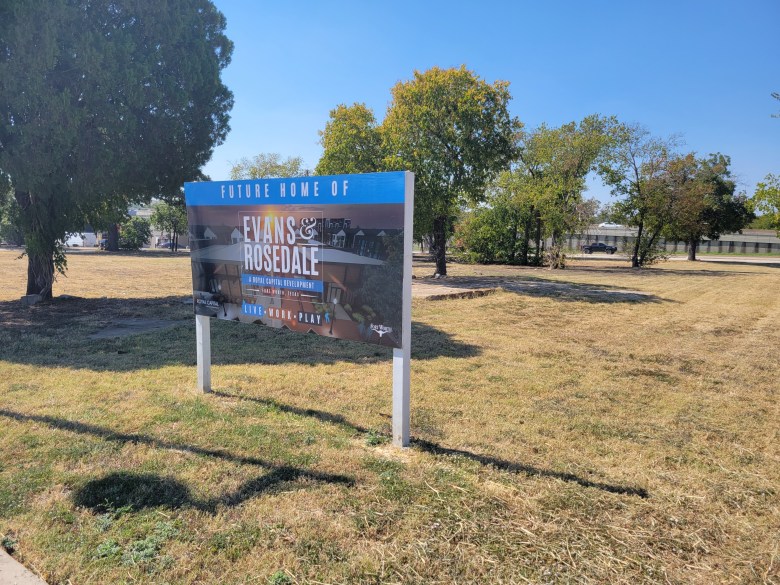 A sign shows where the Evans and Rosedale urban village will be built. Several acres between Evans Avenue and Interstate 35W will be filled with new housing, retail stores and community amenities. (Eric E. Garcia | Fort Worth Report)
Kevin Newell, president and CEO of Royal Capital Group, is the developer behind the urban village. He hopes it will address some of residents’ concerns about health care, education and affordable housing.
The Southside community, he said, is like “a great family.”
“It’s very vocal,” Newell said.
Jarred Howard, CEO of the National Juneteenth Museum that will be built at the site of the Southside Community Center at Rosedale and New York Avenue, said the neighborhood is rich in history.
Texas’ first Black millionaire, banker William Madison McDonald, bought land and later sold it to Black residents, Howard said.
In its prime, Evans and Rosedale “was the center of it all,” with its own ecosystem, he said.
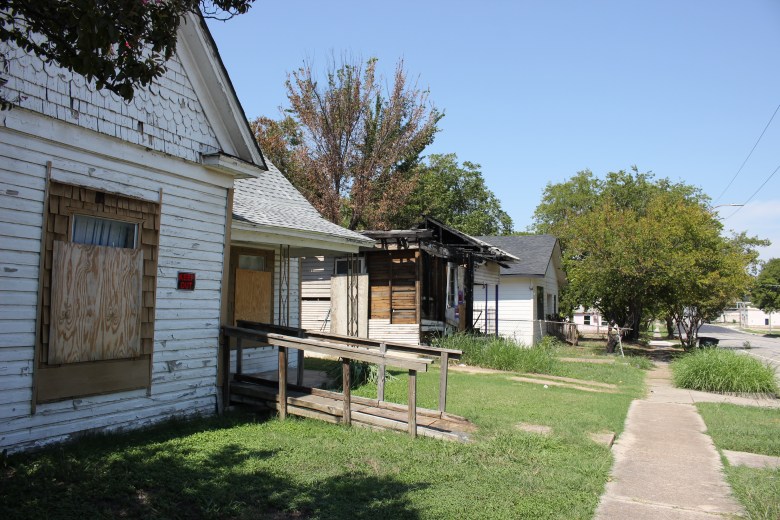 Revitalization of Evans Avenue between East Rosedale Street and East Allen Avenue is a focus of an ongoing study. (Scott Nishimura | Fort Worth Report)
Now, “it’s a shell of what it once was,” Howard said.
Just two businesses — a Jack in the Box fast-food eatery and a 7-Eleven convenience store — have been built at Rosedale and the Interstate 35W frontage road in recent years, he noted.
On Evans south of East Allen Avenue, churches, a beauty salon and convenience or package stores are among the businesses.
Meanwhile, new apartments, stores and restaurants emerged to the west, beyond the highway and railroad tracks, to bolster the Near Southside district.
“It is heartbreaking that none of that is happening here,” Howard said. “But that’s about to change. This neighborhood is no longer left out … we start now.”
Neighborhood challenges
Along the bus tour, organizers pointed out lingering challenges facing the area from homelessness to lack of grocery stores.
The Historic Southside, an area of .63 square miles, has more than 2,500 residents with a median income of $51,899 and an unemployment rate of 8%, which is more than double the rest of the city. Most work in the health care industry, according to the North Texas Community Foundation.
Most residents — 53.6% — own their homes, but about 1,400 households live below the poverty level and about a quarter receive food assistance, according to the demographic information compiled by the foundation.
To the south, residents in the Hillside and Morningside neighborhoods face similar challenges.
Morningside, for example, has 5,190 residents living in an area where more than 67% own their homes. About 2,100 Morningside households live below the poverty level and more than 27% receive food assistance. Most work construction jobs.
Residents complain about the abundance of homeless people, many of whom are stationed at Rosedale and I-35W or other major intersections along the highway.
“There’s got to be some progress on that,” Lassiter said.
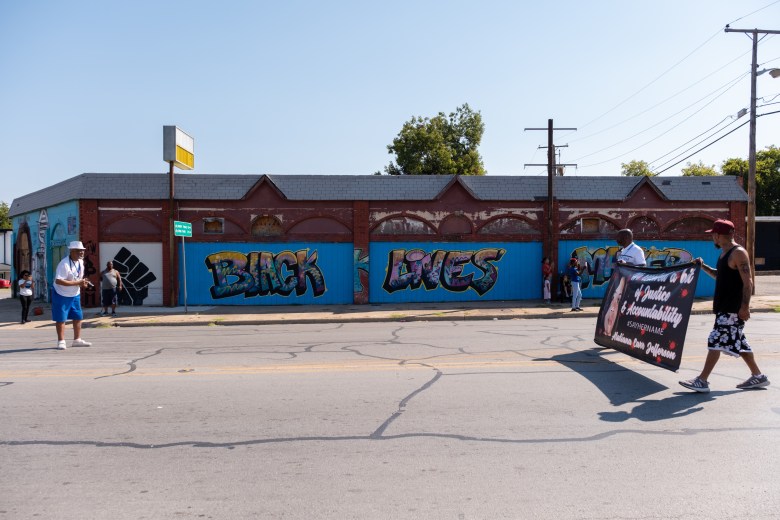 Parade participants make their way onto Evans Avenue and Allen Avenue during an Atatiana Carr-Jefferson memorial parade on Oct. 12, 2024, in the Historic Southside. The parade ended at the Atatiana Carr-Jefferson Community Center at Hillside. (Camilo Diaz | Fort Worth Report)
Parade participants make their way onto Evans Avenue and East Allen Avenue during an Atatiana Carr-Jefferson memorial parade on Oct. 12, 2024, in the Historic Southside. The parade ended at the Atatiana Carr-Jefferson Community Center at Hillside. (Camilo Diaz | Fort Worth Report)
As the charter bus traveled south on Evans, Howard pointed out the mural of Atatiana Jefferson, who was shot and killed by a Fort Worth police officer in 2019. Two blocks away, he noted an old sign that marked the one-time location of a neighborhood pharmacy. Across the street, a building once housed the Brooks Medical Clinic, which operated from 1952 to 2013.
The area, which has dozens of small convenience and package stores scattered on residential streets, is considered a food desert because residents don’t have easy access to fresh produce and healthy foods.
A grocery store once occupied the historic building at 1063 Evans, which is now the offices of the NAACP Fort Worth/Tarrant County.
The closest grocery store, El Rio Grande Latin Market, is about 2 miles south at the corner of East Berry Street and I-35W.
Securing a grocer for the Historic Southside neighborhood is vital to residents, advocates said.
Newell, the Milwaukee-based developer of the urban village, said a grocery or market tops the list of projects residents want to see.
“We have a mandate from the community,” he said.
Despite the boom of the Near Southside district, the city has had trouble securing a grocer for that neighborhood as well, officials have said.
A grocery near Evans Avenue would be popular, Lassiter said. “There will be spenders here,” she said.
Martha Collins, Fort Worth economic development manager, said the alignment of housing and retail development and resources is key for the area.
“The hardest thing is finding someone willing to put in time and money,” she said.
Residents are aided by local food programs operated by a community center and a middle school.
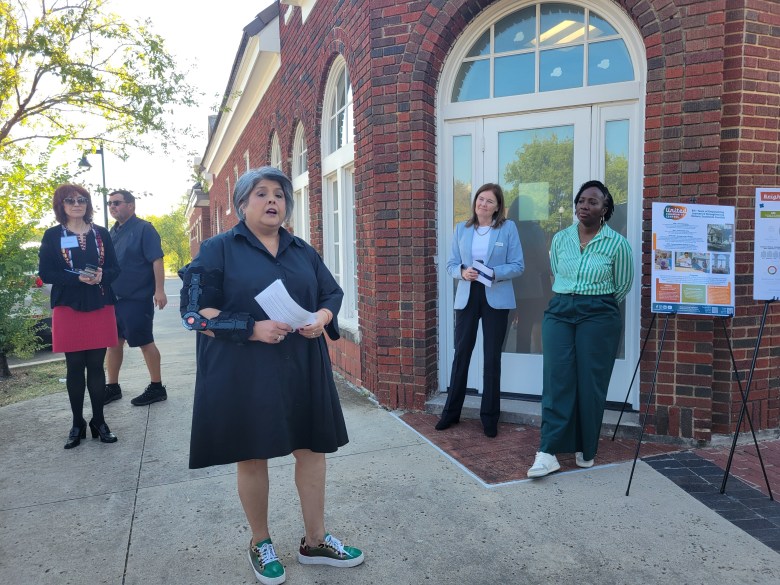 Johnette Brookins, Bethlehem Center director, talks to stakeholders about the facility’s community and literacy efforts. (Eric E. Garcia | Fort Worth Report)
At the Bethlehem Center, 951 Evans, officials distribute about 30 pounds of food per person every day, part of the services the facility provides. It is one of three in Fort Worth operated by United Community Centers Inc.
“We are here for our community,” Bethlehem Center director Johnetta Brookins told community members on the tour. “We always take care of children and families. That’s who we are.”
The center focuses on literacy and tests students three times a year, she said.
At Morningside Middle School, donations to a food pantry help feed residents near the campus, officials said.
Howard later pointed out an empty building on Rosedale east of Evans that once housed a popular cafeteria that fed the community.
Nowadays, Stephanie’s Jamaican Kitchen and Smoke-a-holics BBQ, both in the 1400 block of Evans, “literally feed the neighborhood” as the area’s most popular restaurants, Howard said.
Goals for the area
Newell said the new urban village will spark employment opportunities.
“You really have to start with the economic footprint,” he said.
Startup businesses will likely get a discount on rent at the urban village, Newell said. A groundbreaking for the project is expected to occur in mid to late 2026.
“This area needs investment in the way it deserves,” he said.
Eric E. Garcia is a senior business reporter at the Fort Worth Report. Contact him at eric.garcia@fortworthreport.org.
News decisions are made independently of our board members and financial supporters. Read more about our editorial independence policy here.
Related
Fort Worth Report is certified by the Journalism Trust Initiative for adhering to standards for ethical journalism.
Republish This Story

Republishing is free for noncommercial entities. Commercial entities are prohibited without a licensing agreement. Contact us for details.