
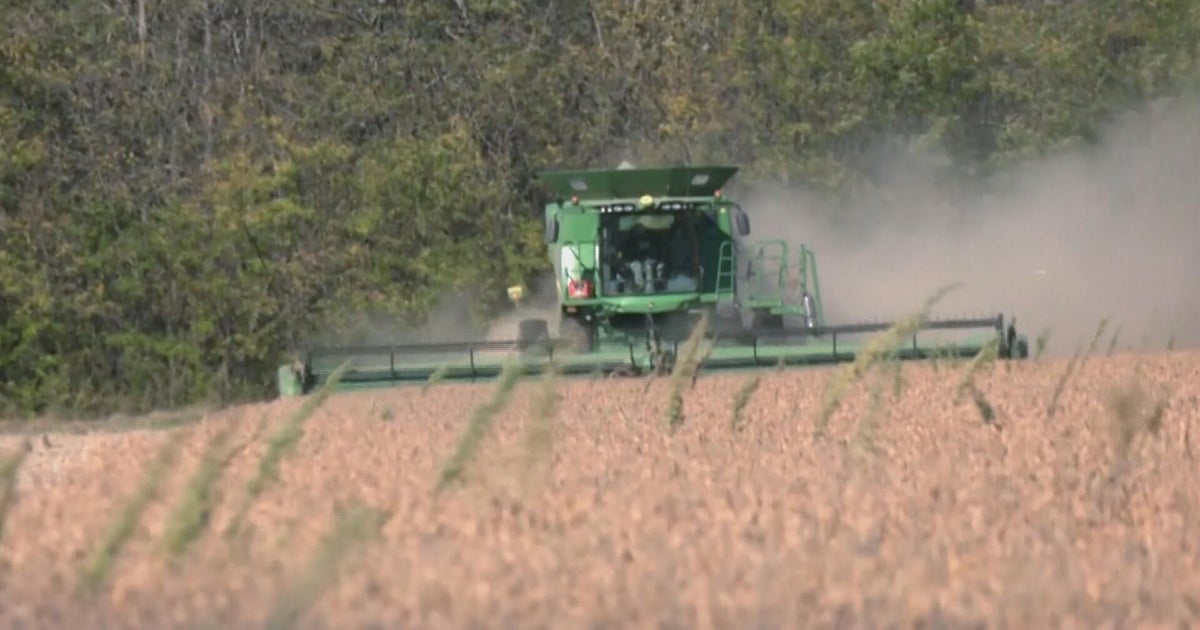
As families across the country get ready for Thanksgiving, much of what ends up on the table comes from the hard work of local farmers.
For five generations, Schronk Custom Ag has farmed land across Hill County, feeding families and fueling agriculture.
“Traditionally, our family has grown cotton, and corn, and milo, we grow a lot of wheat now,” said owner Rodney Schronk. “It’s our food, it’s our nation’s food supply.”
The farm is mostly family-operated, but as the workload grows, so does the need for labor. Schronk said finding workers willing to work long hours for a temporary time is tough.
“When you work through that heat all day long, and it’s crazy hours, it’s hard work, you’re out in the environment a lot and all of a sudden you don’t have any job at all, so an American doesn’t want to work 20 hour days for three months and then don’t have any job at all,” he said.
These challenges led his family to turn to migrant labor about 10 years ago. This year, his farm has three immigrant workers from South Africa.
“We have a husband and a wife, and then a gentleman who talk about sacrifices, he left his son and wife at home to come here and work for 9-10 months,” Schronk said.
The South African migrant workers are in the U.S. legally under the H-2A visa, a federal program that allows foreign nationals to do temporary or seasonal agricultural work. It began in the 1980s and while it’s been updated over the years, it still provides thousands of seasonal workers to American farmers.
“We went to the H-2A program out of necessity, because we can’t make enough money if we farm just a very small acre it’s tough to make a living, so we have to have larger acres to survive,” he said.
While these immigrants do help fill these labor gaps, it comes with many challenges for the farmer.
“It’s extremely complicated, so much so that our family cannot handle it, we don’t have the ability, we have to hire agents that help us and guide us through the application process and the whole can take 3-4 months,” said Schronk.
He added that not only is the program complex and time-consuming, it’s also costly, leaving most fees on the farmer, including airfare, costing him thousands of dollars just to get one migrant to the U.S.
“We have to provide them housing, electricity, water sewer trash and on top of that they get a salary that’s set by the federal government,” Schronk said.
Texas Department of Agriculture Commissioner Sid Miller agrees the program is complex adding that it needs to be revamped.
“Most everyone agrees that we need the guest workers, and most everyone will agree we want them to be legal, but getting enough of them is the problem,” Miller said. “We need to refine it, make it work a lot better, make it more efficient, make it widely accessible, make it easier for the guest workers to get up here and stay up here. Everybody wins on something like that, and we have the consumer in mind, this keeps prices down, and so the American consumer, when they go to the grocery store they can afford to buy those products.”
In October, the U.S. Department of Labor warned that the Trump administration’s mass deportation efforts could drive up food prices, prompting the department to propose changes to programs like the H-2a. Texas Farm Bureau associate director Jay Bragg believes these changes will bring some much-needed relief for farmers.
“I think our members are really excited about the changes to the program. Again, I think it may help for some, maybe not for everyone,” said Bragg. “Certainly, we decrease that wage rate, it makes it more affordable for a lot of folks to go through and use that as a mechanism.”
While Schronk believes the proposed changes to the H-2A program are a step in the right direction, he still hopes to see a more streamlined process for farmers and immigrants who want to come work here legally.
“If they take away all the illegal immigrants and they don’t expand these work programs, you’re going to see more and more food disappear. We must protect our food supply,” Schronk said. “Stop being far left, stop being far right, look at the average American, let’s find some common ground in the middle, and let’s solve our labor issue.”
More from CBS News