
In October, both the El Paso Water Company Board and Derby City Council (one in the same) took action to officially dissolve the company and streamline services through the city’s water department moving forward.
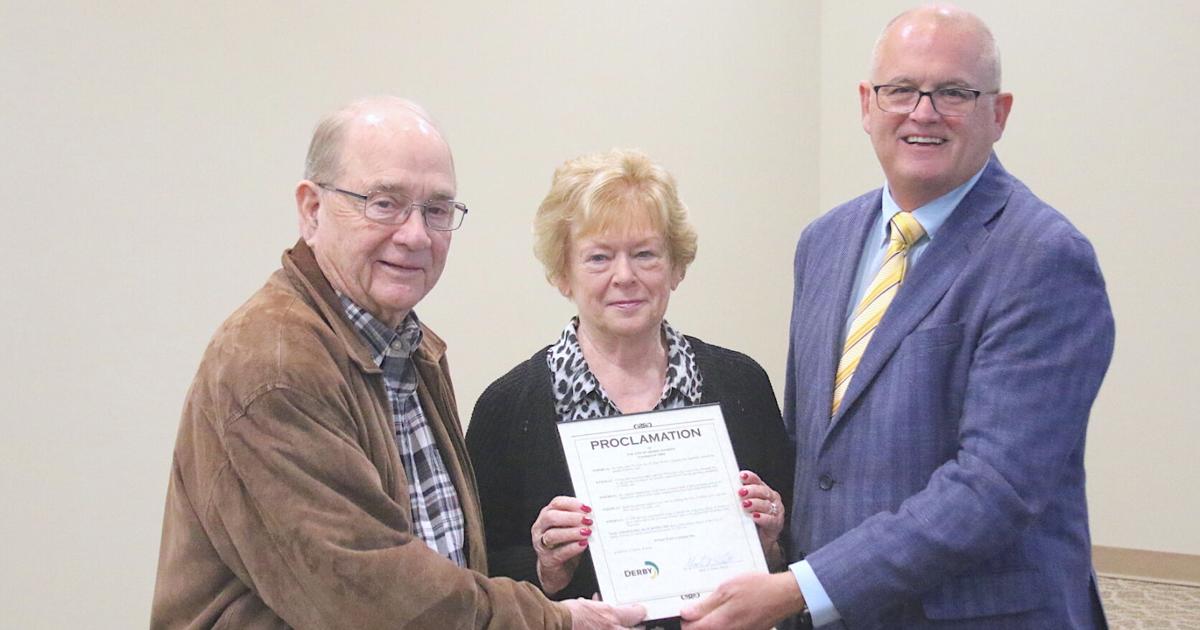
To acknowledge the work the El Paso Water Company took on to ensure the community had reliable water, Mayor Mark Staats officially proclaimed Nov. 30 as El Paso Water Company Day — the same day as its dissolution — at the latest City Council meeting.
Per the proclamation, El Paso first acquired water rights for Derby in 1954 with wells west of the Arkansas River, “laying the foundation for reliable water service for the growing community of Derby.”
“Those investments played a key role in helping the city of Derby grow into the thriving city it is today,” Staats said.
On hand for the proclamation was Pat Swaney, who served as the president of El Paso Water Company at the time it was sold to the city in 1999 to ensure long-term growth and the reinvestment of water revenue into needed infrastructure — like the current plans for Derby’s new water treatment facility.
Swaney gave credit to both the council members of 1954 and initial company president Ray Reed for making a major decision. Needing both sewer and water service at the time, the council addressed the former while Reed helped with the latter.
“If one hadn’t have gone, the other one wouldn’t have, and the city would’ve still been sitting there without sewer and water,” Swaney said. “That’s what really started the growth was when they got sewer and water.”
Beginning with El Paso Water Company in the mid-1970s, Swaney served in various roles for nearly a quarter century — including reading and installing water meters, back when that meant about 20 new meters per year.
That was when Derby had the one water tower with a 100,000 gallon tank, but the foundation of the El Paso Water Company helped growth quickly take off.
“When I started, there were probably 6,000 people in town and now there’s probably 26,000,” Swaney said. “When I started there were four districts plus commercial that you read, now there’s probably 22.”
And now Derby has water rights to pump 700 million gallons annually, with all meters being read electronically.
But in pursuing its new water treatment facility, the city is going back to some of those original wells to help continue expanding local water service.
“We’ve kind of come full circle since 1954,” Staats said.