
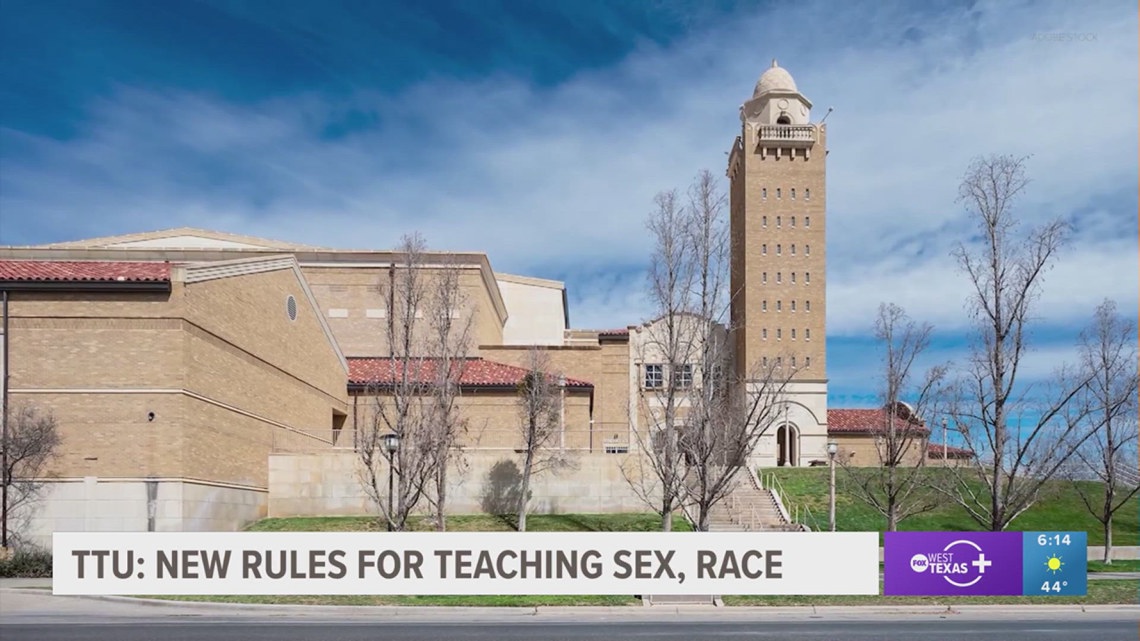
The new standards are designed to give professors in the Texas Tech University System clearer guidance on how to address these topics if they arise in the classroom.
TEXAS, USA — The Texas Tech University System has released new instructional standards that limit how faculty may address topics such as race, sex and gender identity across its member institutions, including Angelo State University. The memo, issued by newly appointed Chancellor Brandon Creighton, comes amid months of statewide scrutiny of university curriculum following the high-profile firing of a Texas A&M professor after a dispute with a student over gender ideology.
Creighton’s memo, sent to the presidents of Texas Tech University, Angelo State University and the system’s three other universities, outlines prohibited instruction and establishes a required review process for course material related to sexual identity.
According to the memo, faculty members acting in their official capacity may not teach or promote the belief that:
● One race or sex is inherently superior to another.
● An individual, because of race or sex, is inherently racist, sexist or oppressive, whether consciously or unconsciously.
● Any person should face discrimination or adverse treatment because of race or sex.
● A person’s moral character or worth is defined by race or sex.
● Individuals bear guilt or responsibility for actions committed by others of the same race or sex.
● Meritocracy or a strong work ethic are racist, sexist or concepts rooted in oppression.
The memo also states that state and federal law recognize only two sexes: male and female. This point was previously outlined in a September memo from former Chancellor Tedd Mitchell. Under the new standards, all faculty must comply with the policy and must submit any course content that addresses sexual orientation for review by the Texas Tech University System Board of Regents.
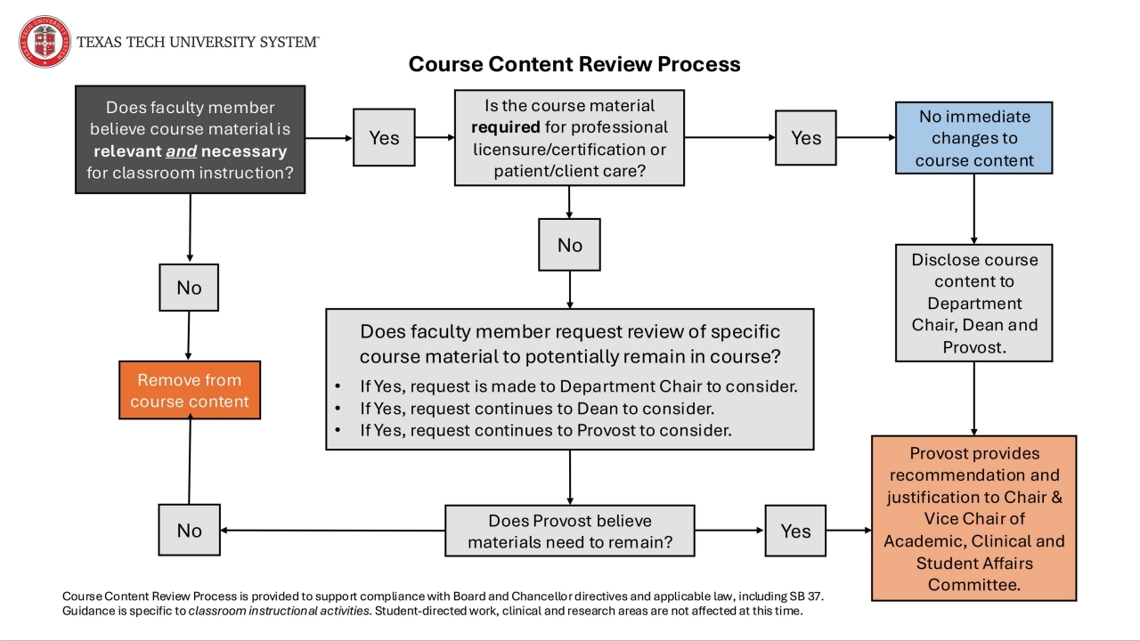
A flow chart included in the memo explains the review and approval process. Faculty, department chairs, deans and provosts are expected to use the chart to determine whether certain instructional materials are allowed in classroom settings.

Creighton emphasized that full participation from faculty is essential and noted that failure to comply could result in disciplinary action. He described the new standards as the first step in the board’s ongoing, state-mandated responsibility to oversee classroom instruction and ensure that each university delivers degrees that hold value for students.