
This story was produced with support from the Education Writers Association Reporting Fellowship program.
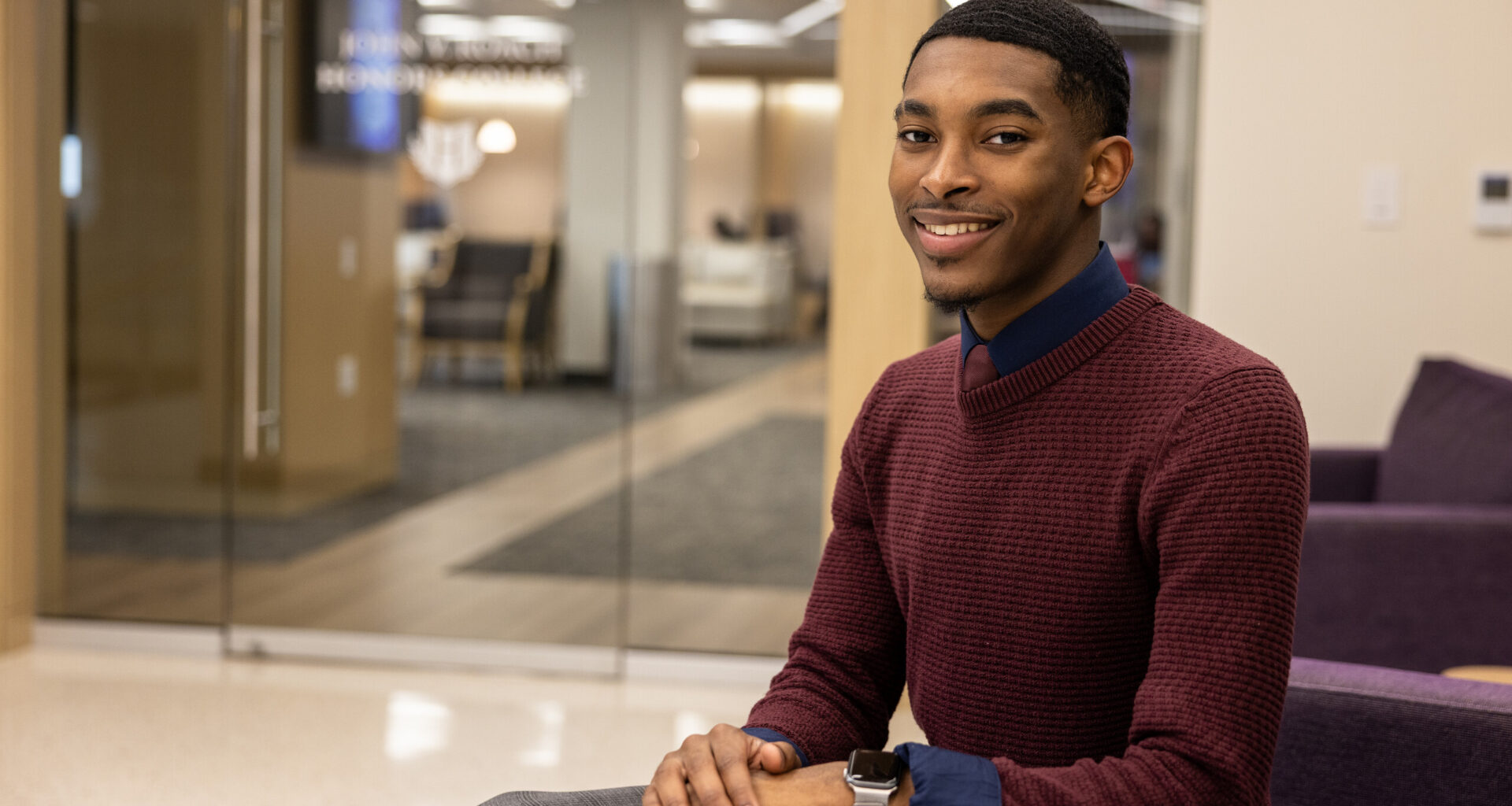
Five months into college, Brian Mata sees the difference between exploring science in a high school lab and surviving a course in a university lecture hall.
He is among a handful of Texas Academy of Biomedical Sciences graduates now on the Texas Christian University campus — a small cluster of students who arrived with college credits, industry certifications and the confidence of classmates who stitched wounds and shadowed clinicians before they could drive.
And yet, just a semester into his first year, Mata already dropped a biology course.
“I was unaware of how hard it truly is, but now my eyes have been opened,” Mata said.
The experience is common among first-year pre-med students, university leaders say. For those who arrive without early exposure — such as that provided by Fort Worth ISD’s biomedical high school — the “weed-out” phase hits earlier and harder, they say.
Texas desperately needs more health workers. But the state’s universities are still producing far fewer doctors, nurses and clinicians— especially among Black and Latino men — than the population requires.
North Texas colleges are building pipelines, from advising to bridge programs, to keep those students from leaving medicine even before they reach medical school.
That work is complicated by state and federal bans on diversity, equity and inclusion initiatives. Universities cannot explicitly recruit or support students by race or gender, even when their own data shows steep gaps in who enters — and stays — in medical pathways.
Nationwide, efforts to keep students engaged in health care pathways are urgent, said Victoria Allen, a Belmont University doctoral nursing candidate whose research focused on increasing Black male representation in nursing. Her work with a group of Black middle school boys in Nashville, for example, found that even a single day of hands-on exposure to Black male nurses shifted how students saw themselves in health care careers.
She said students often decide whether they are “good at” science and math in middle school — long before they ever reach medical school and even prior to attending specialized high schools such as Fort Worth ISD’s Texas Academy of Biomedical Sciences, or TABS.
For Mata, that lack of early, tailored support shows up on campus as self-doubt among students like him, he said.
“Although they were very high-achieving students in high school, I just don’t think they had the resources or content exposure,” Mata said. “They doubt their abilities.”
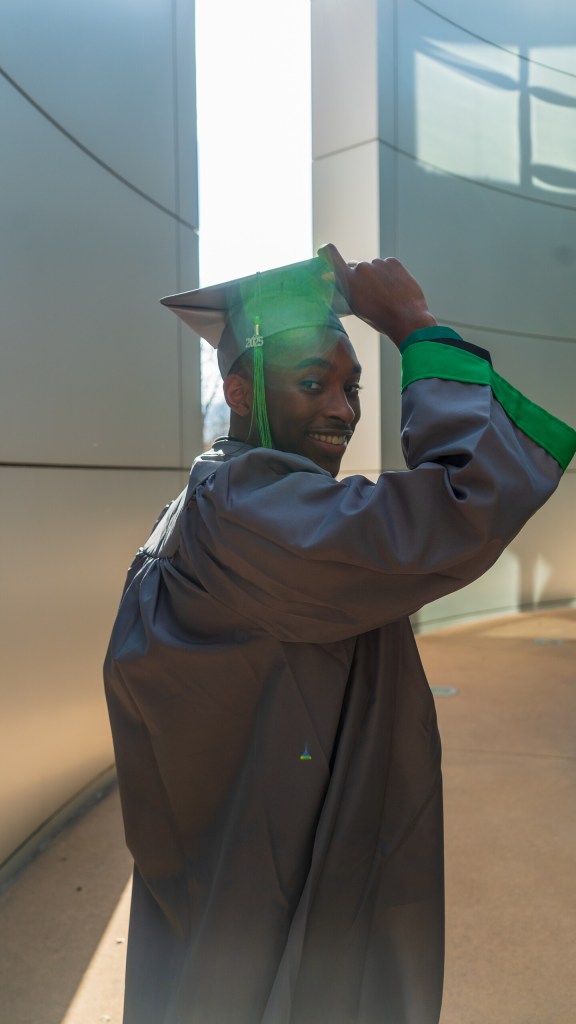 Ronald King, now a freshman at Texas Christian University, takes his graduation photos after graduating from Fort Worth ISD’s Texas Academy of Biomedical Sciences in May 2025. (Courtesy | Victor DeCluette Jr)
Ronald King, who also graduated from TABS, plans to become an obstetrician-gynecologist. He echoed the shock of arriving on campus that his TCU classmate Mata experienced.
“I definitely think that I came into it all a little too confident,” King said. “There was nothing I could have done to prepare me for university life in general, and it’s definitely been a humbling experience.”
North Texas college officials say they are moving quickly to build pipelines so that more students such as Mata and King find mentoring networks and research tightly structured transfer pathways to keep them from falling out of the system before they reach medical school.
Representation and shortages collide
Even as colleges produce more doctors, demand across the state is accelerating, driven by an aging population and waves of retirements, according to reports from the Texas Medical Association. In North Texas alone, the state estimated the region is short more than 3,000 physicians this year. By 2036, nearly half of the region’s primary care demand could go unmet, according to projections.
For communities of color, which already face higher rates of chronic disease, maternal mortality and delayed care, the shortage exposes a second challenge: lack of representation.
Across the country, Black men represent just 2.9% of medical school graduates. Latino men, just 3.2%, according to the Association of American Medical Colleges. Which means, students such as King and Mata rarely see doctors who are Black and Latino men. They rarely see professors or even classmates who look like them, they said.
Those gaps ripple through the pipeline, said Dr. Kirk Calhoun, president of UNT Health Fort Worth and the university’s Texas College of Osteopathic Medicine.
Texas needs a wide variety of students to make it through high school and college and into medical training, he said, but too many young people from underserved communities leave school before they get that chance.
“If we have young people dropping out of high school or college who are bright, who could be successful, who could be physicians, that kills the pipeline,” Calhoun said.
Latino students make up about 53.5% of Texas’ 5.5 million public students. Black students make up 12.8%. At the college level, those shares drop to about 36.9% Latino and 11.7% Black undergraduates at public campuses statewide.
How universities try to plug the leaks
At Fort Worth’s Texas College of Osteopathic Medicine, Calhoun doesn’t pretend the numbers aren’t stark.
Two obstacles loom largest, Calhoun said: socioeconomic barriers and awareness.
“From the social part, awareness of what a medical career might look like … and from the economic side, making sure that we keep the cost of going to medical school affordable.”
Calhoun, a Black man, learned the lesson personally after a childhood illness forced him into long conversations with doctors and nurses. That experience — that visibility — pushed him toward medicine, he said.
“It’s hard to be what you can’t see,” he said.
But visibility alone isn’t enough, said UNT Health Provost Christopher Ray.
The admissions gap, or how little students understand about being competitive applicants, begins long before an application is submitted, Ray explained. Most students have no idea how admissions committees read their files, when they should seek help or what counts as meaningful experience until it’s too late, he said.
Instead of leaving students to guess, the university pairs would-be med students — mostly undergraduates and recent graduates from partner colleges including Tarrant County College and the University of Texas at Arlington — with advisers who walk them through the mechanics of becoming a competitive applicant, course by course, hour by hour.
To counter any confusion, advisers at the school push students into structured advising early, long before they’re thinking about the Medical College Admission Test, or MCAT, prep.
“Those (admissions) officers are well trained … they’ll say, ‘I think you’d be really competitive if you had more observation hours … if you retake this one course,’” Ray said.
The college built a parallel track for those who fall just short. Rather than shutting the door on medical school, the university diverts them into a biomedical sciences master’s program designed to strengthen their credentials — and then pulls them back toward medicine. Nearly 40 current UNT medical students came through this program, Ray said.
Students spend a year in biomedical sciences, often retaking key science courses or adding observation hours, then work with admissions officers to apply again to medical school with stronger grades and a clearer roadmap.
“You may be deterred, and we may advise you to go do this MS,” Ray said. “But then we’re routing you right back into med school.”
The first gate: Prerequisites, exposure and cost
At the front end of the pipeline, Tarrant County College is one of the region’s largest health education hubs. The Trinity River Campus now enrolls 2,900 students across health and nursing programs, a 36% increase in five years.
TCC leaders do not specifically recruit Black or Latino men. Texas lawmakers banned public colleges from any DEI-related efforts in 2023, which prompted many schools to shift how they support students. Federal directives and funding moves also rolled back efforts.
“We certainly want to be compliant, but we’re also doing some great things,” said Sean Madison, president of TCC Trinity River.
The college’s pipeline is structured around exposure and affordability.
Dual-credit programs allow high school students to take college-level courses at little or no cost. Early college partnerships with area school districts allow for pairing high schoolers with hospitals and health companies beginning in ninth grade, giving them access to industry mentors, workplace experiences and a structured path toward credentials. Summer bridge courses let students earn early credits and acclimate to college-level expectations before their first semester.
TCC Trinity River Vice President Beverly Clark pointed to TABS where hundreds of students attend high school on the Trinity River campus and then graduate with patient care technician or pharmacy technician certifications. Those credentials qualify graduates for entry-level clinical roles at local hospitals and clinics — positions students could use to earn income and build experience while they continue their education.
College officials work to adjust policies when hidden barriers block students, Clark said.
For example, sterile processing certifications require a high number of clinical lab hours, but high school students often cannot complete enough shifts during the school year. TCC now offers extended scheduling and partnerships with local health systems to accommodate the teens.
“We’re really committed to solving this,” Clark said. “Trying to make our credentials truly attainable before they leave high school.”
Still, the leaks are real. Jerry Findley, the college’s dean of health sciences and nursing, said prerequisites — anatomy, physiology, microbiology — remain the cliff where many students fall.
“The biggest drop-off with health programs is the prerequisites,” Findley said. “They’re really science-heavy. We really try to identify the why behind that and then bridge that gap.”
Rather than a single fix, TCC leans on systemwide support that includes required advising with career and technical counselors and workshops tailored to students trying to enter health programs.
Additionally, health sciences faculty layer in simulation labs and extra academic support so learners can practice real-world skills before stepping into clinical sites.
Early exposure is the difference
Not seeing many Black men on the pre-med track at TCU can make King feel discouraged at times, he said.
“But I feel like that’s also a reason to push you more,” he said.
The first semester rattled him. He dropped two courses to protect his grade average.
He watched friends quit biology courses. Others walked away from medicine entirely.
Mata saw TCU classmates who earned straight A’s in high school — who never had to dissect organs, work in labs or study college-level vocab — find themselves failing their first exams. Mata, who spent two years at TABS taking physics at a higher level and knocking out college chemistry and biology while earning his associate degree, said that hands-on practice and early credits are what kept him from dropping the pre-med track when his own grades slipped.
“They know it in theory, but they don’t know how to apply it,” Mata said. “Application is crucial.”
Both students credit early exposure as the difference between struggling and quitting.
Mata enrolled at TABS because his cousins described it as a “cool school.” By sophomore year, he was handling physics, AP biology and college chemistry. He graduated one year early.
Even after dropping a course, Mata is ahead of most TCU freshmen as he studies organic chemistry while they learn medical terminology they are seeing for the first time.
King, meanwhile, leans on structure: He is a STEM Scholar at TCU, one of only seven selected each year.
TCU supports those scholars by setting them up with weekly meetings with the program’s director. The students see a graduate assistant every other week and have a monthly faculty mentor check-in.
Those touchpoints matter, King said. They prevent isolation.
“You just truly have to learn that … it’s OK,” King said. “You’re not the only one struggling.”
Matthew Sgroi is an education reporter for the Fort Worth Report. Contact him at matthew.sgroi@fortworthreport.org or @matthewsgroi1.
At the Fort Worth Report, news decisions are made independently of our board members and financial supporters. Read more about our editorial independence policy here.
Related
Fort Worth Report is certified by the Journalism Trust Initiative for adhering to standards for ethical journalism.
Republish This Story

Republishing is free for noncommercial entities. Commercial entities are prohibited without a licensing agreement. Contact us for details.