
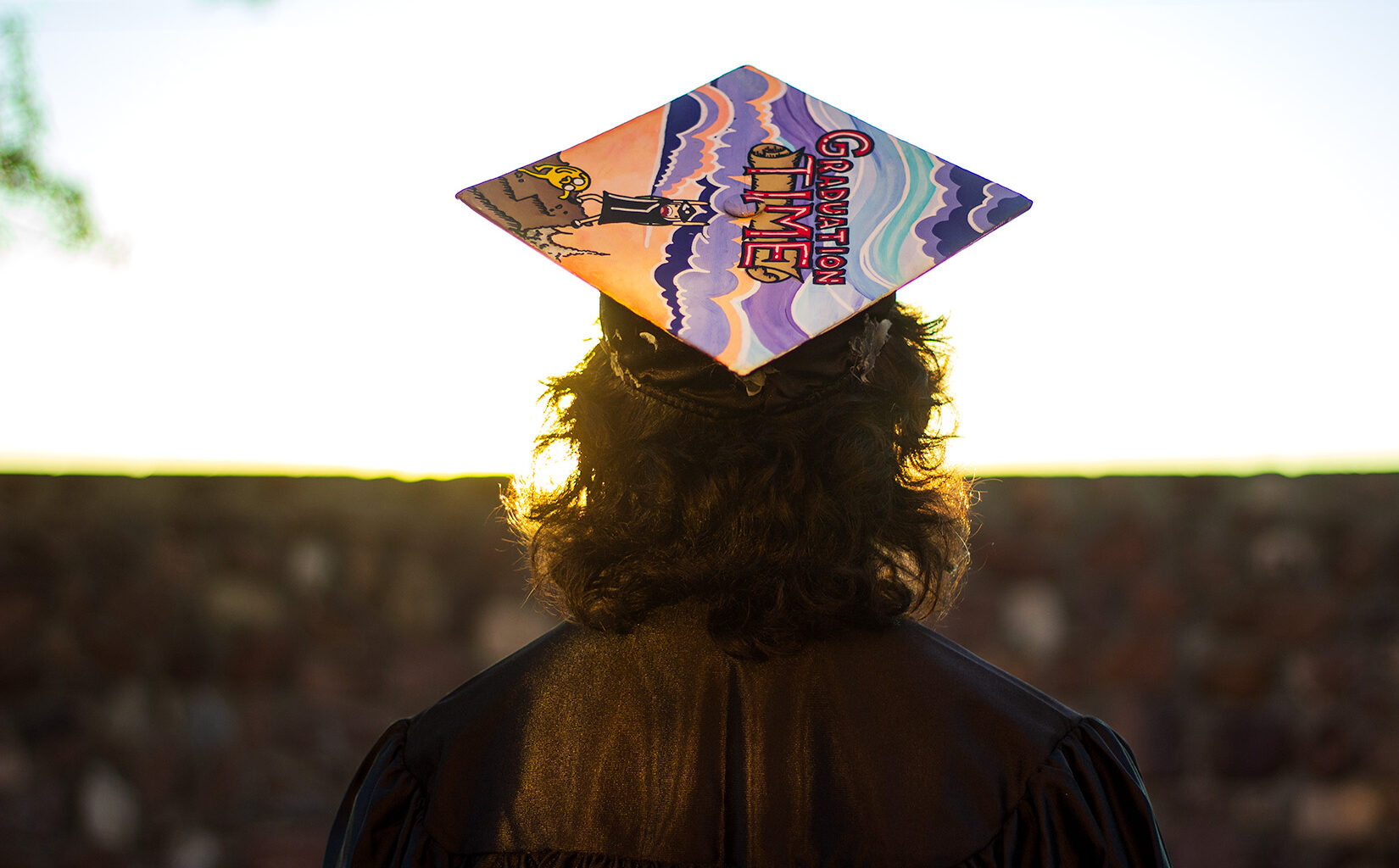
While most students are counting down to winter break, a growing number of seniors at The University of Texas at El Paso (UTEP) are looking ahead. With graduate school applications open, more students are choosing to pursue advanced degrees over going straight into the workforce.
This process often involves managing test scores, crafting personal statements, requesting letters of recommendation and meeting funding deadlines, all while finishing undergraduate coursework. To support students through these steps, UTEP offers resources ranging from academic advising and fellowship guidance to grants and workshops that help applicants navigate their next steps.
For Ivan Acedo Aguilar, a computer science graduate studying for a masters in AI and international student, applying to graduate school was a strategic choice.
“As an international student, getting a job is quite difficult. Right now, in the current marketplace, it’s difficult, and as an international student it’s even more difficult, because companies need to pay for your work visa… in most cases they are only hiring people with master’s and above,” Aguilar said.
As one of only 141 R1 institutions nationwide, UTEP ranks in the top 5% of U.S. universities for research activity according to UTEP’s website. A designation that encouraged Aguilar to stay with UTEP.
Maryanne Long, Ph.D., Director of Post Doctoral Affairs and Graduate Fellowships, recommends that students begin searching for funding opportunities at least a year before graduation and stay alert for deadlines.
Assistant Dean at the Graduate School, John Indiatsi, Ph.D., said that beyond email notifications and campus events, students are welcome to come ask for information directly.
“The Graduate School is here to serve our students, both undergraduate and graduate,” Indiatsi said. “It’s about leadership potential and one’s ability to collaborate, build networks and communicate. You should always know that graduate school is an option, even if not immediately, somewhere down the line.”
Nearly 60% of UTEP’s graduate students are university alumni, according to Indiatsi. Additionally, the Fast Track program allows undergraduates to take graduate-level courses that count toward both bachelor’s and master’s degrees. An option that Aguilar took advantage of in preparing for his master’s.
“Because I was a part of the fast-track program, it was pretty straightforward, I just needed to submit my transcript. I didn’t need any recommendation letters; I had some professors vouch for me,” Indiatsi said.
For others, the path to graduate school looks different. Matthew Shaw returned for a master’s in English and American Literature after 15 years working as an electrical engineer.
“In some ways I wish that it had been a shorter time, but I think there’s some value in taking time between your bachelor’s and your graduate program.” Shaw said.
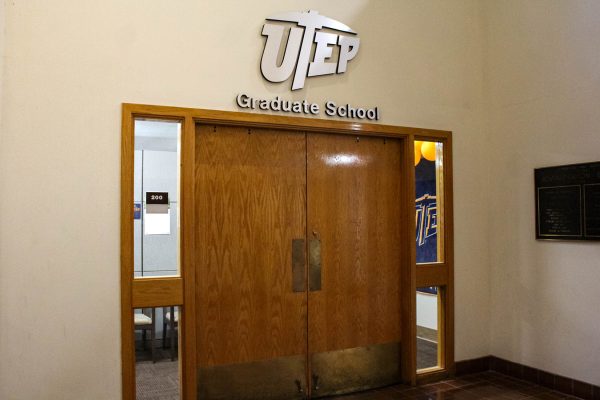 Located in the Administrative Building, The University of Texas at El Paso (UTEP) offers resources and advice to those starting graduate school, looking for a graduate program, or curious about graduate school. (Sadie Briones)
The Graduate School’s website serves as a central hub for students exploring advanced degrees, offering more than 100 programs, including 26 doctoral degrees, 68 master’s degrees and 49 graduate certificates. Its website outlines admissions timelines, costs and funding information to help students plan ahead.
Beyond advising, the school hosts events designed to support students’ academic work. For example, the monthly Graduate Writing Retreat offers a dedicated space and peer accountability for students working on dissertations, theses or other large projects.
Assistant Director for Student Support, Crystal Bright, Ph.D., said the goal is to remind students that they are not alone in the process.
“We want students to know that graduate school is attainable. There are resources available, not just within the graduate school but in the university as a whole,” Bright said.
Finance remains one of the biggest concerns for graduate students. UTEP provides opportunities such as the Dodson Research Grant, which offers up to $3,000 for research expenses, and support for national awards likethe National Science Foundation Graduate Research Fellowship (NSF GRFP), one of the nation’s most competitive awards. The NSF GRFP provides three years of support with a $37,000 annual stipend for qualifying research-based master’s and Ph.D. candidates
Indiatsi added that admissions are often the first challenge for students looking to apply. Unlike undergraduate programs with open enrollment, graduate applicants face a selective review process.
“You should know you are competing against other people,” Indiatsi said. “You want your documents as strong as possible.”
For Shaw, returning to school after years in the workforce had been challenging but worth it.
“The emphasis on development and really learning and growing is very rewarding.” Shaw said. “Once I did, (apply) it was a smooth process, and I was very happy.”
Aguilar encouraged students to get involved with research early and to approach the process with confidence.
“It’s not as different as you might expect from undergrad, you need to be more engaged with the community. Being socially active is a key ingredient to grad school. And why not get a graduate degree? It’s nice to be called a master,” Aguilar said.
Faculty encourage students to keep their options open but not hesitate once they’re ready. As Bright put it: “Don’t leave graduate school with regrets. Go forth and be great.”
Jewel Ocampo is a staff reporter and at [email protected]