
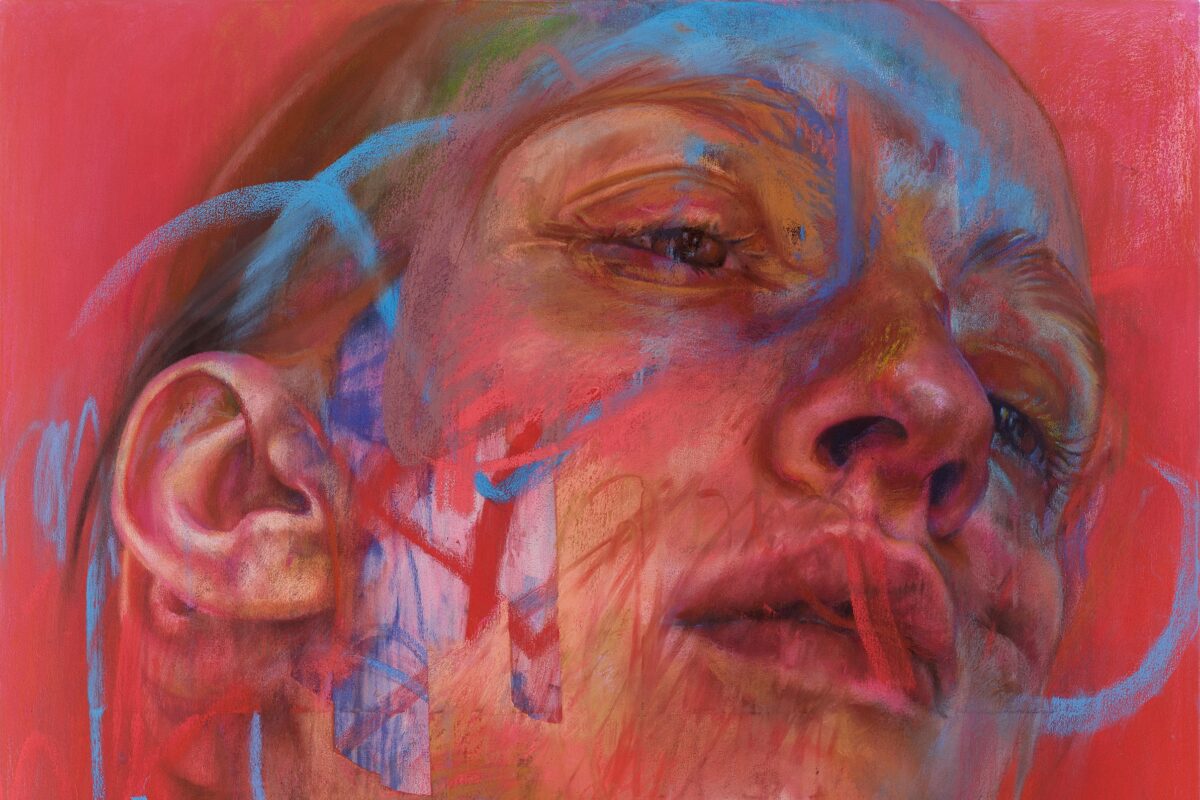
Augustus Owen Foundation’s Peter Augustus Owen chats with Andrea Karnes, chief curator, the Modern Art Museum of Fort Worth, on the eve of one of the top shows of the fall in the American museum world. This fall, “Jenny Saville: The Anatomy of Painting” traveled from London’s National Portrait Gallery to The Modern, its only U.S. stop. Karnes shares insights and an insider’s perspective — a PaperCity exclusive.
Peter Augustus Owen: In an era where the human body is often reduced to a series of curated images on social media, Jenny Saville’s paintings stand as unapologetic, visceral declarations of physicality, challenging how we perceive beauty and identity in contemporary culture. What resonates with you personally and professionally?
Andrea Karnes: Jenny’s work feels profoundly human, and I respond to that. She doesn’t shy away from complexity — there’s rawness, vulnerability, and strength in each work. Professionally, I really love her fearless approach to scale and subject matter. She has redefined figurative painting, and she’s given the body a monumental presence that is contemporary, but also timeless.
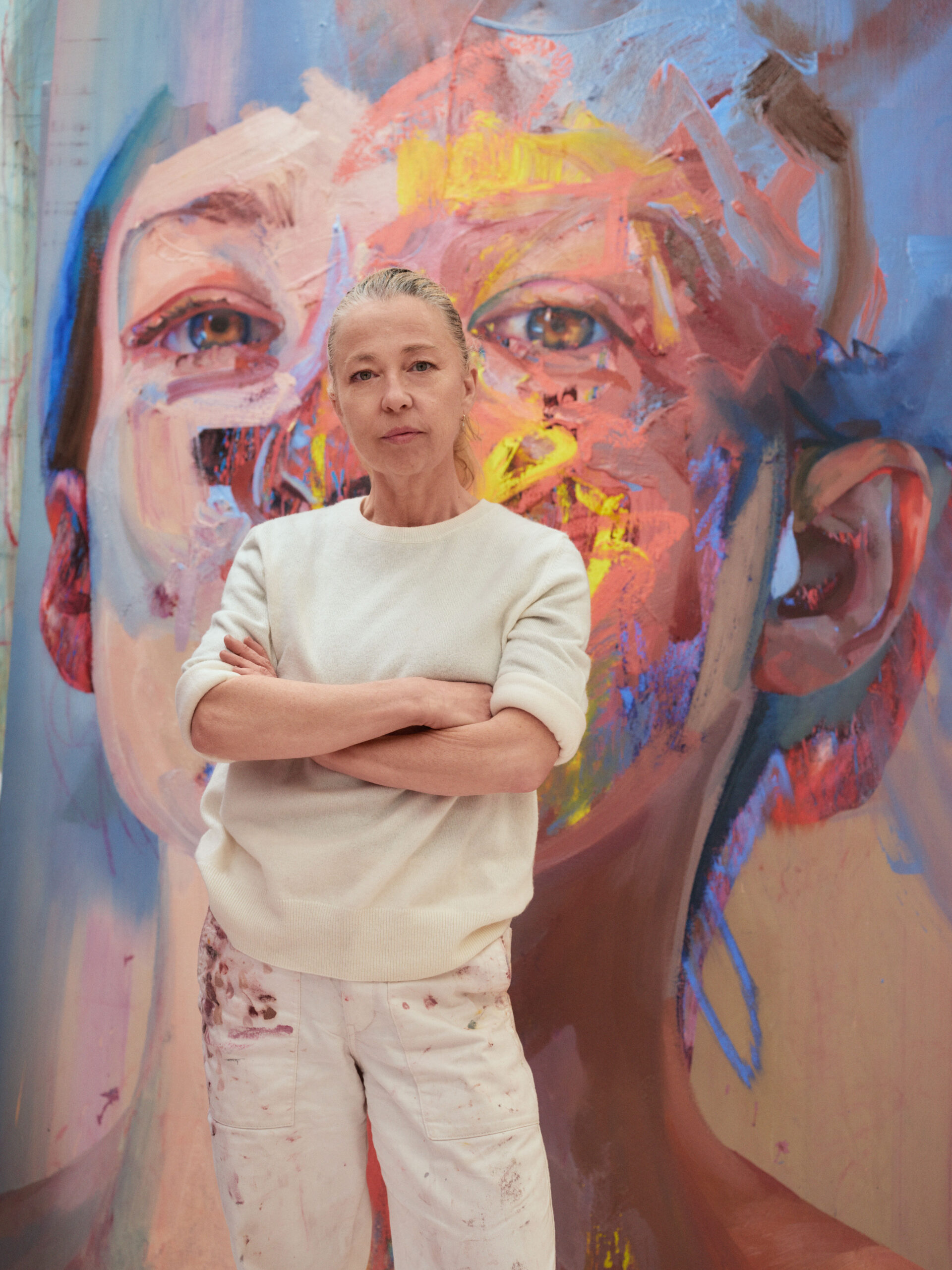 Artist Jenny Saville (Artwork © Jenny Saville. All rights reserved, DACS 2025. Photo by Tyler Mitchell. Courtesy Gagosian)
PAO: Her paintings are known for thick brushstrokes and flesh tones. How do medium and scale shape their impact?
AK: The paint itself feels alive. Those thick brushstrokes and fleshy colors give the figures a physical presence; you feel the weight of the body or head. Scale makes that even more powerful. When you stand in front of a work by Jenny Saville, it’s immersive. You experience it with your whole body.
PAO: This survey includes paintings and charcoal drawings. Which works stand out for you?
AK: This is a super-tough question. I’d say Fulcrum, 1998–1999, is an early milestone. The interlocked figures create this sense of weight and balance, almost like a human landscape. And then a work like Stare, 2004–2005, for its almost cold palette, even though it contains warm colors, too, and for her handling of paint, which is thick and deliberate in places, but looser and more gestural in others. The combination gives the work a psychological resonance — it’s not just about looking at a figure, it’s about the intensity of looking.
More recent works like Drift, 2020-2022, focus on heads instead of bodies, and they really push the commingling of figuration with abstraction to new heights. And yet, the charcoal drawings are just as important because they reveal Jenny’s thinking and how she puzzles through things before a subject becomes a monumental work. While they show speed and experimentation, the canvases reveal the depth of her labor and her chops as a painter.
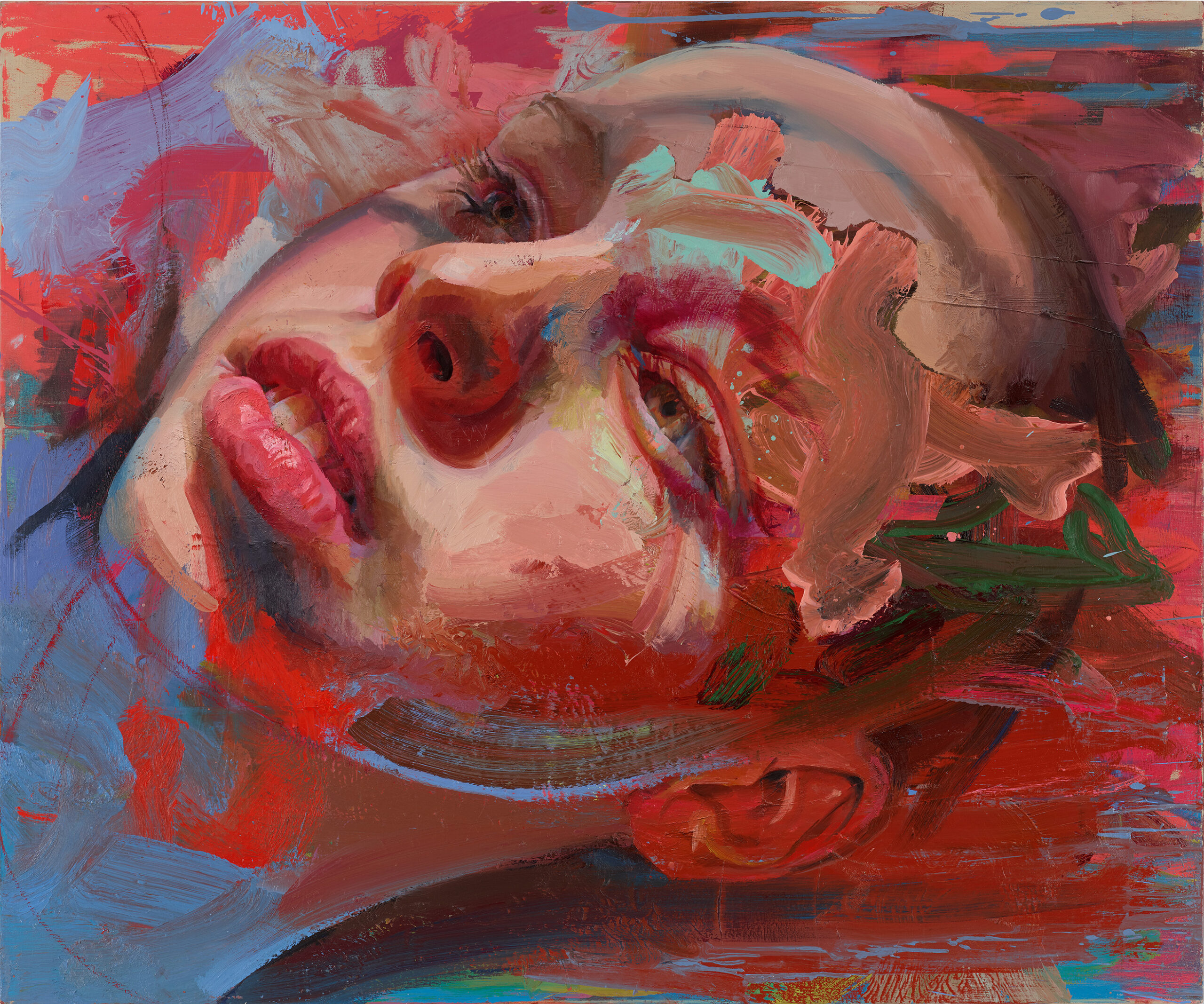 Jenny Saville’s Drift, 2020-2022, at Modern Art Museum of Fort Worth. (Private collection. © Jenny Saville. Courtesy Gagosian.)
PAO: You wrote an essay for the exhibition book comparing Saville to Willem de Kooning. What do you see as her legacy?
AK: I think her legacy will be that she reinvented figurative painting. Like de Kooning, she expanded the language of paint — it’s visceral, muscular, and emotional. And she gave us a new definition of humanness, which, in real time is complex and layered, not neat and idealized. I think future generations will look to her not just for technical mastery, but for that insistence on honesty.
PAO: I heard you visited Saville’s studio in Oxford. What was that like?
AK: Unforgettable. There are books, images, materials, tools, drawings, and canvases everywhere, and upon arrival for my first visit, she was painting while blasting Taylor Swift! What really struck me was that Jenny nearly always thinks about painting — and her rigor. She pushes herself. You feel that intensity in the paintings.
“Jenny Saville: The Anatomy of Painting,” through January 18, 2026, at the Modern Art Museum of Fort Worth. Learn more here.