
Audio recording is automated for accessibility. Humans wrote and edited the story. See our AI policy, and give us feedback.
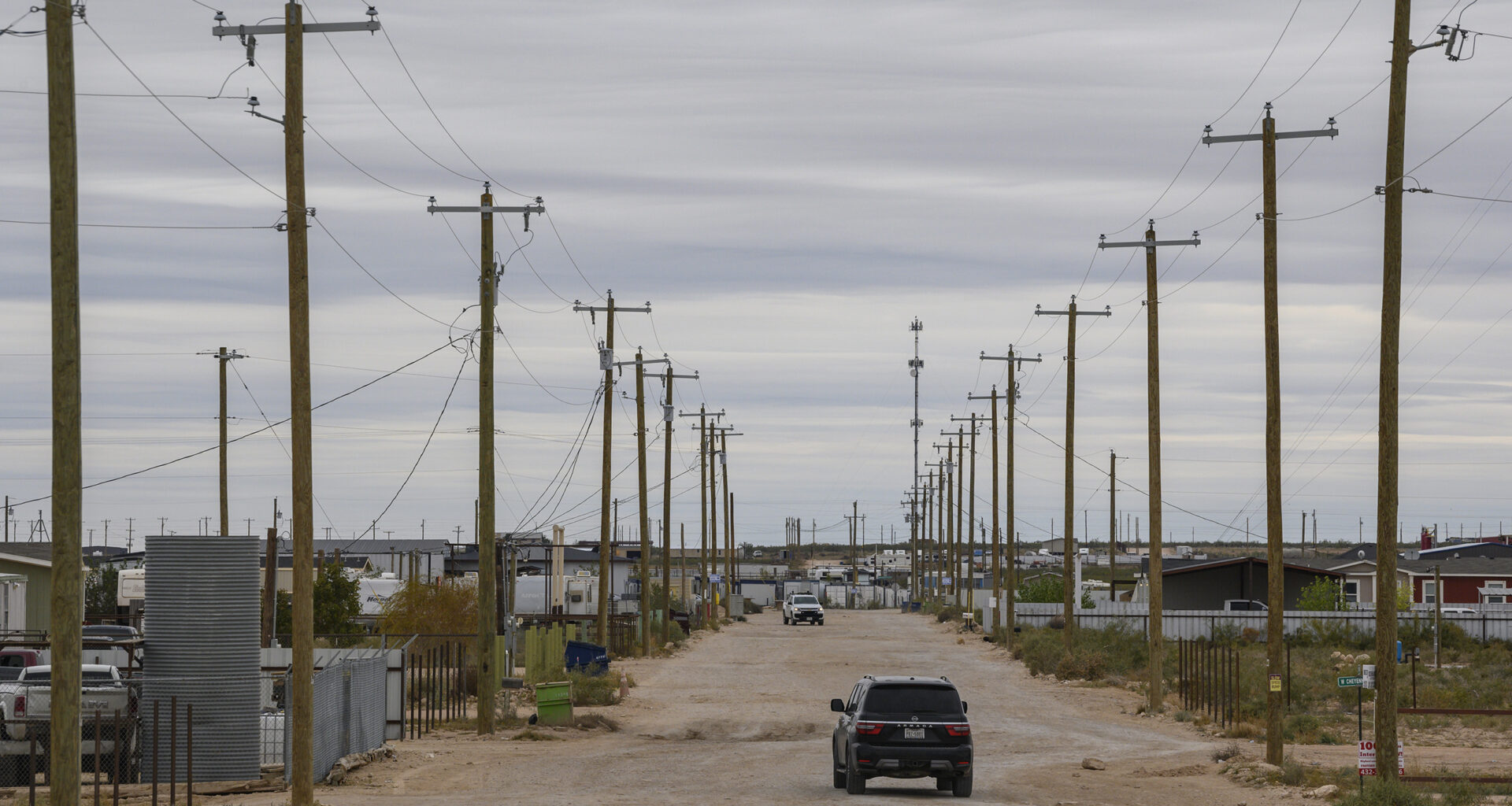
WEST ODESSA — When Paula Graham’s family moved here to chase the oil boom in the 1980s, this unincorporated portion of Ector County was scarcely populated. Roads were barely paved. There was no running water.
In the decades since, the lonely stretch of roads is now full of other trailer homes. Despite the boom, there is still no access to clean and reliable drinking water.
Families like Graham’s rely on wells and pump systems they’ve installed and must maintain themselves. She fears the increased population is straining her well and that it will dry up.
For the last four years, Graham has asked the local water utility about adding lines from nearby Odessa, with little luck. Until now.
Graham is cautiously optimistic about a new $17 million project paid for by the Texas Legislature to expand water infrastructure in West Odessa. The utility district could “stop short” of her house, she said.
The one-time state investment offers another reminder that scores of Texans still lack access to running water — and the staggering costs local governments face building and maintaining those systems. Most Texans without running water typically live outside municipal boundaries, like West Odessa or colonias along the border.
The Best of the Tribune in your Inbox

The Y’all is a weekly dispatch about the people, places and policies that define the state of Texas. Produced by Texas Tribune journalists embedded in communities across the state.
To help communities expand, improve and maintain their water systems, the Legislature and the Texas Water Development Board have created financial assistance programs. Those programs will see a boom during the next two decades after voters approved spending $20 billion on water during the last election.
However, available funding can fall short of demand, wait times are long, and in many cases, these areas without a water utility or city government may no be eligible.
Several state lawmakers took matters into their own hands this year, earmarking projects within their districts as part of the state’s two-year budget. Nearly $600 million will go toward water-related expenses, more than five times what lawmakers got in 2023 for such projects. One project in Lynchburg, an unincorporated community near Houston, will get $100 million for a water pumping station. Bellaire, a city of about 17,000, also in the Houston area, received $54 million for a flood mitigation project.
State Rep. Brooks Landgraf, a Republican who represents West Odessa, said that in approving his request, the Legislature acknowledged the desperate need in this part of his district.
“If there’s a clear need, I’m always going to ask and make that fight,” Landgraf said. “I know we can put that money to work.”
The promised state funds are only a start.
Ector County Judge Dustin Fawcett has made improving the quality of life in West Odessa a major part of his work as the chief executive of the county.
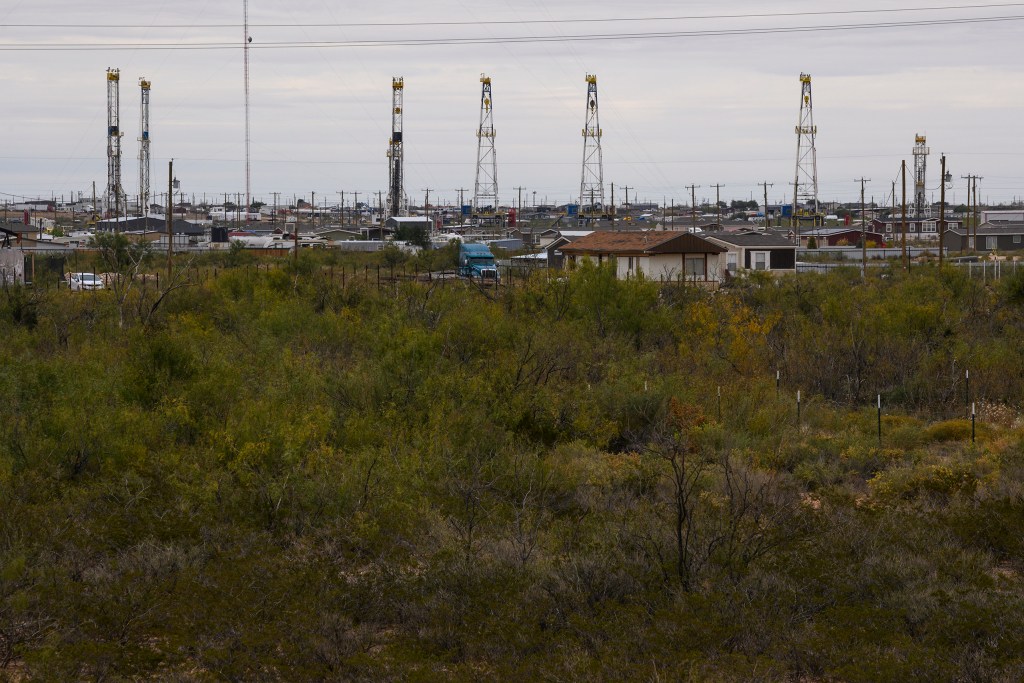 West Odessa on Nov. 10, 2023. Eli Hartman/The Texas Tribune
“More and more folks have moved out there, and it’s arguably closer in size to Odessa,” Fawcett said. There are roughly 114,000 people in Odessa. “Yet the amount of water lines connecting citizens to water has remained relatively static. And then we have people who are moving out there who don’t understand they won’t have any type of water supply.
“The fact that residents are living without water is something I don’t think we should be having happen in 2025,” Fawcett said.
The Ector County Utility District, which serves about 5,200 customers, does not tax its residents, though it has the authority to do so. It relies solely on customer fees. The limited budget has prevented the district from expanding to more households within its boundaries, Fawcett said.
Utility district officials did not respond to requests for comment.
Ector County officials will oversee the $17 million to develop water infrastructure and will oversee the build-out. They will spend $250,000 on a study to determine the county’s needs and to apply for future grants and loans. The rest will go toward the new pipelines and connections. Residents must opt in to connect to the water lines. The county plans a public awareness campaign.
The money won’t be enough to bring water to every resident of West Odessa, Fawcett said. The estimate of such a project exceeds $100 million.
Funding for water projects can amount to millions of dollars at a minimum for local governments and water systems, putting major upgrades out of reach for smaller and rural ones.
The state dollars available to help those systems are incredibly competitive, even after a $20 billion boost approved by voters in November. The Texas Water Development Board, tasked with the state’s water preparedness, administers multiple programs to help local governments afford projects. Most of them are low- or no-interest loans.
For certain areas of the state, these loans can be difficult to qualify for. For instance, West Odessa does not meet the criteria to be considered a colonia due to its population size. The utility district covers only a small portion of the area, disqualifying it from other grants. It’s also not a municipality, Fawcett said.
To address needs that don’t meet the Water Development Board’s standards, state lawmakers are hashing it out in the budget. Lawmakers regularly request billions in water projects and infrastructure needs, including parks, roads and airports. The amount of money lawmakers can request — and how much is approved —will vary with every budget. Lawmakers need to demonstrate to other lawmakers, who ultimately vote on whether to approve the budget, that the need is urgent.
At almost $600 million, water was far and away one of the largest expenses in 2025. For parks, lawmakers secured $60 million. For airports, they got $106 million. In 2023, when lawmakers last convened, they requested $106 million for water-related projects.
“Texas’s documented water needs now exceed $200 billion within a 50-year period,” said Alan Leonard, director of policy at the Texas Water Foundation. “And lawmakers are taking a bigger interest in Texas’ water needs and their growing costs.”
Perry Folwer, executive director of the Texas Water Infrastructure Network, acknowledged that many communities desperately need the money. He was wary, however, of circumventing the water development board with individual projects.
“You lose the ability to leverage funds and maximize them,” Fowler said. “It’s not anybody’s loss, but if we’re doing this in the future, let’s have it go to the board.”
Residents in West Odessa are hesitant to celebrate before they see any actual construction. Many agreed that the area is more densely populated and needs more services, such as paved roads and water.
Prudencio Rivera moved to West Odessa eight years ago. He’s had a water well for as long. It’s never failed to run in the house. Every month, he and his wife buy 20 gallons of water to drink.
He was not aware of the new plan to build water, but says the county should move quickly if it wants to catch up with the new development.
“There was no one here,” he said of his neighborhood. “It would help the new people moving in.”
Graham, who moved there in the 80s, has spent years worrying about whether her water well can take the pressure of all the new neighbors. She said she conserves every drop but doesn’t trust others to do the same. She keeps her garden small for that reason.
As for the county’s plans, she wasn’t aware. She hopes that next time she asks for a water line to her home, they’ll say yes.
Disclosure: Texas Water Foundation has been a financial supporter of The Texas Tribune, a nonprofit, nonpartisan news organization that is funded in part by donations from members, foundations and corporate sponsors. Financial supporters play no role in the Tribune’s journalism. Find a complete list of them here.