
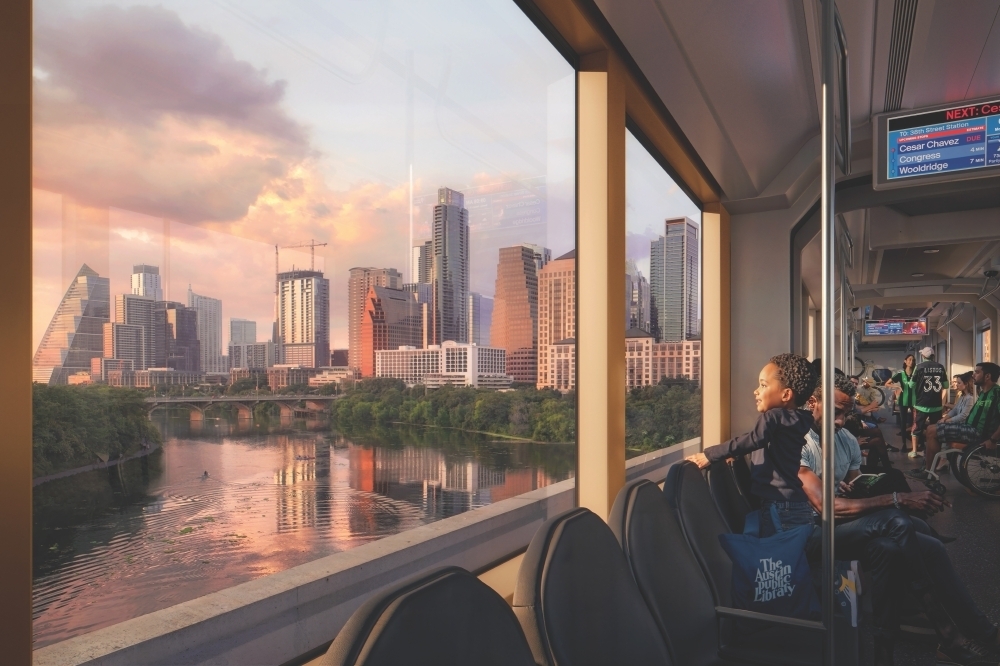
Austin’s light rail project, known as Project Connect, has been marked a priority by the Federal Transit Administration, paving the way for on-time construction of the city’s multibillion dollar transit initiative.
Explained
Overseen by the Austin Transit Partnership, the first phase of Austin’s light rail project has cleared a major federal milestone, ATP CEO Greg Canally told Community Impact in late November. The FTA gave the project a “Medium-High” overall rating in its fiscal year 2026-27 funding recommendations—the highest given during this year’s large project evaluation.
For any major infrastructure project in the United States, navigating the federal funding process is a rigorous journey where every step is scrutinized, Canally explained.
Securing a strong FTA rating is a “key step” in the federal funding process, validating a project’s viability and moving it closer to a financial commitment, he said. This “Medium-High” rating places Austin Light Rail among the top-rated new transit projects nationwide seeking federal investment, a “strong signal” from the FTA, Canally said.
Zooming in
The federal ranking criteria include an assessment of the project’s plans for land use and economic development. ATP has collaborated closely with the city to strengthen and implement land use policies along the proposed light rail line, aimed at encouraging transit-oriented development, or TOD.
TODs are a growing focus for the city, designed to create compact, mixed-use and pedestrian-friendly neighborhoods centered around multimodal transit hubs. City-level policy changes—such as eliminating parking minimums in 2023 and introducing new TOD zoning overlays in 2024—are helping to expand this approach across Austin.
Project Connect corridors are already attracting developers that build affordable housing, offices and entertainment destinations, according to local transportation officials.
“To have strong economic development that helps communities grow and prosper, you need to invest in your infrastructure. And I think Austin is really setting the standard around the country,” Canally said.
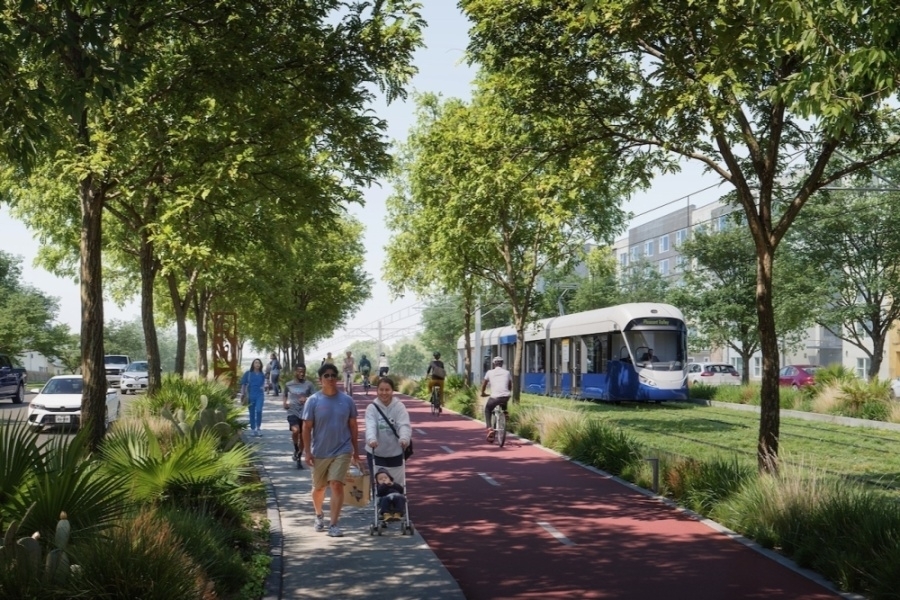 Austin Transit Partnership has proposed a greenway running parallel to the proposed rail line along Riverside Drive. (Artist conceptual visualization courtesy Austin Transit Partnership)Zooming out
ATP officials are currently positioning themselves to remain on track as the project moves closer to construction in 2027. Recent board discussions reveal a deliberate focus on preemptively tackling key risk areas—from permitting and construction coordination to technology integration—ensuring Austin can deliver on its promises efficiently and effectively.
Recognizing that permitting delays represent one of the primary risks for major infrastructure projects nationwide, ATP has collaborated with the city of Austin to reform the permitting process for public infrastructure.
In the past, the process was more like “grading papers,” said Keith Mars, assistant director of land development for the city of Austin. Projects would submit permits, the city would review them, send them back for revisions, and repeat—going back and forth multiple times.
This new “partnership approach” is designed to alleviate any potential bottlenecks throughout the permitting process. Shortening review timelines from years to months can save time and public money.
The city is currently piloting an “all hands on deck site plan review” Mars said, targeting a six-month time to permit for a site plan, which is a significant reduction from the worst times which range from upwards of about two years to the standard 12 to 14 months.
“All of this work that we’ve done to date is positioning the [light rail] project to end up being the national model of how we address [permitting] at the local level,” Mars said.
In addition, ATP is proactively establishing master utility agreements with dozens of private and public utility companies. Having these “rules of the road” in place before construction begins is critical for coordinating the vast number of utility relocations that will be required to help mitigate potential delays, ATP staff said.
Looking ahead
The project remains on schedule and is meeting all of its key milestones, Canally said, set to see construction begin in 2027 and begin offering services by 2033. With the latest federal ranking now in place, the project has completed two of the five steps in the federal approval process.
The agency is requesting $4.1 billion in federal funding, representing around 50% of the total $8.2 billion in capital costs for the light rail project.
Within the next year, ATP is expected to:
Complete its National Environmental Policy Act, or NEPA, impact statement; the draft was released earlier this yearAward three major contracts for design and constructionDevelop a needs assessment for local businesses along the proposed alignment to tailor support programs designed to help establishments not only remain stable but strengthen operations during constructionLaunch its Construction Partnership Program, a construction data platform—with a website and app—to coordinate major infrastructure projects citywide and provide the public with up-to-date transportation information and wayfinding toolsEstablish interlocal agreementsAdditionally, the project will introduce a public art program that will feature both permanent and temporary artwork, intended to celebrate and integrate “Austin’s DNA” into the transit system.
Quote of note
“Light rail is new to Austin, and we have the opportunity to define what it will be in such a way that meets our community’s needs, both for the riders and really to create a sense of civic pride for all Austinites,” said Lindsay Wood, ATP executive vice president of design and construction.
“>