
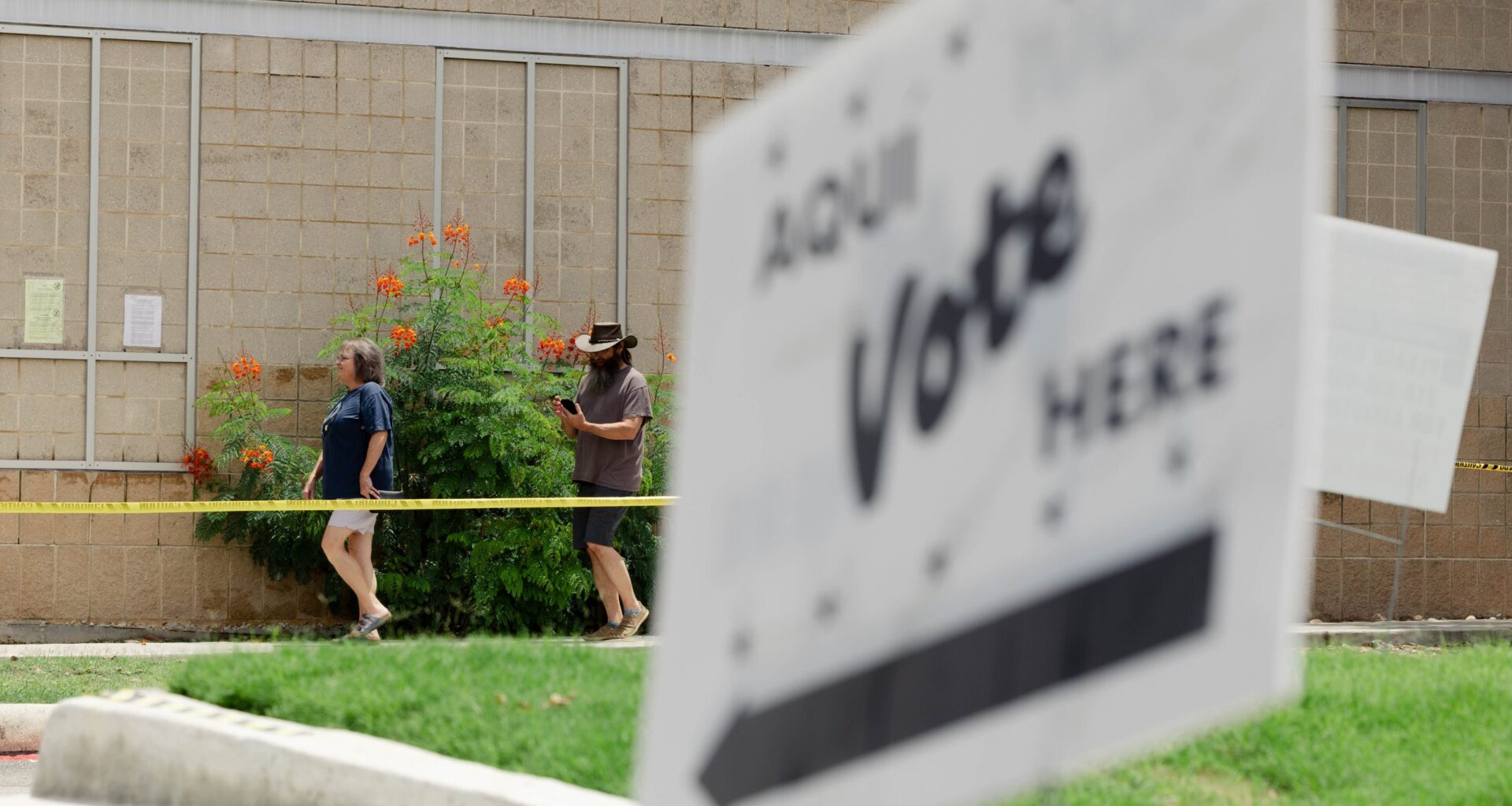
The candidate filing period closes today, setting the field for an exciting March 3 primary election in Bexar County.
That’s when Democrats and Republicans each choose their nominees for the November 2026 midterm, featuring the Texas governor’s race, a U.S. Senate contest, a Bexar County Judge race and much more on the ballot.
All registered Texas voters are eligible to participate in the primary election, but can only choose one party’s ticket — meaning they’re either selecting which candidates Republicans nominate to appear on the ballot in November or they’re deciding who Democrats put forward as their nominees.
Third party groups choose their candidates differently and don’t have a ballot to select in the March 3 primary. For example, Libertarians name their nominees at a party convention, and those candidates later appear alongside Republican and Democratic nominees on the general election ballot in November.
Do you have to register with a party to vote in the primary?
Despite Republicans’ best efforts to limit who participates in their primary elections, Texas voters are still free to cast a ballot in either the Republican or Democratic primary, regardless of their party affiliation.
Election officials will simply ask which party’s ballot you’d like before entering the voting booth.
However, voters who participate in the first round of the primary must continue using the same party’s ballot if they want to vote in the May 26 primary runoff — a second round of voting caused when a race doesn’t have a candidate take at least 50% of the vote in March.
Runoffs are likely in contests with many candidates, such as the Republican U.S. Senate primary, where U.S. Sen. John Cornyn (R-Texas) faces two GOP challengers spending big money to take him on. Public polling shows none of the candidates taking more than about 30% of the vote in a crowded first round.
Democrats could also see runoffs. Their own U.S. Senate primary features two high-profile candidates, former U.S. Rep. Colin Allred (D-Dallas) and state Rep. James Talarico (D-Round Rock), and looks likely to add a third, if U.S. Rep. Jasmine Crockett (D-Dallas) decides to run. Bexar County Democrats are also choosing from a long list of candidates vying to replace exiting District Attorney Joe Gonzales.
Mark your calendars for a March 3 primary election that many political watchers consider to be even more important than the general election in November.
The San Antonio Report will have an all-encompassing voter guide explaining all the races on your primary ballot before early voting begins.
Key dates to know for the March 3 primary
Dec. 8: Deadline for candidates to file for the 2026 primary
Jan. 15: Campaign finance reports are due, showing how much candidates and PACs have raised and spent from July 1 to Dec. 31
Feb. 2: Last day to register to vote for the March primary
Feb. 20: Last day to apply for a mail ballot
Feb. 17 – 27: Early voting for the primary
March 3: Texas primary election
When is the primary runoff in Texas?
In any race where no candidate receives at least 50% of the vote in the March 3 primary election, the top two vote takers will advance to a May 26 primary runoff to determine the winner.
Remember, you don’t have to vote in the primary to participate in the runoff. But if you did cast a ballot in the primary, you’re only eligible to vote in that same party’s runoff election.
Key dates to note for the primary runoff:
April 27: Last day to register to vote in the May primary runoff
May 18 – May 22: Early voting for the primary runoff
May 26: Texas primary runoff election