
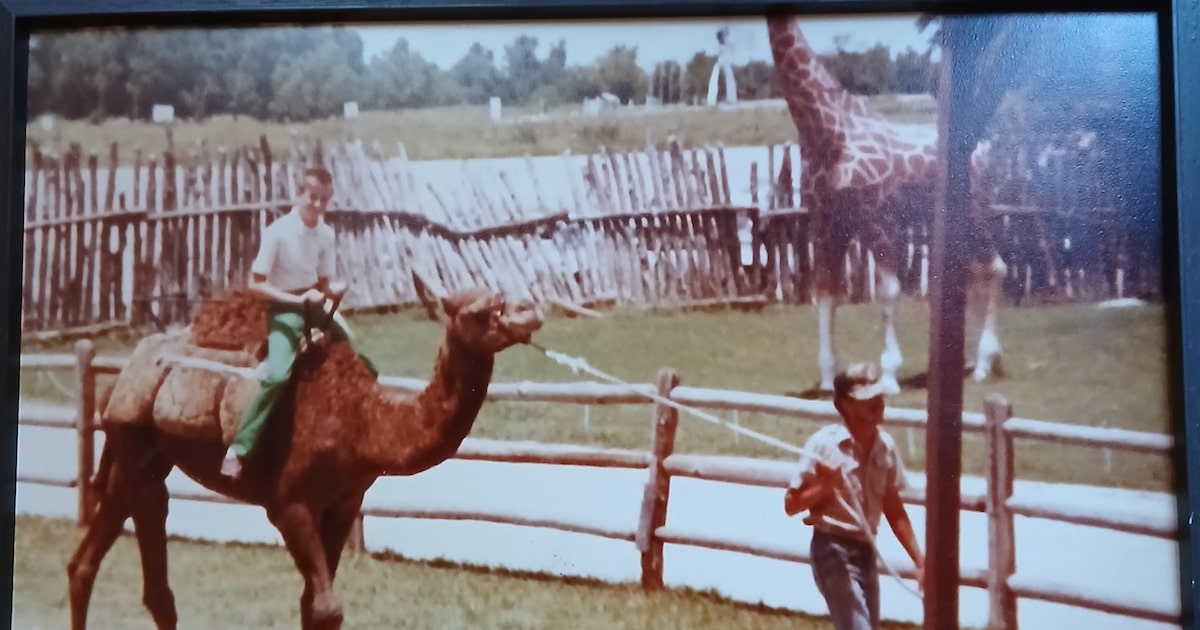
In 1972, the International Wildlife Park — formerly known as Lion Country Safari — debuted in Grand Prairie, showcasing 1,500 free-roaming lions, elephants, rhinos, zebras and giraffes in a landscape that tried to mimic what you might find on an African safari. However a series of natural disasters, damages and animal deaths forced the park into closing in 1991.
The once successful safari’s closure and memories of a flood and escaped animal prompted a reader to ask Curious Texas: What happened to the Lion Country Safari?
Curious Texas is a project from The Dallas Morning News that invites readers to join in our reporting process. The idea is simple: You have questions, and our journalists track down the answers.
International Wildlife Park featured a river boat ride, paddle boats, jeep rides and a petting zoo with lion cubs, goats, tortoises and sheep. The park was about 3 miles from Six Flags Over Texas and stretched across nearly 435 acres at one point.
Curious Texas
Families could drive through the safari for $7.59 on the weekends and $5.95 on the weekdays, according to an ad in the Dallas Times Herald in 1989.
Vance McCutchen spent some of his happiest days working at the park in the early ’80s. He fed the elephants and worked in the drive-through for about two and half years. Recently, he has been trying to figure out where Abu and Aggie, two elephants that he cared for, were placed after the park closed.
Related
The animals were well loved by the public, including William Holden and Stefanie Powers, two well-known actors of the time. Some of the animals were even featured on Daktari, a TV drama series about a veterinarian that ran from 1966-69, before their time at the park. Those animals included Clarence the lion, Riff the leopard and Judy the chimp. Judy died in one of the floods, according to McCutchen.
In 1980, 33 baby African elephants were moved from Kruger National Park in South Africa to Grand Prairie, drawing media coverage. The park planned to keep about 20 of the elephants, but the exact number that remained there is not known.
The park was bought in 1977 by the International Wildlife Exchange, an exotic animal supplier that was founded by Brian, Don, Mickey, and Tom Hunt in 1960, according to the Houston Chronicle. The new owners renamed the park the International Wildlife Park and continued to receive positive reviews. It ranked No. 3 in revenue among Grand Prairie tourist attractions, pulling in $2.5 million to $3 million annually in the late ’80s.
Weather disaster in Grand Prairie
Although the park was a hit for Grand Prairie, the temperamental Texas weather didn’t agree with the exotic animals.
In February 1978, bitter ice storms killed nearly 20 animals in two weeks at the park. A source told The Dallas Morning News at the time that the park failed to provide adequate protection from the ice and freezing temperatures.
When a reporter and photographer from The News went to cover it, they found carcasses of dead zebras that had been used to feed lions and tigers. A veterinarian and the zoo’s manager denied the report, despite photos by The News that backed the story.
In October 1990 Alison Young wrote “Falling Prey to Neglect,” for the Dallas Times Herald about “neglect and disease” in the park. She found that in some years, the death rate was nearly twice that of the average American zoo according to park records. Employees were told to falsify records and cover up unsanitary conditions.
Related
Additionally, the park was plagued by floods throughout its tenure because it ran parallel with the Trinity River. While McCutchen was there, the park had to be rebuilt twice. He left his job at the park to work with aircraft after the second flood.
Animal rights activists were outraged by animal deaths caused by the floods. The Dallas Times Herald reported in May 1990 that the USDA had no record of a flood plan to protect the animals.
The end of the Grand Prairie park
By 1990, there was approximately 650 animals on 350 acres as compared with the 2,000 animals that were advertised in 1989. Animals were constantly moved around, but deaths due to flooding and neglect seemed to contribute to this decrease.
The park closed in December 1991 after three floods in 1989 and 1990 killed 65 animals and destroyed many of the park’s buildings, causing over $2 million in damage and $1 million in lost business. There was talks of relocating the safari to Hickory Creek in Denton County, but those plans fizzled after the mayor said that the park wouldn’t be beneficial.
Nearly 65% of the approximate 650 animals that were recorded in November 1990, were moved to the African Safari Wildlife Park, in Port Clinton, Ohio, which is still running. The Ohio park is owned by the same parent company as the IWF and regularly had animals moving back and forth seasonally, according to the Fort Worth Star-Telegram.
On Dec 4, 1991, animals were sold at an auction out of the parking lot in Grand Prairie, including pot-belly pigs, ponies, and emus. Equipment like tractors, trucks, generators, and a water pump were also sold. It is not clear if any permits were needed from buyers of the animals.
Researcher Sarah Haldeman contributed to this report.