
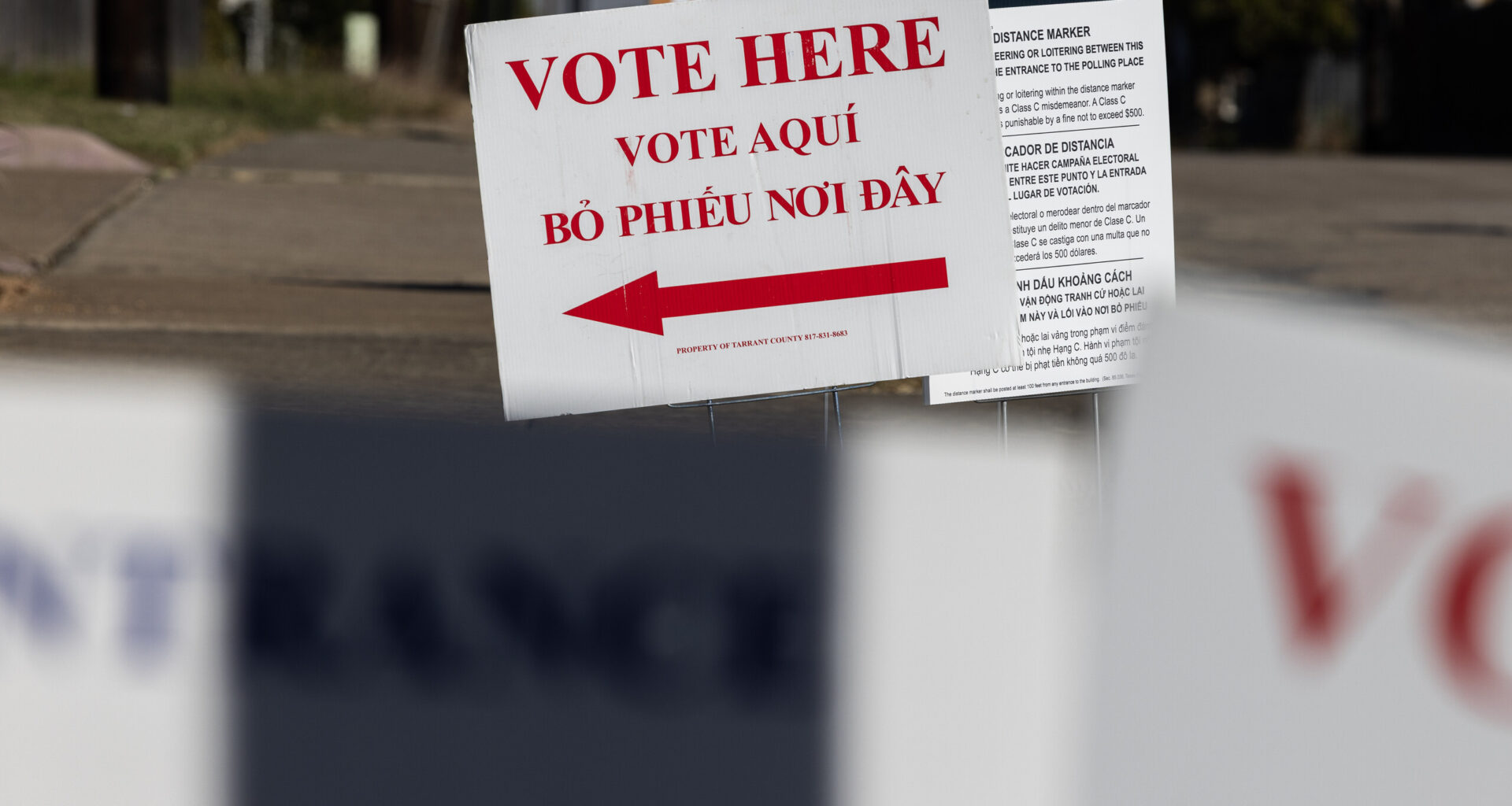
Texas Senate District 9 voters will have 22 early voting locations and 142 Election Day sites for the Jan. 31 runoff.
Tarrant County commissioners, voting along party lines, approved the number of polling places on Tuesday, with the five-member court’s Republican majority voting in favor of the reduced number despite Democrats pushing for more locations.
The move follows a fall election that saw fewer voting locations after the GOP commissioners cut 100 Election Day polling places and 11 early voting locations from 2024’s election. That brought the Nov. 4 election total to 33 early voting locations and 215 Election Day sites.
Next month’s runoff election will see voting locations in and directly surrounding Senate District 9, which covers a swath of the northern half of Tarrant County.
About 119,000 people voted in the Senate race in November across the county. Because Tarrant County offers countywide voting, residents of District 9 can cast votes from any polling location.
Number of polling locations sufficient, Republicans argue
At the Dec. 9 meeting, Republican County Judge Tim O’Hare said the number of polling locations was appropriate for the runoff, as he felt the November election went smoothly.
Clint Ludwig, Tarrant County Elections administrator, told the commissioners the average wait time for early voting during the Nov. 4 election was 1:24 minutes, and the average Election Day wait time was 7:52 minutes.
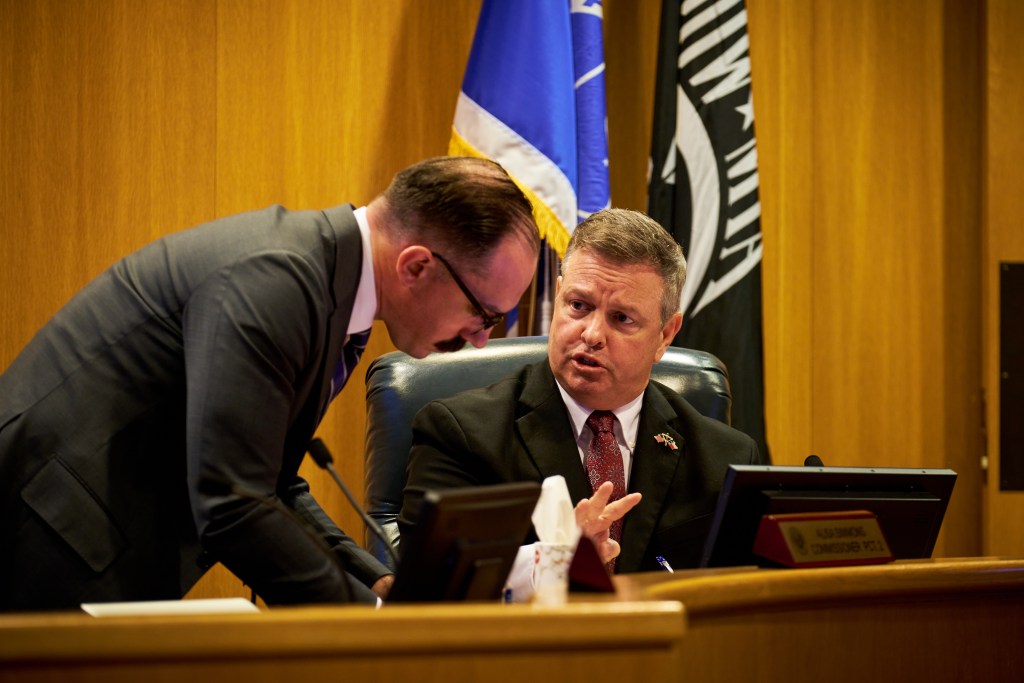 Tarrant County Judge Tim O’Hare talks to a staff member at a commissioners court meeting on April 2, 2025, at the Tarrant County Administration Building. (Drew Shaw | Fort Worth Report)
Democratic Commissioner Alisa Simmons pushed back on O’Hare’s notion that last month’s election went smoothly, saying she saw lines wrapping around buildings in several popular locations on Election Day.
Ludwig admitted some well-known sites were abnormally popular but said their popularity wasn’t due to a lack of voting locations.
Como Community Center, for example, saw an average Election Day wait time of 25.26 minutes, but another polling location in a church about 2 miles away had an average wait time of 1.15 minutes, he said.
“They just went to the main ones that they know,” he said. “We had 35 locations across the county that had zero wait time all day. No wait time at all on Election Day, and that’s because people weren’t showing up to them.”
Despite the reductions, the election saw record-high turnout for an odd-numbered year election.
Simmons questioned what role a technical error on the Texas Secretary of State’s website could have played in creating long wait times. The website only pointed Tarrant County voters to one polling location in Arlington on Election Day.
Ludwig said the county is working on tools to direct voters to locations near them, and he encouraged using Tarrant County’s website seeking polling information. He added that on Election Day, most locations didn’t have long waits until 4 p.m. Wait times continued to get longer as the evening went on.
“By waiting until the last few hours of Election Day, and then only going to the large location that you know, you’re going to run into a line,” he said. “There was a line at Mansfield Subcourthouse when we had 340 polling locations. That’s just what happens.”
Republicans shut down push for more polling locations
Looking ahead to the runoff’s locations, Simmons proposed reopening all of the Election Day polling places used Nov. 4 for a total of 215 places across the county. She made a motion to add six early voting locations. Both motions failed along party lines.
Backing up their decision to reduce polling locations, Republican commissioners maintain that the move is financially savvy. In November, election officials estimated the reductions will save the county about $1 million. The county has a budget of about $825 million this fiscal year.
Simmons said the reduced voting locations amount to voter suppression. The commissioner, who over the weekend announced a bid for the county judge seat, said the reductions target polling places in communities of color and Fort Worth’s urban core.
“These three gentlemen just made the decision for an entire county voting population on which vote centers to add, where to add, and which ones not to add,” she said, referring to the three Republicans on the court.
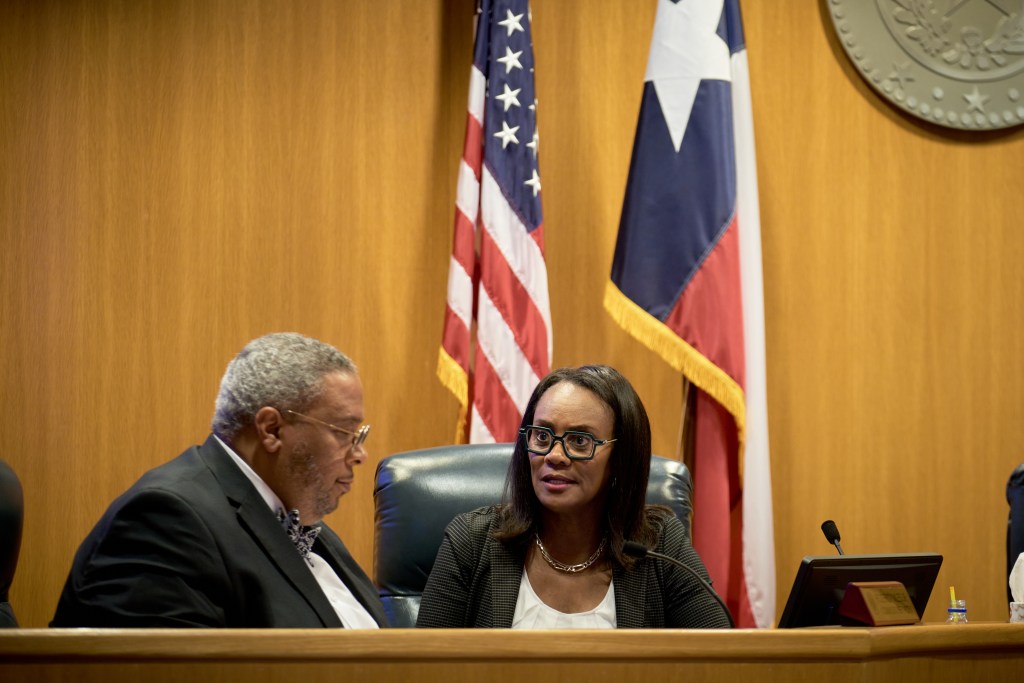 Tarrant County commissioners Alisa Simmons, right, and Roderick Miles Jr. talk during a commissioners court meeting April 2, 2025. (Drew Shaw | Fort Worth Report)
Three people who signed up to speak asked commissioners for more voting options.
Hurst resident Bob Harper came to advocate to make the city’s Brookside Center an early voting location. He was the center’s election judge on Election Day, when almost 1,000 people voted using 11 voting machines and overwhelmed his team of six poll workers, he said.
He said the election’s ballot items, which included 17 constitutional amendments and multiple special elections, took voters a long time to read. Hurst voters would benefit from the location being available during early voting as the city currently only has one such location under the court’s plan, he said.
Commissioners ultimately added one early voting location from the 21 that staff initially proposed. This one, the Grapevine Public Library, didn’t respond to Ludwig’s initial communications until after he submitted the meeting’s agenda, so it had to be added to the list via an amendment.
The race for Texas Senate is expected to be a tight one between Democrat Taylor Rehmet, an Air Force veteran and union leader, and Republican Leigh Wambsganss, chief communications officer for the Patriot Mobile wireless service provider.
In November, Rehmet came within 2.4 percentage points of winning the seat outright in a three-way race that saw his two challengers split the GOP votes.
Of the Nov. 4 Election Day voting sites located in Senate District 9, one will not be used in January: River Oaks City Hall, where nearly 60% of the 240 voters this fall cast ballots for Rehmet.
All but four of the 22 early voting locations are located in Senate District 9. Other locations outside of the district are excluded from the initial list of potential runoff locations.
A full list of voting locations approved by commissioners for the runoff, minus the Grapevine Public Library, can be found here.
Drew Shaw is a government accountability reporter for the Fort Worth Report. Contact him at drew.shaw@fortworthreport.org or @shawlings601.
At the Fort Worth Report, news decisions are made independently of our board members and financial supporters. Read more about our editorial independence policy here.
This <a target=”_blank” href=”https://fortworthreport.org/2025/12/09/tarrant-voting-locations-for-texas-senate-runoff-approved-as-democrats-push-for-more/”>article</a> first appeared on <a target=”_blank” href=”https://fortworthreport.org”>Fort Worth Report</a> and is republished here under a <a target=”_blank” href=”https://creativecommons.org/licenses/by-nd/4.0/”>Creative Commons Attribution-NoDerivatives 4.0 International License</a>.<img src=”https://i0.wp.com/fortworthreport.org/wp-content/uploads/2021/04/cropped-favicon.png?resize=150%2C150&quality=80&ssl=1″ style=”width:1em;height:1em;margin-left:10px;”>
<img id=”republication-tracker-tool-source” src=”https://fortworthreport.org/?republication-pixel=true&post=321226&ga4=2820184429″ style=”width:1px;height:1px;”><script> PARSELY = { autotrack: false, onload: function() { PARSELY.beacon.trackPageView({ url: “https://fortworthreport.org/2025/12/09/tarrant-voting-locations-for-texas-senate-runoff-approved-as-democrats-push-for-more/”, urlref: window.location.href }); } } </script> <script id=”parsely-cfg” src=”//cdn.parsely.com/keys/fortworthreport.org/p.js”></script>